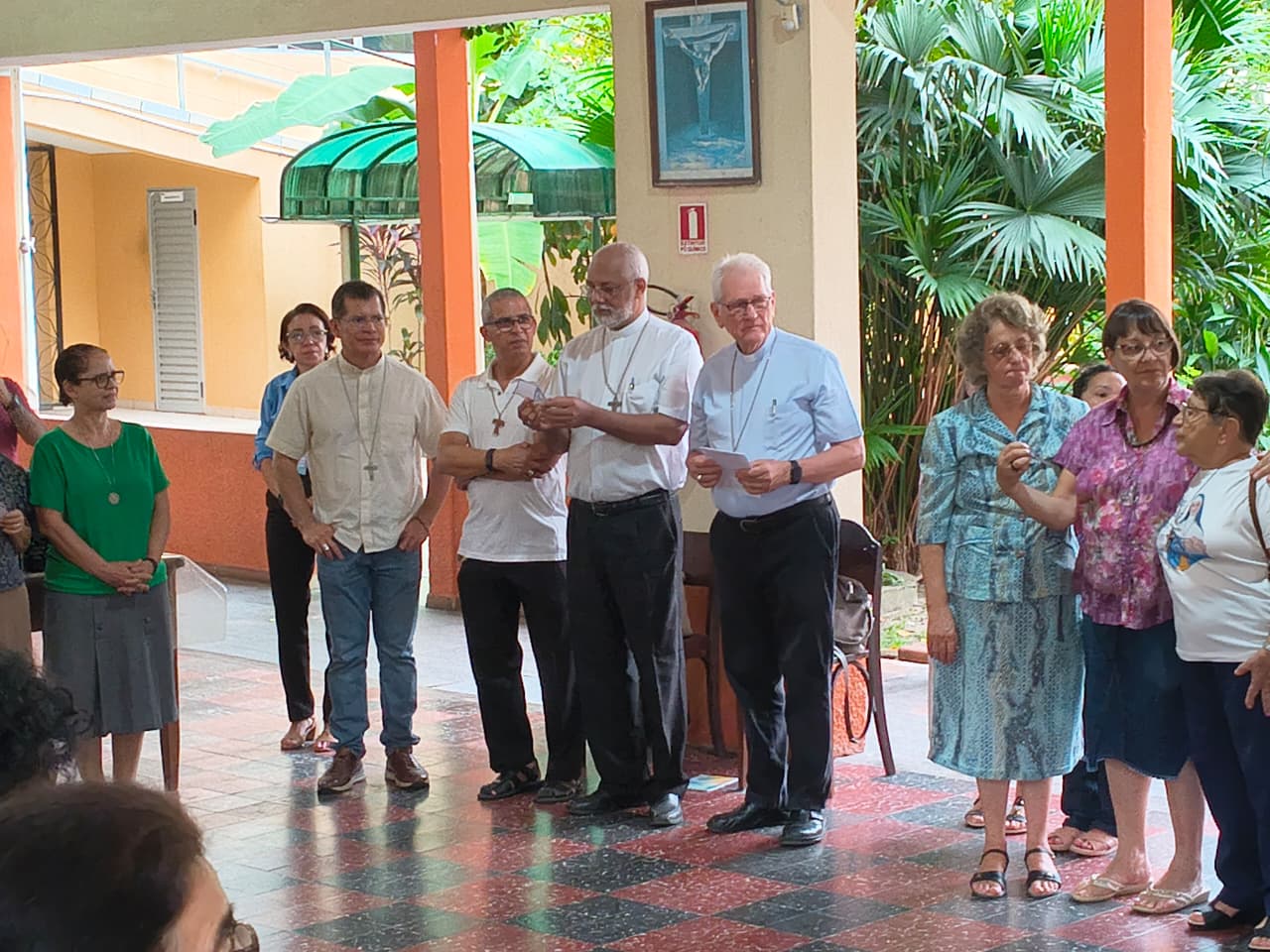
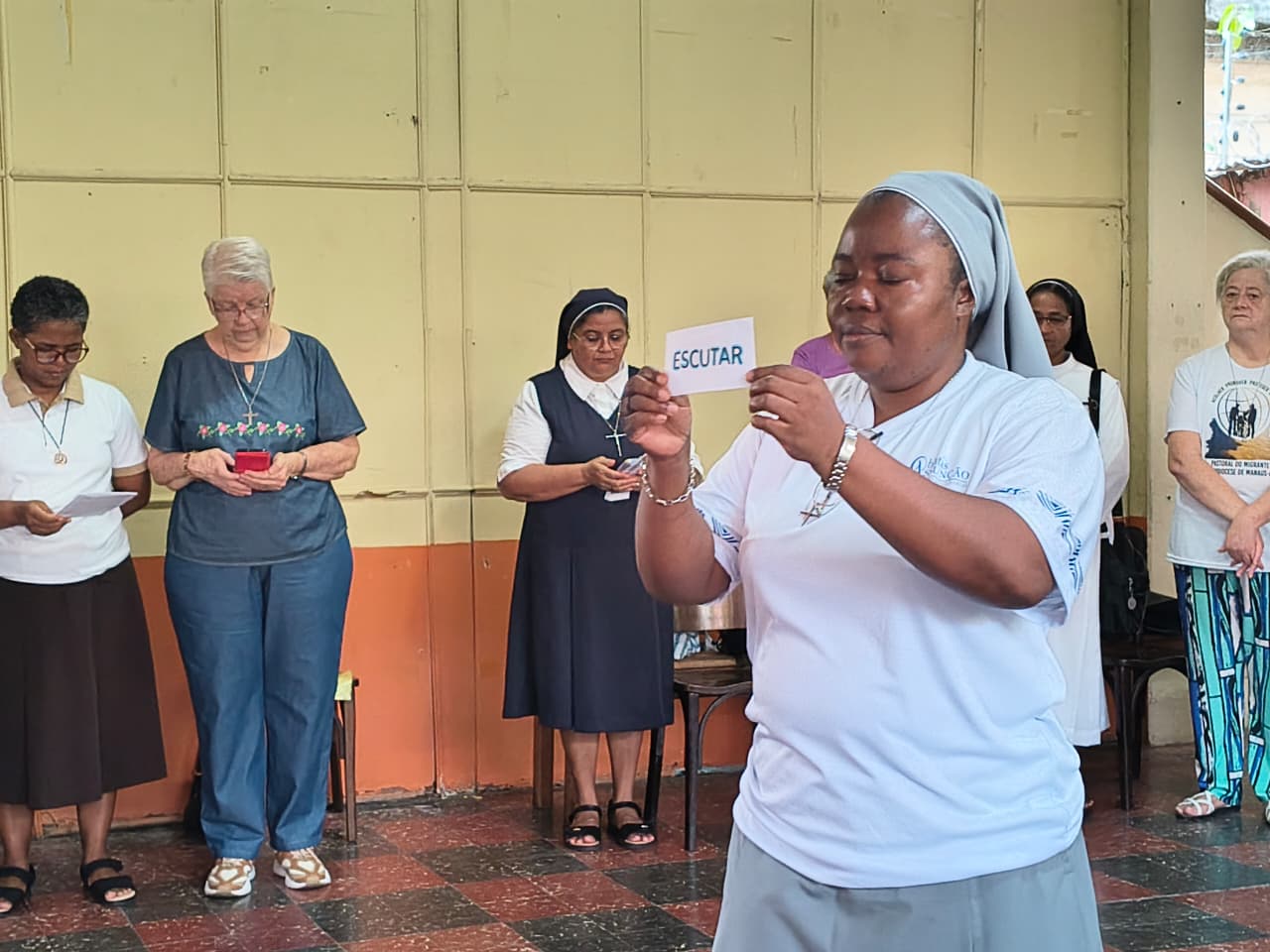
With the aim of strengthening ecclesial communion and responding to the pastoral challenges of the Amazon, the Archdiocese of Manaus (Brazil) held the Third Meeting of the Bishops with Women Religious from the Peripheries, a space for dialogue, listening, and discernment that reaffirmed the fundamental role of women’s religious life in the Church’s evangelizing mission.
The meeting took place on July 7 at the Metropolitan Curia of Manaus and was presided over by Cardinal Leonardo Ulrich Steiner, Metropolitan Archbishop of Manaus and president of the Ecclesial Conference of the Amazon (CEAMA). Also participating were Auxiliary Bishops Zenildo Lima, Joaquim Hudson Ribeiro, and Samuel Ferreira, who shared a day of reflection with women religious carrying out their mission in the various peripheries of the archdiocesan territory.
A Church That Listens from the Peripheries
Under the theme “Encounter, Listen, and Discern,” the gathering focused on the pastoral experience of the women religious who accompany the most vulnerable communities in the Amazon on a daily basis. Their presence in outlying neighborhoods, riverside communities, indigenous territories, and other mission areas allows them to experience firsthand the joys, hopes, challenges, and sufferings of the People of God.
During the event, the participants shared experiences and offered reflections that will contribute to the archdiocese’s pastoral discernment. The Church in Manaus once again recognized the presence of consecrated women as a living sign of the Kingdom of God and an indispensable witness for evangelization in the Amazon.
Listening to Walk Together
Cardinal Leonardo Steiner expressed his gratitude to the religious sisters for their daily dedication and for the service they provide in the many contexts where the Church is present.
In his remarks, he emphasized that, although the Archdiocese’s vast territory poses a major challenge, the existential peripheries are even more complex and require a Church that is close to the people—one capable of listening, accompanying, and proclaiming the Good News of Jesus Christ from a synodal perspective.
The meeting made it possible to identify various pastoral challenges that require a shared response from bishops, priests, religious sisters, and communities. Among these, the need to strengthen the ongoing formation of pastoral workers and the clergy from a synodal perspective, to deepen the Church’s missionary dimension, and to consolidate spaces for greater collaboration between women’s religious life and ordained ministry stood out.
A Prophetic Presence in the Amazonian Regions
The women religious also emphasized the importance of maintaining a constant presence in regions marked by social conflict, violence, and exclusion, where their mission serves as a concrete sign of hope and closeness.
Likewise, they highlighted the urgency of strengthening pastoral care for young people, better coordinating social ministry initiatives, accompanying migrants and indigenous peoples, engaging in dialogue in contexts of religious pluralism, and promoting communities that are increasingly welcoming and inclusive for those who wish to begin their journey of faith and sacramental life.
A Synodal Path for the Church with an Amazonian Face
This third meeting reflects the Archdiocese of Manaus’ commitment to a Church that moves forward through listening and communal discernment, strengthening shared responsibility among bishops, religious, and the laity.