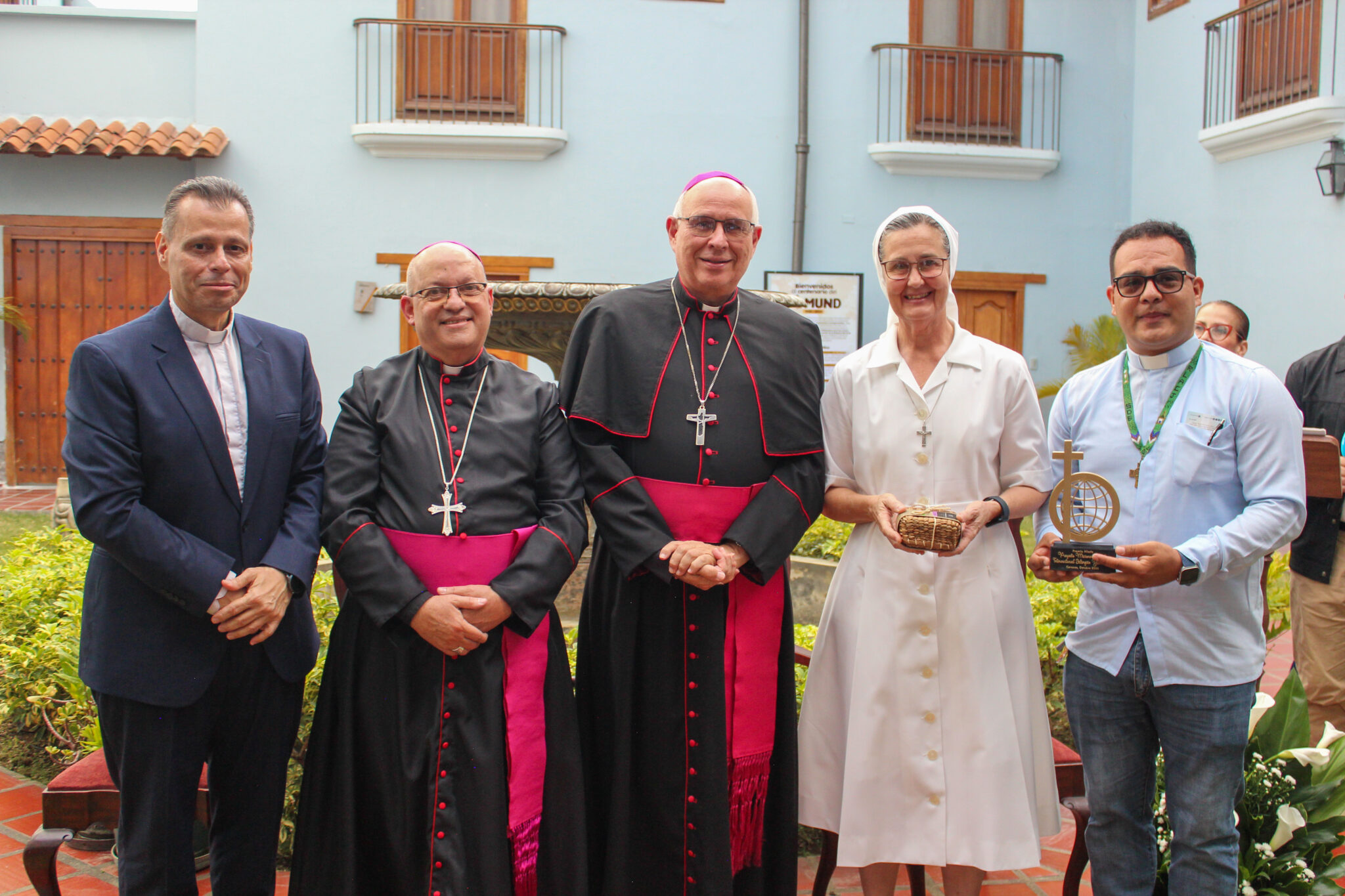
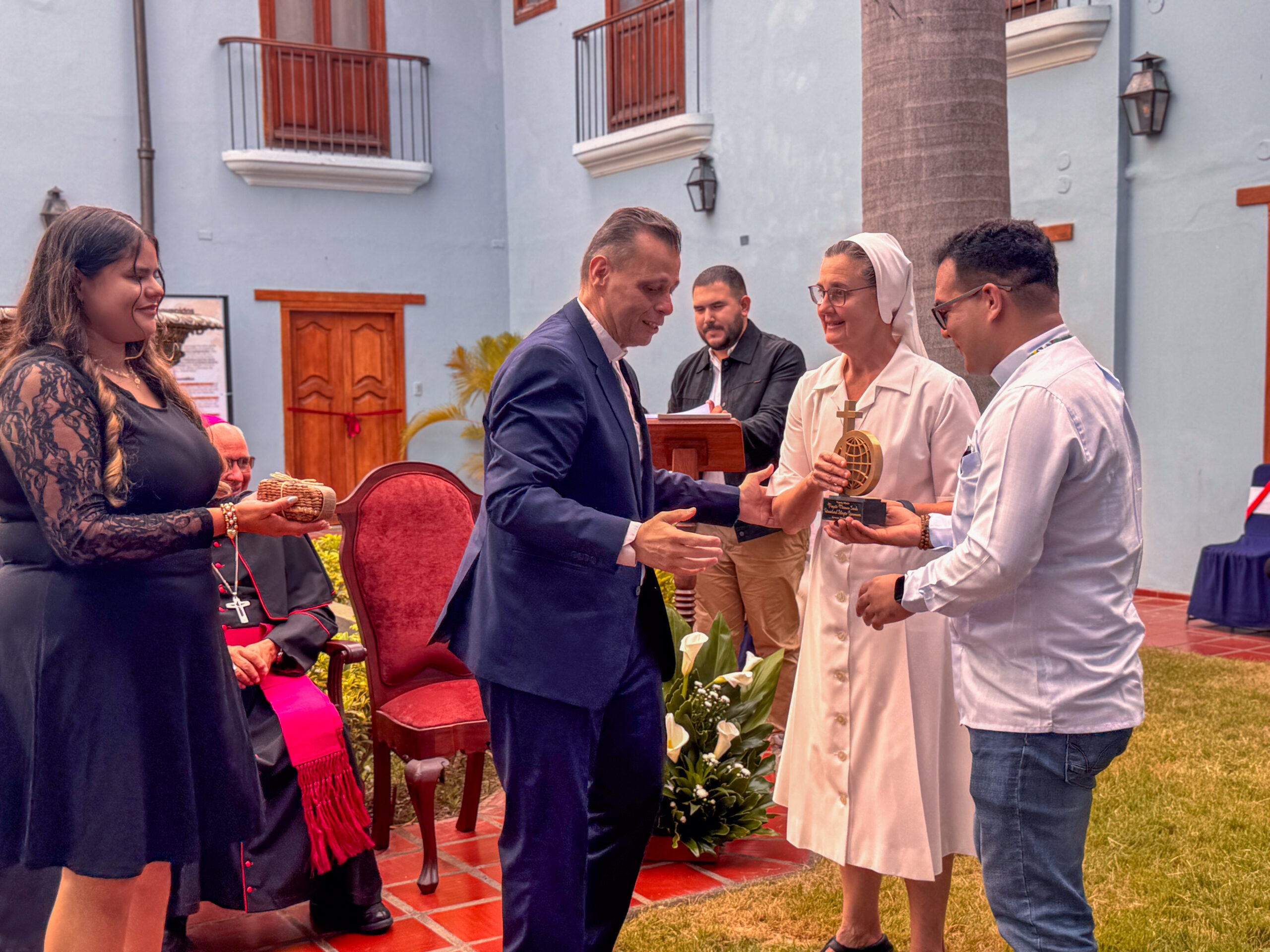
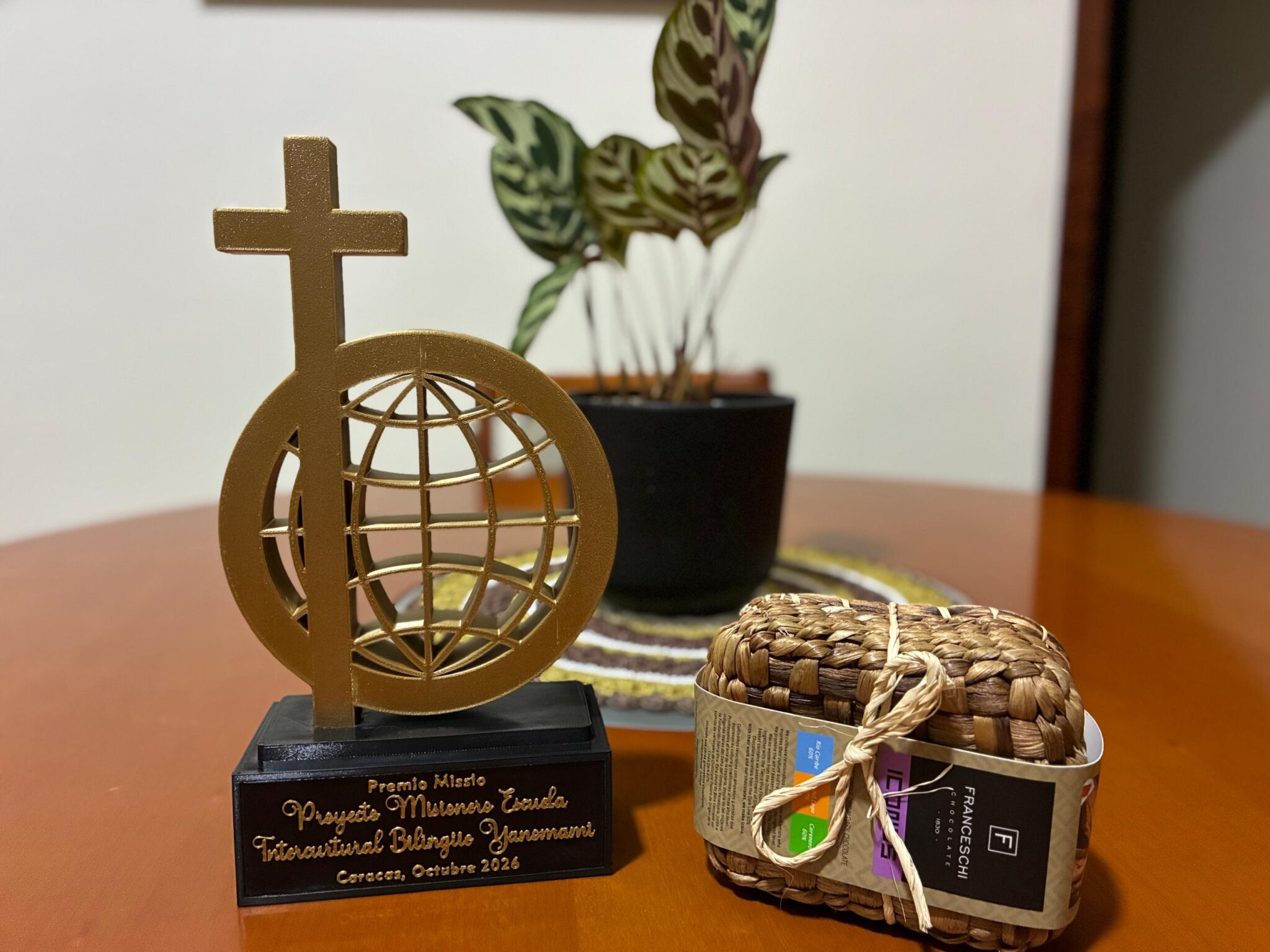
The award, presented by the Pontifical Mission Societies (OMP) of Venezuela in its inaugural edition, highlights decades of commitment by the Salesians of Don Bosco, the Daughters of Mary Help of Christians, and lay educators to intercultural bilingual education, the preservation of the Yanomami language, and the empowerment of indigenous peoples in the Venezuelan Amazon.
The Yanomami Intercultural Bilingual School Missionary Project was honored with the Missio Award, presented by the Pontifical Mission Societies (OMP) of Venezuela during a ceremony held at the Archbishop’s Palace in Caracas. This recognition highlights a missionary and educational initiative that, for decades, has supported the Yanomami communities of the Upper Orinoco in Amazonas State, promoting an education that respects their cultural identity, language, and traditions.
The initiative is the result of a joint effort by the Salesians of Don Bosco (SDB), the Daughters of Mary Help of Christians (FMA), and lay educators, who have championed an educational model that seeks to empower the Yanomami people themselves to take the lead in shaping their own history and educational journeys.
The award recognizes not only the history of this mission but also the commitment of missionaries, educators, families, and indigenous communities who have helped build an educational model rooted in the reality of the Amazon.
An Educational Mission Born from the Encounter with the Yanomami People
The Salesian educational and evangelizing presence in the Upper Orinoco began in 1957 with the arrival of the first missionaries in towns such as Ocamo and Mavaca. From its inception, this work was inspired by Don Bosco’s Preventive System, grounded in reason, religion, and love.
Over the years, missionaries and religious sisters worked alongside the communities to develop an educational approach that recognized the richness of their culture and promoted their active participation in shaping their future.
This approach was consolidated in 1976 with the creation of the first Yanomami Educational Project, an initiative aimed at strengthening learning processes rooted in the identity of indigenous peoples and dialogue between cultures.
Experience shows that the educational mission in the Amazon requires closeness, active listening, and respect for the communities’ knowledge, recognizing that each people has its own history, language, and way of understanding the world.
Intercultural Bilingual Education to Preserve Identity
The Yanomami Intercultural Bilingual School Project addresses the sociocultural and geographic challenges of Amazonas State through an approach that integrates education, cultural identity, and community participation.
Among its main contributions are three fundamental dimensions:
- Cultural and linguistic preservation: promotes the use of the Yanomami mother tongue in early childhood education and the early grades of school, fostering the transmission of the people’s knowledge and traditions.
- Intercultural dialogue: seeks a balanced relationship between the ancestral Yanomami culture and Venezuelan society, ensuring that education does not lead to the loss of one’s own identity.
- Community-led approach: It fosters the training of students who can become teachers and develop their own educational materials in their mother tongue.
These elements help us understand bilingual intercultural education as a tool for strengthening cultural autonomy, participation, and the exercise of indigenous peoples’ rights.
Reflecting on the fruits of this experience, Sister María Henar Alcalde, provincial superior of the Daughters of Mary Help of Christians in Venezuela, highlighted the importance of seeing former students become teachers and authors of their own school textbooks, keeping their cultural expressions, faith, songs, dances, and games alive.
Education and Dignity for the Communities of the Upper Orinoco
The Yanomami communities, scattered across hard-to-reach territories far from major urban centers, face significant challenges in accessing educational services and training opportunities.
In this context, the educational units linked to the project seek to help bridge existing gaps and provide tools that promote justice, equity, and respect for fundamental rights.
The proposal recognizes that ensuring access to relevant education does not mean merely facilitating academic learning. It also involves protecting the language, valuing ancestral knowledge, and creating conditions so that new generations can strengthen their identity and actively participate in the life of their communities.
From this perspective, the Yanomami educational experience stands as a testament to how the Church’s mission can contribute to the defense of the dignity of Amazonian peoples through processes that integrate education, culture, and community support.
A Recognition of the Shared Mission
During the ceremony, Sister María Henar Alcalde expressed her gratitude to the Pontifical Mission Societies for bringing to light work built up over decades in the Venezuelan Amazon.
She emphasized that the Missio Award also belongs to the missionaries, educators, advocates, elders, and families who have made the development of intercultural bilingual education in the Yanomami communities possible.
Along with the Missio Award, this first edition also recognized other examples of missionary commitment: Sister Ángeles Miguelez received the Blessed Paulina Jaricot Award, while Monsignor Felipe González was honored with the Blessed Pablo Manna Award.
The recognition of the Yanomami Intercultural Bilingual School thus highlights a mission built on engagement with indigenous peoples, respect for their cultures, and the promotion of their active participation.
An Amazonian Church That Learns from the Peoples
The experience of the Yanomami Intercultural Bilingual School invites us to reflect on the importance of a Church that recognizes the richness of Amazonian cultures and accompanies its communities through respect, listening, and intercultural dialogue.
In keeping with the path of a Church with an Amazonian face, this initiative underscores that evangelization and education gain greater depth when they acknowledge the languages, traditions, and knowledge of Indigenous peoples.
The Missio Award thus provides an opportunity to highlight the commitment of those who work toward an education that does not erase cultural differences but rather recognizes them as a source of richness for all of society.
Accompanying the Yanomami people means walking alongside their communities, strengthening their identity, and recognizing their right to shape their own future. The history of this missionary project reminds us that an education rooted in culture and open to dialogue can become a concrete path toward dignity, fraternity, and hope for the Amazon.