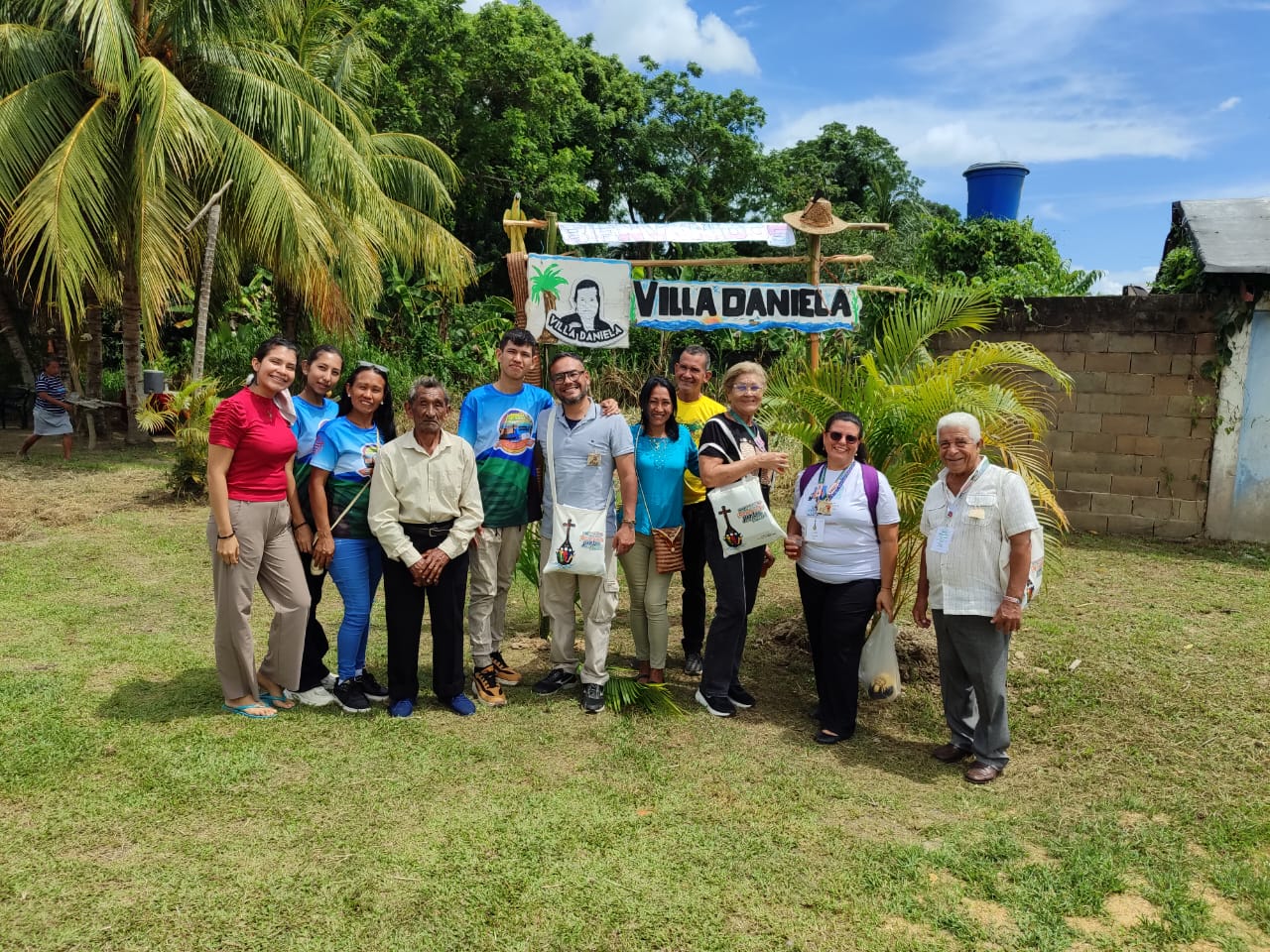
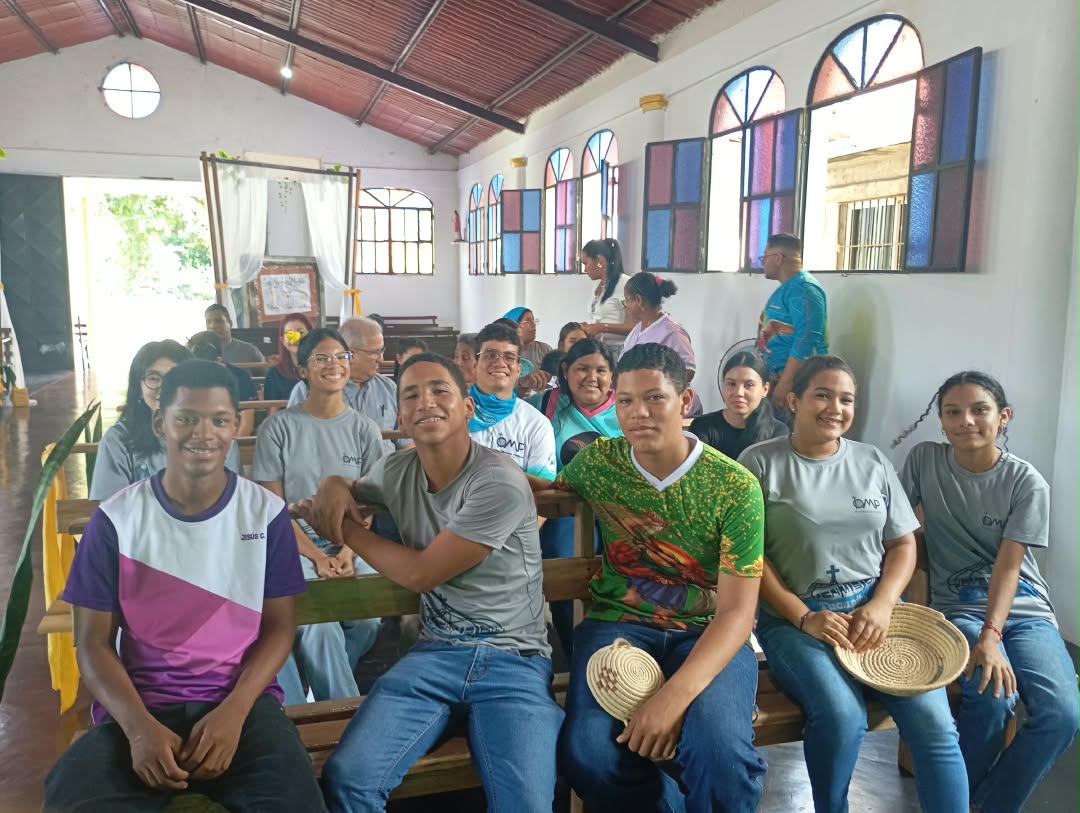
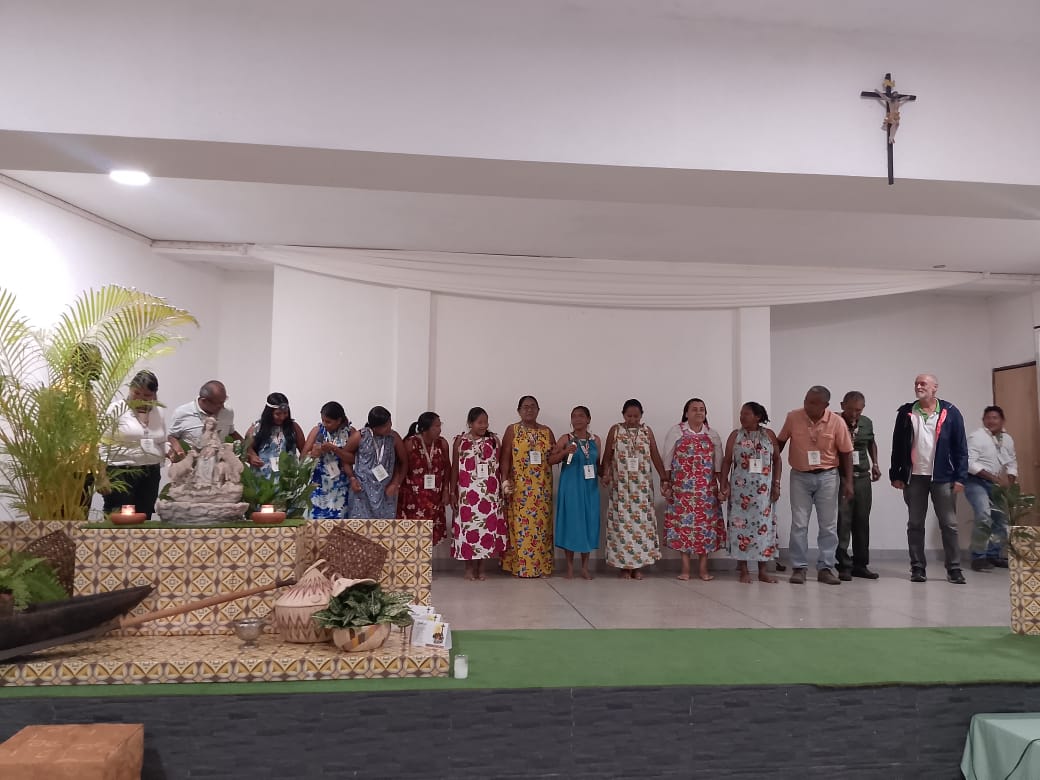
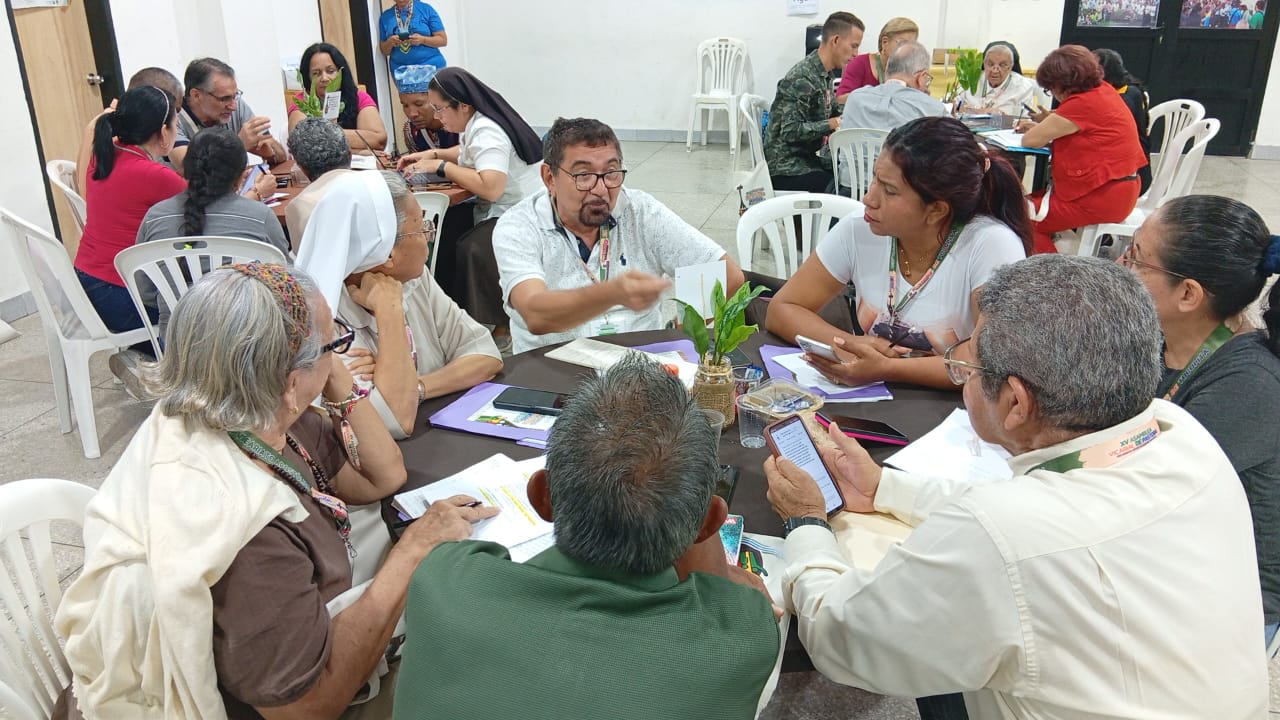
From October 8 to 11, the Apostolic Vicariate of Tucupita, in Venezuela, held its 15th Vicariate Pastoral Assembly, a space for encounter, listening, and discernment that brought together nearly 70 representatives from the ecclesial communities of the Amacuro Delta. The Assembly sought to revitalize the Vicariate’s Pastoral Project, strengthen synodality, and renew the commitment to evangelization alongside the Warao people, in anticipation of the 75th anniversary of this local Church in 2029.
Under the theme “I am making all things new. Rowing Together in the Mission” (Is 43:19; Rev 21:5), the Assembly took place in the Mons. Felipe González Auditorium at the Episcopal Residence in Tucupita, with the participation of priests, religious sisters, religious brothers, missionaries, catechists, and laypeople from the various parishes and pastoral zones throughout the territory.
The gathering is part of the preparation process leading up to the 75th-anniversary Jubilee of the Apostolic Vicariate of Tucupita, which includes a three-year pastoral preparation period from 2026 to 2029. This journey seeks to renew ecclesial life in light of the region’s social, ecological, cultural, and missionary challenges, in harmony with the call to synodality and the guidelines of the apostolic exhortation *Querida Amazonía*.
Listening to the Communities to Renew the Mission
One of the central themes of the Assembly was reflection on the results of a consultation conducted in parish communities, whose purpose was to identify the main challenges and priorities for promoting a new evangelization in the Amacuro Delta.
Based on this process of listening, eight fundamental areas for pastoral renewal were identified: inculturation and intercultural dialogue, especially with the Warao people; the ministry and active role of the laity; ongoing formation in the faith; charity and mercy; the renewal of evangelization methods and digital culture; synodality; integral ecology; and the accompaniment of young people and families.
These priorities express the desire to build a Church that is close to the communities, capable of listening to their needs and accompanying them in their realities, especially in the most remote areas of the Delta.
The Assembly also provided an opportunity to reflect on the need to strengthen the biblical and pastoral formation of those involved in evangelization, to promote the active role of the laity, to consolidate pastoral and financial councils, and to develop new forms of organization that foster the shared responsibility of all the baptized.
The Warao People: Key Players in a Church with an Amazonian Face
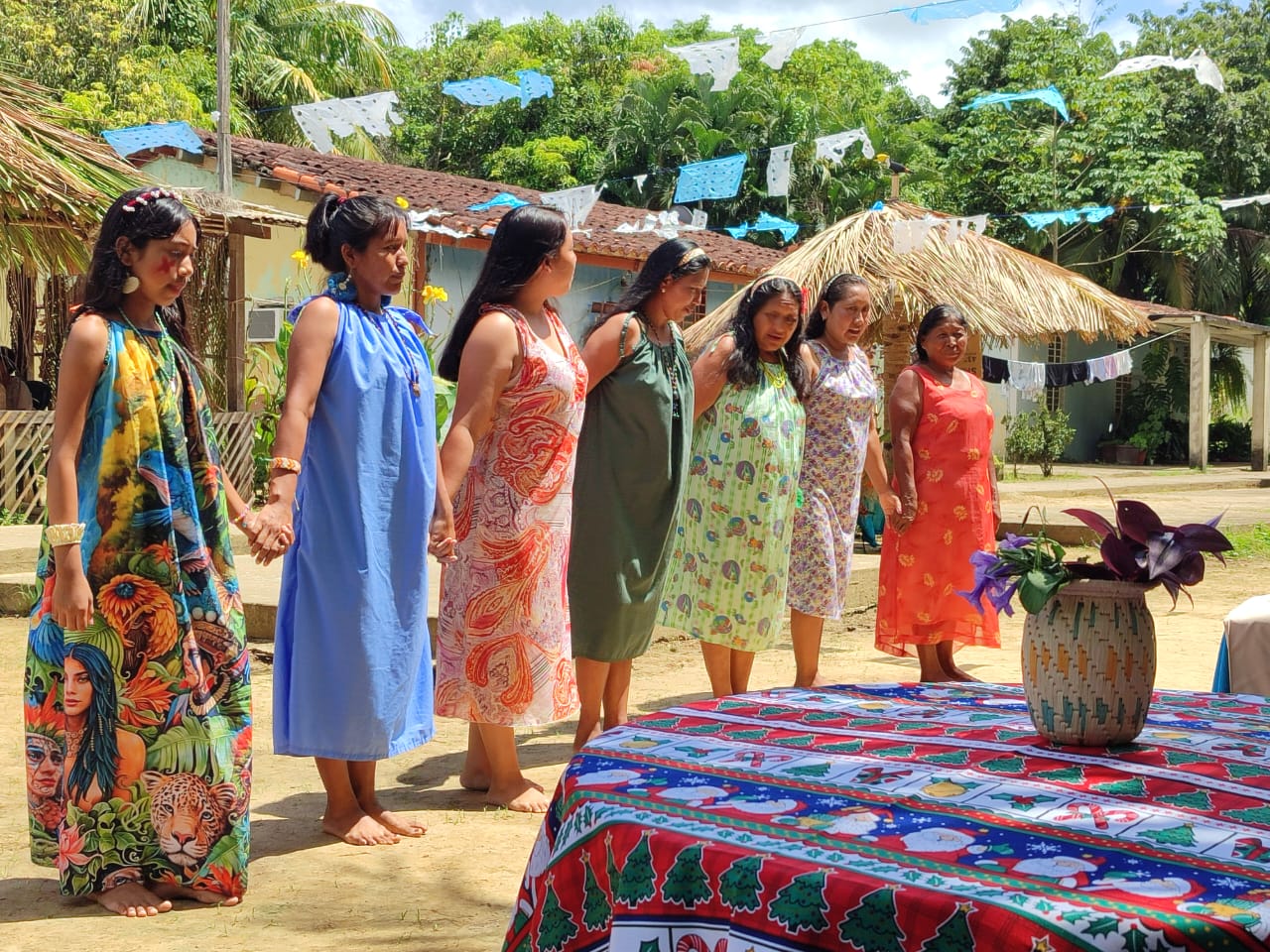
The inculturation of the faith and intercultural dialogue featured prominently in the reflections, with special attention given to the Church’s relationship with the Warao people, their languages, their worldview, and their ancestral traditions.
Among the proposals put forward is the incorporation of the wisdom of the elders, traditional stories, songs, and cultural symbols into the processes of catechesis and the celebration of the faith. The importance of deepening the use of the Warao language in prayers, pastoral materials, and liturgical celebrations was also emphasized, so that the Gospel may be expressed through the identity and experience of the communities.
Likewise, the need to train indigenous leaders and pastoral animators who will take on an active role in the life of their communities was underscored, thereby strengthening their participation in ministries and in processes of ecclesial discernment.
These proposals stem from a fundamental conviction: indigenous peoples are not merely the recipients of evangelization, but protagonists in the life and mission of the Church. Their wisdom, spirituality, and communal experience are essential for building a Church that is truly incarnate in the Amazonian reality.
From Discernment to Pastoral Commitments
During the Assembly, participants worked to identify concrete actions to strengthen the life of Christian communities, parishes, and the Vicariate as a whole.
Among the priorities are the creation of permanent formation spaces for catechists and leaders, close accompaniment of families and people in vulnerable situations, the strengthening of basic ecclesial communities, and the formation of itinerant missionary teams capable of reaching the most remote areas of the territory.
They also highlighted the importance of fostering a youth ministry that responds to the realities and interests of the younger generations, promoting the Church’s Social Doctrine, and strengthening the commitment to justice, peace, and care for our Common Home.
Integral ecology constitutes another fundamental challenge for this local Church. The close relationship between the Delta’s communities and the rivers and nature calls for the promotion of a spirituality committed to the defense of life, the protection of the territory, and shared responsibility in the face of socio-environmental threats.
To guide this process, the Assembly proposed adopting a synodal approach that would allow each pastoral initiative to be evaluated according to five dimensions: the concrete needs of the communities, missionary commitment, baptismal co-responsibility, transparency, and the transformation of structures and working methods.
A Path of Preparation Toward the Jubilee of 2029
The 15th Vicariate Assembly is part of the three-year pastoral plan convened by Monsignor Ernesto José Romero Rivas, Apostolic Vicar of Tucupita, to mark the 75th anniversary of the Vicariate’s canonical establishment, which will be celebrated in 2029.
The first pastoral year, covering the period 2026–2027, is dedicated to social and ecological challenges, under the theme “Caring for Life, Defending Creation.” The following years will delve deeper into cultural and inculturation challenges and into the consolidation of a missionary, ministerial, and co-responsible Church.
This journey aims for the jubilee preparations to transcend mere commemorative celebrations and become an authentic process of pastoral conversion, capable of renewing structures, strengthening community participation, and responding to the current challenges of evangelization.
The centennial commemoration of the Divine Pastoral Mission of Araguaimujo, served by the Capuchin Friars Minor, also serves as a significant reference point for this journey. Its history invites us to recognize the contribution of the missionaries and the communities that have sustained the life of faith along the waterways of the Orinoco Delta, and to envision a mission in which the Warao people play an increasingly central role.
CEAMA Accompanies the Church’s Journey in the Delta Amacuro
On the occasion of this Assembly, the Presidency of the Ecclesial Conference of the Amazon (CEAMA) sent a message of solidarity and communion to the vicariate, recognizing the importance of this process of listening and discernment for the future of the Amazonian Church.
In its message, the Presidency emphasized that the 100th anniversary of the Misión Divina Pastora de Araguaimujo represents a history of encounters, shared lives, and communities that have kept the faith alive amid the waters and streams of the Orinoco Delta.
It also recalled that the Warao people, with their wisdom, their languages, and their ways of inhabiting the territory, are a living part of the Church, and that their participation, their voice, and their ministries are essential for the Gospel to continue taking root in the lives of the communities.
CEAMA particularly valued the pastoral horizons identified during the consultation process and encouraged the mission’s centennial to mark the beginning of a new phase of evangelization, in which communities increasingly take the lead in their own ecclesial journey.
The 15th Vicariate Pastoral Assembly thus reaffirms the commitment of the Apostolic Vicariate of Tucupita to a Church that listens, discerns, and walks alongside its peoples. This journey, drawing on the cultural and spiritual richness of the Amacuro Delta, seeks to renew the evangelizing mission, strengthen shared responsibility, and care for life in all its dimensions.
Looking ahead to the Jubilee of 2029, the challenge is to continue rowing together to build a Church with an Amazonian face, deeply rooted in the culture of its peoples and committed to the defense of life, justice, and the care of our Common Home.