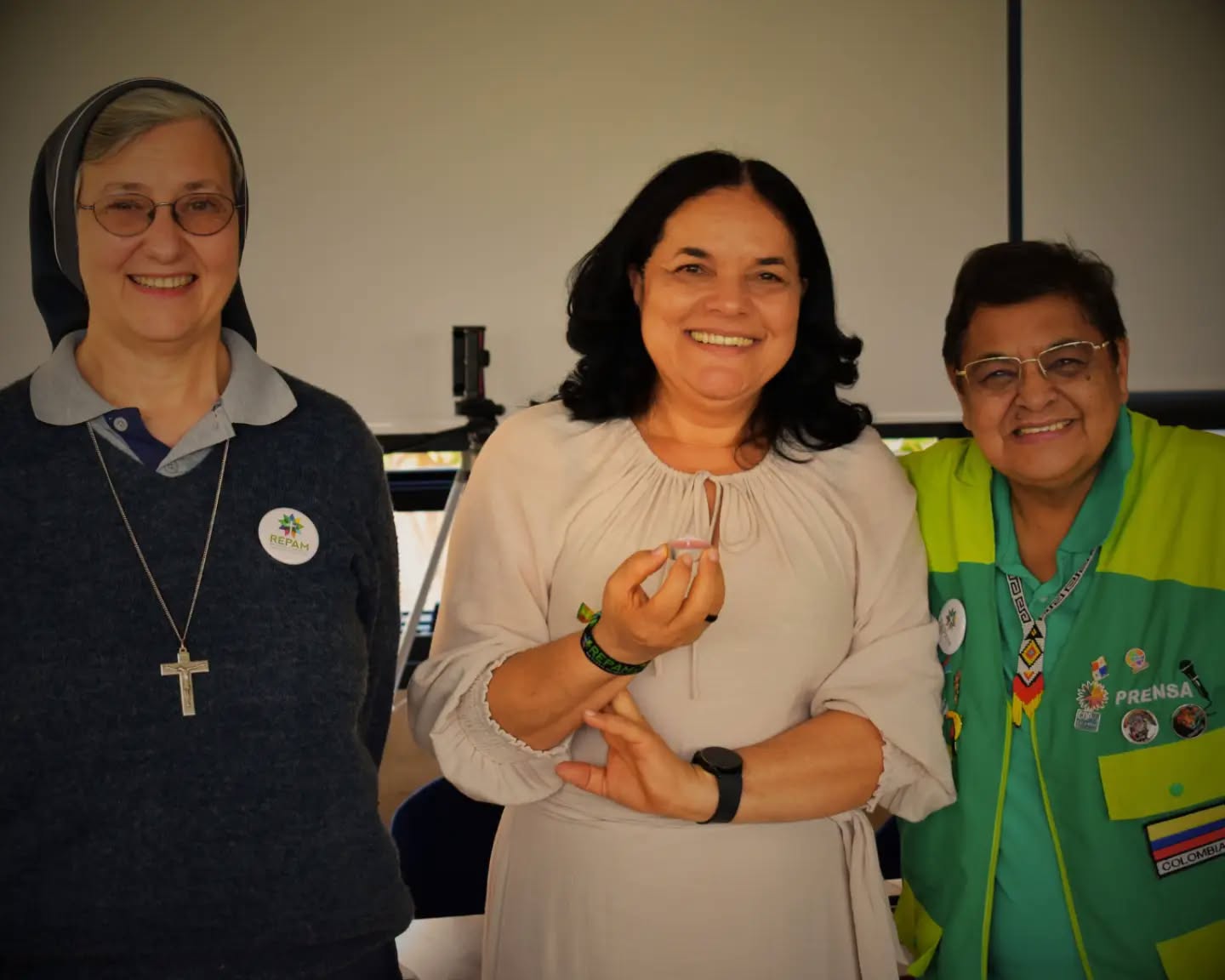
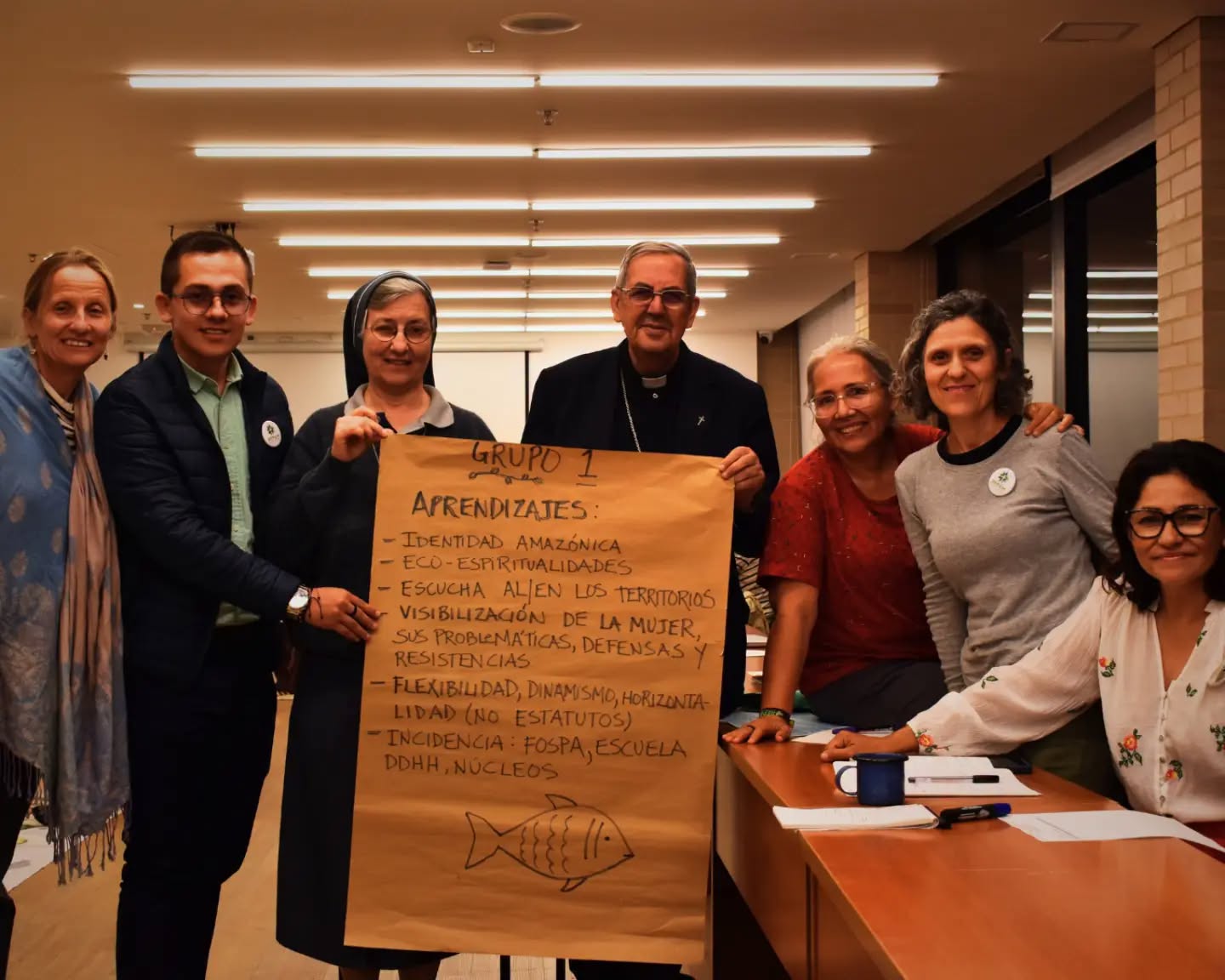
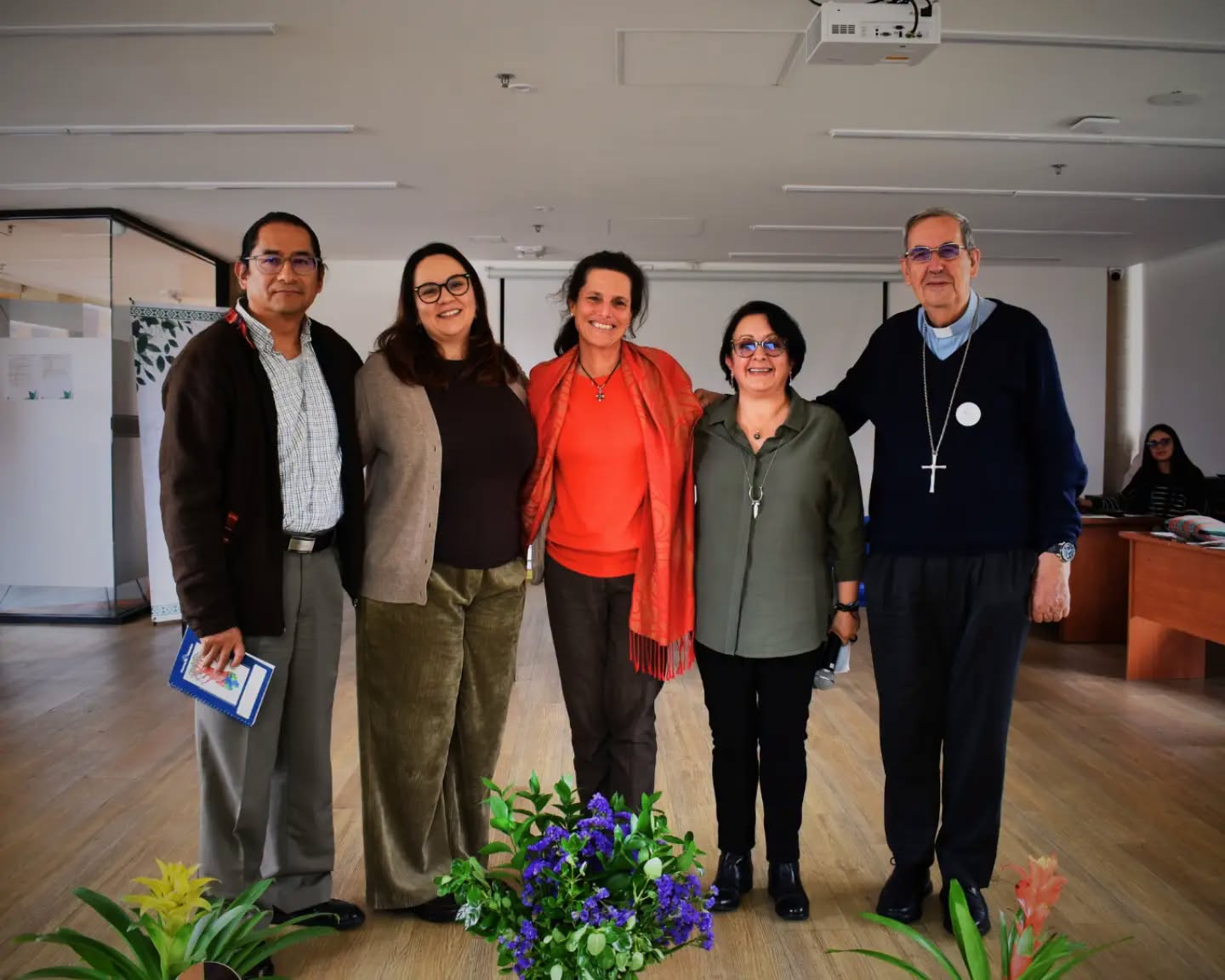
From November 2 to 4, 2026, the Pan-Amazonian Ecclesial Network (REPAM) held its Expanded Committee meeting at the headquarters of the Latin American Episcopal Council (CELAM) in Bogotá, Colombia. The meeting brought together representatives from national REPAM chapters, thematic groups, the Presidency, the Executive Secretariat, Amazonian peoples, and strategic allies, with the aim of discerning common goals and developing coordinated strategies to address the challenges facing Amazonian peoples and territories.
Cardinal Leonardo Steiner, president of the Ecclesial Conference of the Amazon (CEAMA), participated in the meeting alongside Marcelo Lemos, the institution’s executive secretary, reaffirming the bonds of communion, collaboration, and shared responsibility between the two ecclesial bodies, both committed to the well-being of the peoples and the care of our Common Home.
The Expanded Committee meeting took place within the context of a new work cycle for REPAM, which began in January 2026, and was guided by the following question: What can REPAM, as a Pan-Amazonian network, achieve that its members and allies could not achieve acting individually?
Nurturing, Weaving, and Transforming: Three Paths to Strengthen the Mission
The meeting’s methodology was structured around three phases: Nurturing, Weaving, and Transforming, understood as a path to strengthen Pan-Amazonian identity, build shared horizons, and agree on strategies for joint action.
The first day, titled “Nurturing the Network,” provided an opportunity to reflect on REPAM’s twelve-year journey, acknowledge the processes developed in the territories, share lessons learned, and renew the commitments of those who are part of this platform for ecclesial coordination.
During this session, participants reflected on the most significant events in the Network’s history, the changes needed to strengthen its service, and the commitments that will enable them to continue walking together, drawing on the diversity of the peoples, Churches, and organizations that make up the Pan-Amazon region.
The second day, “Weaving REPAM,” focused on analyzing territorial, geopolitical, and ecclesial contexts, as well as on strengthening alliances and international cooperation. Experiences and reflections were shared with representatives from partner organizations and institutions, including CEAMA, CELAM, CLAR, Caritas Latin America and the Caribbean, PUAM, and the Dicastery for Promoting Integral Human Development, as well as international cooperation agencies.
One of the central themes was the analysis of the threats facing the Amazon, including deforestation, the spread of illegal mining, extractive activities, the presence of criminal networks and armed groups, and geopolitical disputes over the region’s strategic resources.
In light of this reality, participants emphasized the need to strengthen the defense of human and environmental rights, support territorial defenders, expand alliances, and promote more coordinated international advocacy to give greater visibility to the voices of Amazonian peoples.
The discussion also highlighted the importance of fostering joint responses to strategic issues such as water, youth, and communication, recognizing that defending the Amazon requires coordinated efforts and a committed presence alongside communities.
Transform: Building Joint Responses for the Territories
The third day was dedicated to “Transform,” a time for collective action to translate these reflections into priorities, strategies, and concrete commitments for REPAM’s new cycle.
Through group work and plenary sessions, participants identified challenges and opportunities to strengthen coordination among countries, connect territorial processes, enhance advocacy capacities, and promote Pan-Amazonian actions with greater impact.
Among the priorities identified were water, youth, and communication as areas for external action, along with organizational strengthening, internal coordination, and the Network’s advocacy capacity.
In outlining the purpose of the meeting, Ximena Lombana, REPAM’s executive secretary, emphasized the importance of strengthening the Pan-Amazonian identity, spirituality, and the Network’s mission by building a shared perspective on the challenges that require collective responses.
For his part, Monsignor Rafael Cob, president of REPAM, acknowledged the progress made over the past twelve years and thanked those whose commitment has made coordination among the nine countries of the Pan-Amazon region possible.
A Church Working as a Network in Service to the Amazon
CEAMA’s participation in this Expanded Committee reaffirms the importance of continuing to strengthen spaces for communion, coordination, and collaboration among the ecclesial institutions that support the life and mission of the Church in the Amazon.
In a context marked by profound transformations and socio-environmental threats, REPAM and CEAMA share a commitment to promoting a Church with an Amazonian face—one that is close to the people, committed to defending their rights, protecting biodiversity, and building paths toward justice, peace, and Good Living.
The meeting concluded by reaffirming that the strength of the Pan-Amazonian mission lies in the ability to walk together, recognize the diversity of the territories, forge alliances, and transform challenges into concrete actions in the service of life.