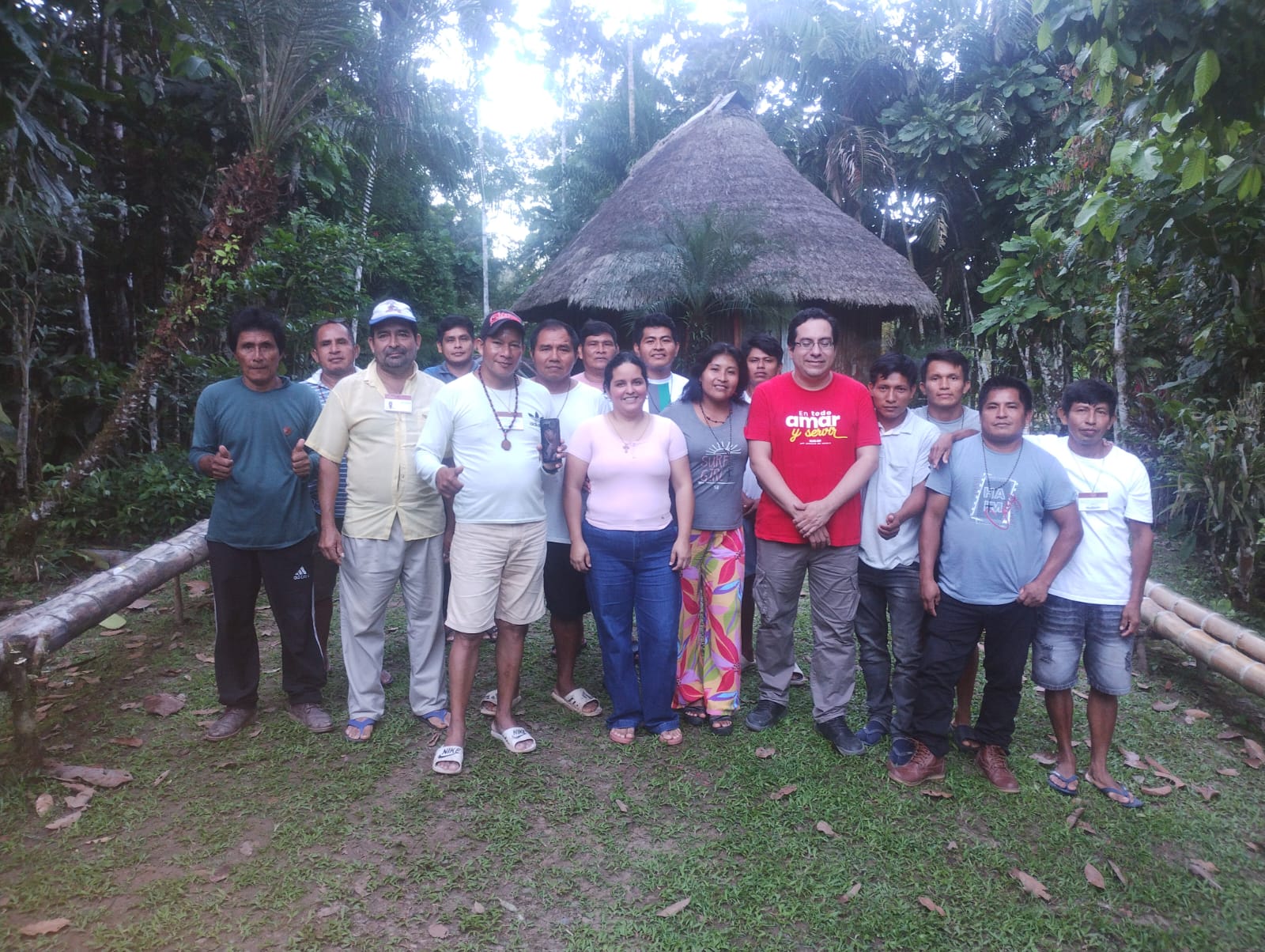
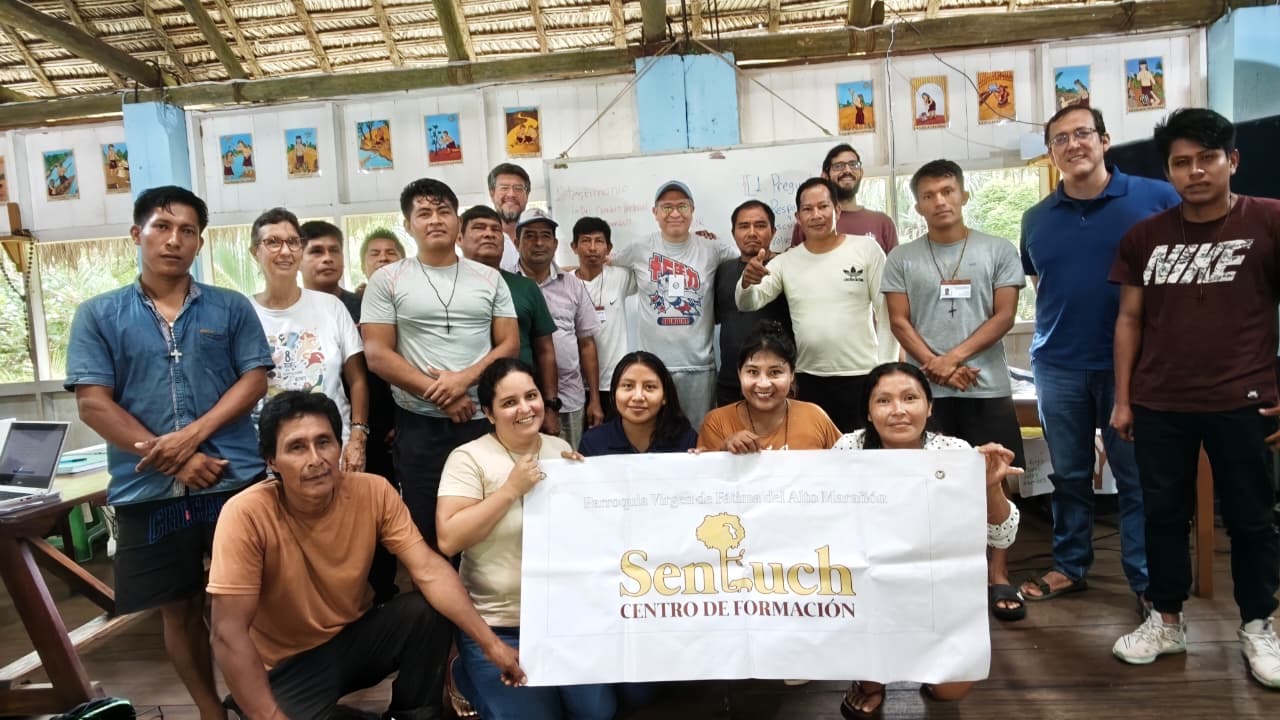
Strengthening a Church with an Amazonian face requires training leaders who, from within their own communities, proclaim the Gospel and accompany the lives of the people. To this end, the Virgen de Fátima Parish of Alto Marañón, through its Sentuch Formation Center, conducted the second cycle of its catechist training program for pastoral workers in the jungle—an initiative that brought together various ecclesial and educational institutions committed to the mission in the Peruvian Amazon.
The training took place at the Tunaants Spirituality Center in Santa María de Nieva, Condorcanqui Province (Amazonas, Peru), and benefited 20 representatives from communities along the Cenepa, Marañón, Santiago, Nieva, and Chiriaco rivers, who are preparing to serve as catechists—known locally as etsejin or etserin—in their home communities.
A Partnership in Service to the Amazonian Peoples
The training program was made possible through a collaborative effort between the Sentuch Formation Center, Antonio Ruiz de Montoya University, Radio Marañón, the Ignatian Spirituality Center, Fe y Alegría School No. 62 “San José” in Wachapea, and the Colegio de la Inmaculada in Lima.
This collaboration aligns with the third line of action of the Society of Jesus’ apostolic priority “Option for Indigenous Peoples” in Peru, which promotes institutional partnerships aimed at capacity-building, community leadership, and the “good life” of indigenous peoples.
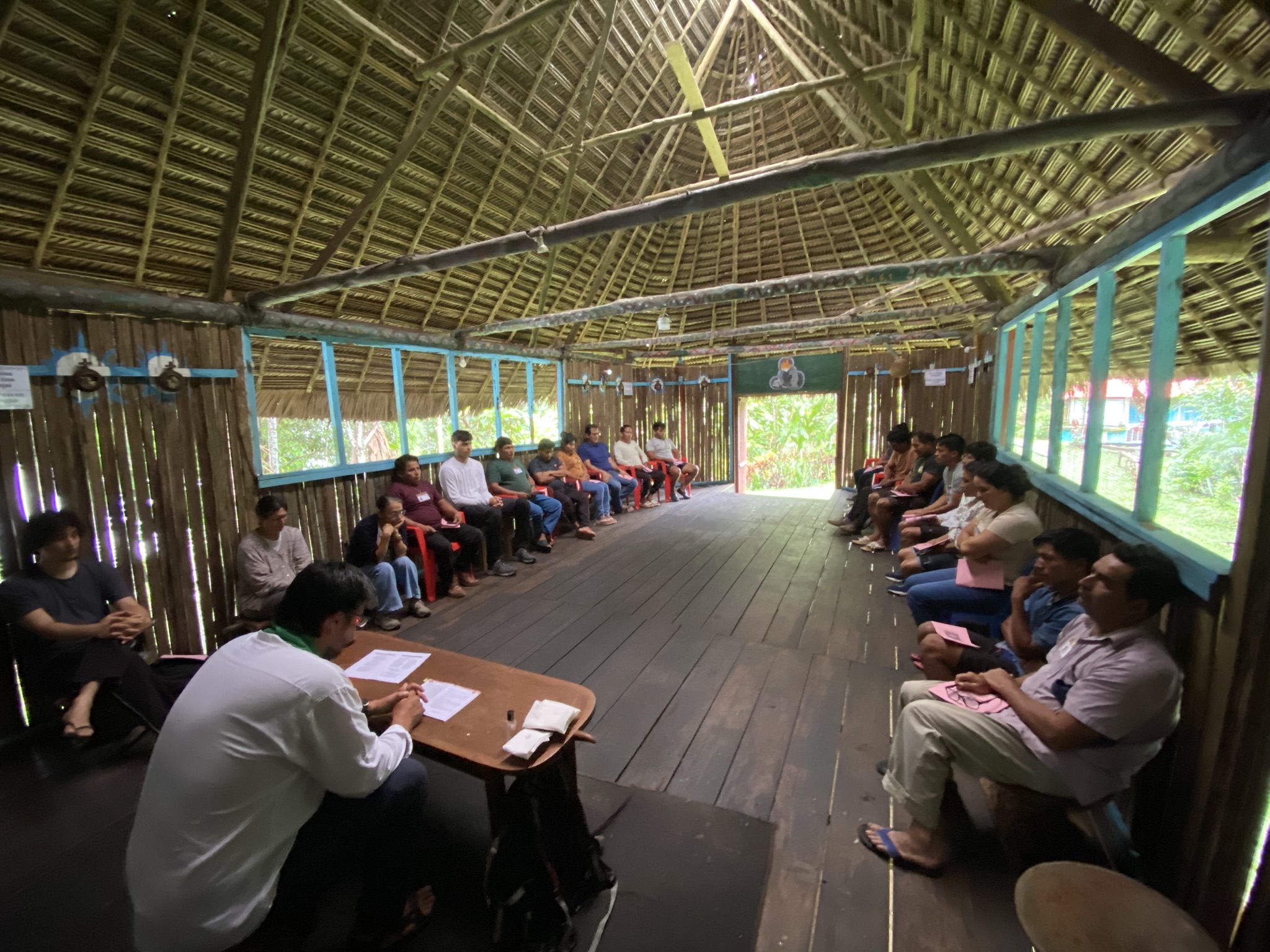
During the second cycle, teachers and pastoral workers voluntarily shared their expertise in various areas of formation. Among them were Professor Óscar Marín of Antonio Ruiz de Montoya University, who taught the course on Culture; Fr. Pablo Hernández, SJ, director of Radio Marañón, who led the course on Liturgy; Fr. José Luis Gordillo, SJ, of the Center for Ignatian Spirituality, who taught the course on the Person; and Sr. Isabel Ramírez, MP, who has extensive experience in formation at diocesan seminaries.
In addition, Brother Daniel Chaw, SJ, the parish’s apostolic administrator, facilitated the course on “Amazonian Social Reality,” while Fr. Juan Carlos Gutiérrez, SJ, the community’s parish priest, led the workshops on Didactics and Homiletics.
Holistic Formation for the Service of Communities
The intensive program lasted ten days and combined theoretical and practical content, allowing participants to delve deeper into topics such as Liturgy, Mariology, Social Reality of the Amazon, human formation, and pedagogical tools for pastoral ministry.
In addition to the academic sessions, the gathering provided opportunities for fraternal fellowship, prayer, celebrations of the Word, and community service, fostering a holistic learning experience in which each participant took on shared responsibilities and strengthened their commitment to ecclesial service.
Currently, the students are in their second year of a three-year formation program, created in response to a need expressed by the communities themselves during the Jungle Assembly: to have well-prepared catechists who can strengthen the life of faith and pastoral leadership in their territories.
Education and Technology in the Service of the Mission
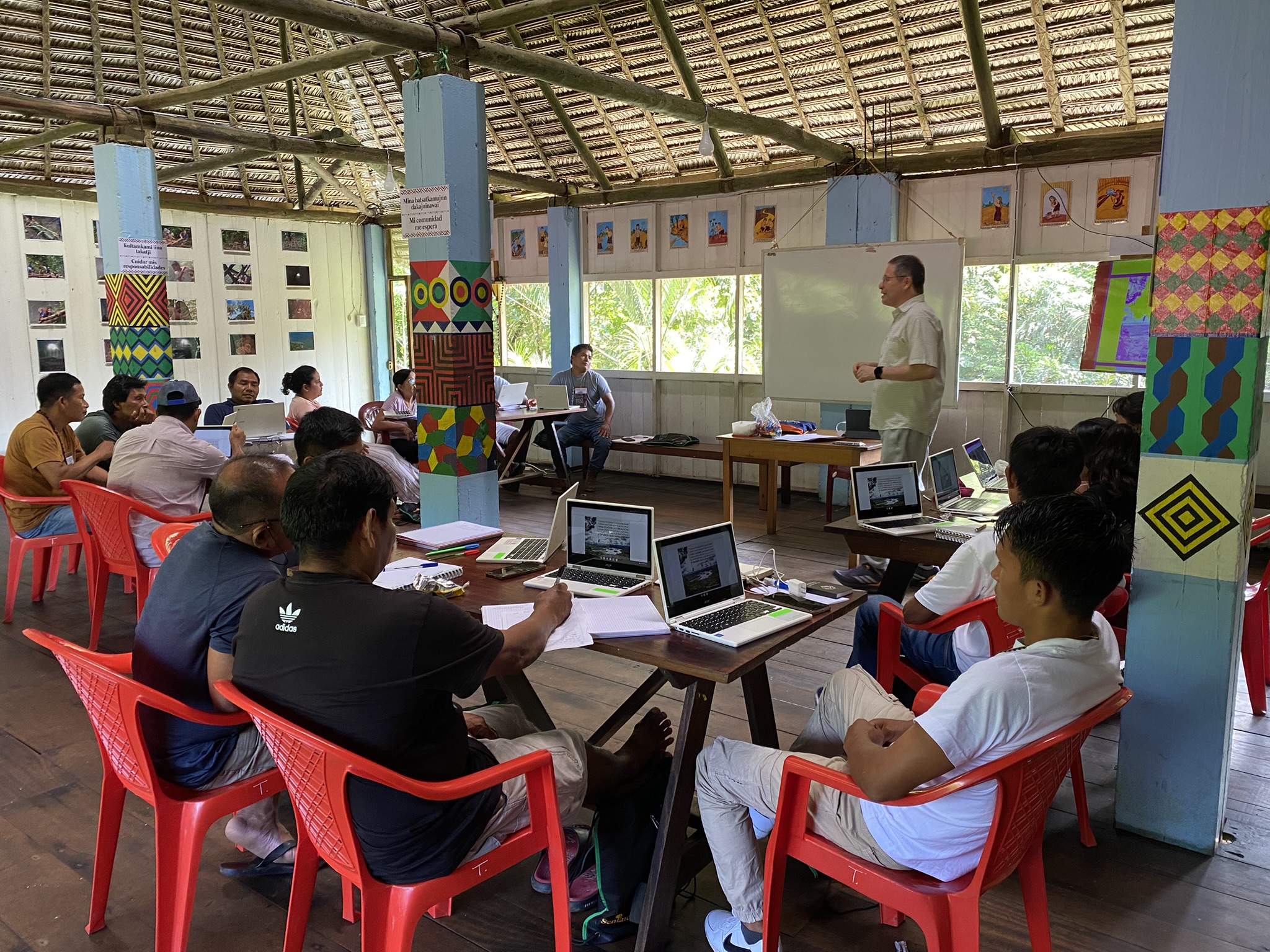
One of the significant contributions to this process has been the support from the Colegio de la Inmaculada in Lima, which, since late 2025, has donated Chromebooks—tools that enable the formation process to be carried out through the Classroom educational platform, facilitating the monitoring of activities, assessments, and content.
This incorporation of technological resources seeks to expand formation opportunities for Amazonian pastoral workers, while respecting the cultural and territorial realities of the communities.
A Church That Forms Leaders from Within the Territories
The formation of catechists is a fundamental pillar for strengthening Amazonian ecclesial communities. By training men and women who live in their own territories, the Church promotes leadership rooted in local culture, close to the communities, and committed to proclaiming the Gospel.
This experience also highlights the value of networking among parishes, educational institutions, centers of spirituality, and ecclesial organizations, demonstrating that collaboration and shared responsibility are essential for continuing to form leaders who accompany the lives, faith, and hope of the peoples of the Amazon.