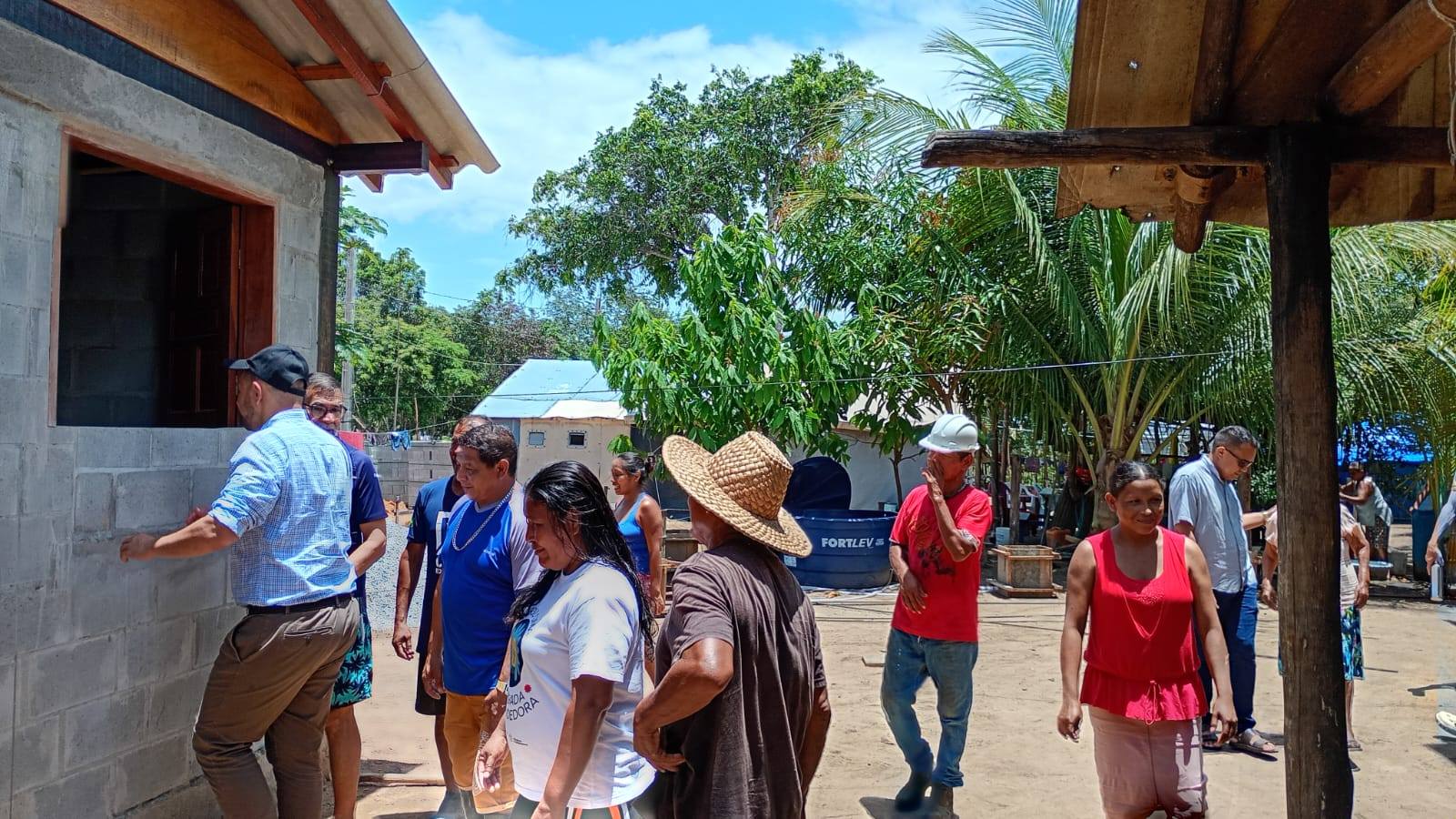
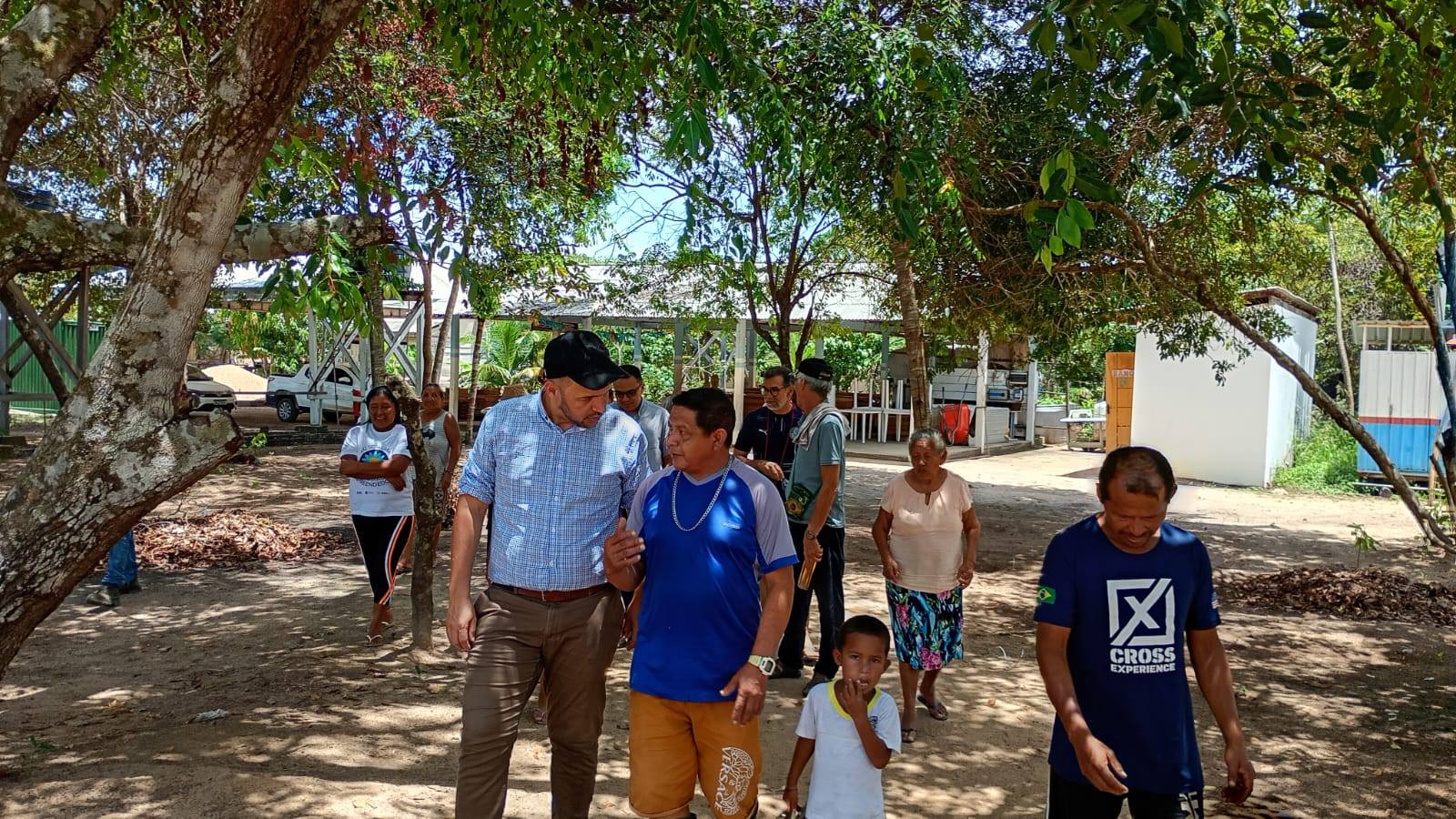
As part of its pastoral mission and commitment to the Amazonian peoples, the Ecclesial Conference of the Amazon (CEAMA), represented by its Executive Secretary, Marcelo Lemos, visited the Warao indigenous migrant community in Janoko, located in the municipality of Cantá, in the state of Roraima, Brazil, on April 10, 2026.
A Church that walks with the peoples
The Church’s presence in this community is the result of a collaborative effort between the Catholic Church and civil society organizations, which have supported indigenous migrant and refugee populations, especially the Warao people, from Venezuela.
The Warao community in Janoko has established itself as a space for welcome, organization, and the rebuilding of life, where cultural identity, spirituality, and community networks remain fundamental pillars.
A gesture uniting the Amazon with the universal Church
During the visit, a significant gesture was recalled that expresses the voice and dignity of the Warao people: six months ago, CEAMA facilitated the presentation of letters and a chinchorro (hammock) made of buriti fiber, woven by a Warao artisan, to Pope Leo XIV.
This symbol, deeply rooted in Amazonian culture, represents rest, encounter, and community, and was presented as a sign of hope and communion between the Amazonian peoples and the universal Church.
Listening to Respond: Community Demands
In a space of fraternal dialogue, community leaders—including Chief Biasy Pinto—along with representatives of family groups, shared their main concerns and needs.
Among the requests presented, the following stand out:
- Food security, as a basic condition for a dignified life.
- Community sustainability, especially the reinstallation of solar cookers that promote energy autonomy.
- Indigenous-led education, aimed at strengthening languages, cultural identity, and educational processes from their worldview.
These requests reflect not only urgent needs but also the longing for integral development that respects the dignity, culture, and rights of indigenous peoples.
A mission that becomes a presence
This visit reaffirms CEAMA’s commitment to a Church with an Amazonian, synodal, and missionary face—one that listens, accompanies, and acts alongside the most vulnerable peoples of the region.
In contexts marked by migration, poverty, and exclusion, the Church continues to be a sign of hope, promoting processes of coordination, the defense of rights, and the care of life.
The presence in Janoko is a concrete expression of a Church that walks with the peoples, recognizing in them bearers of life, wisdom, and hope for the Amazon and the world.