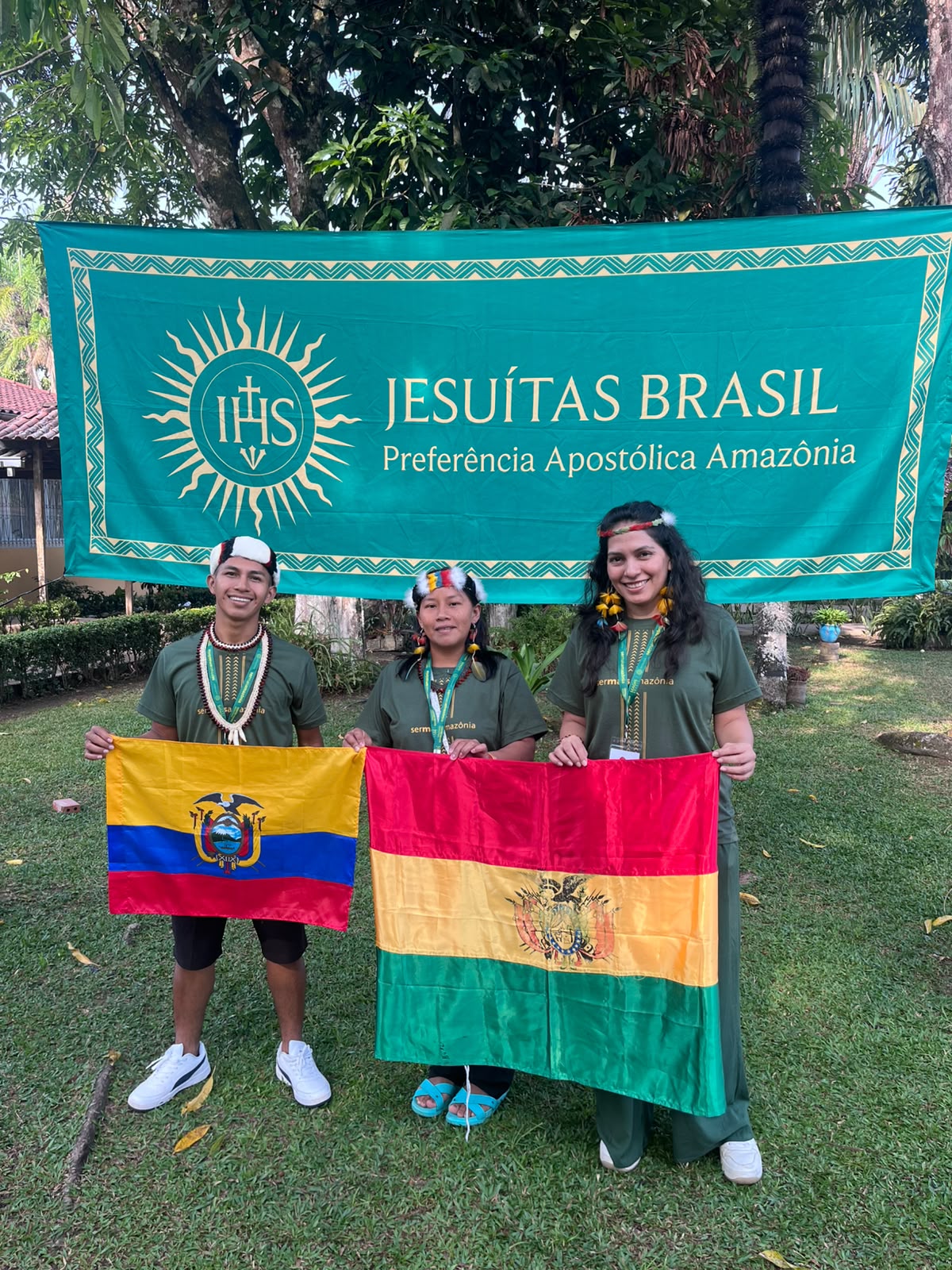
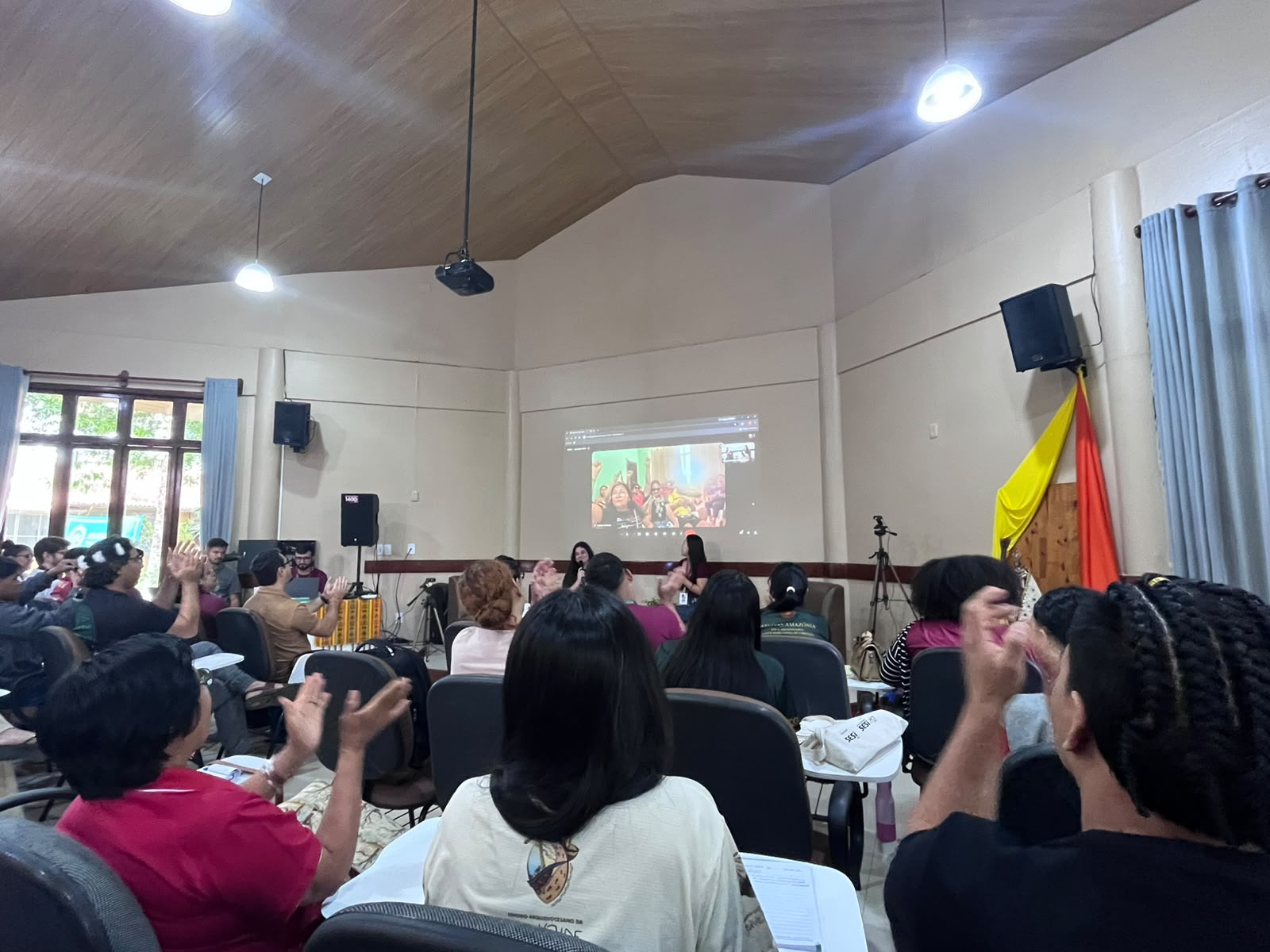
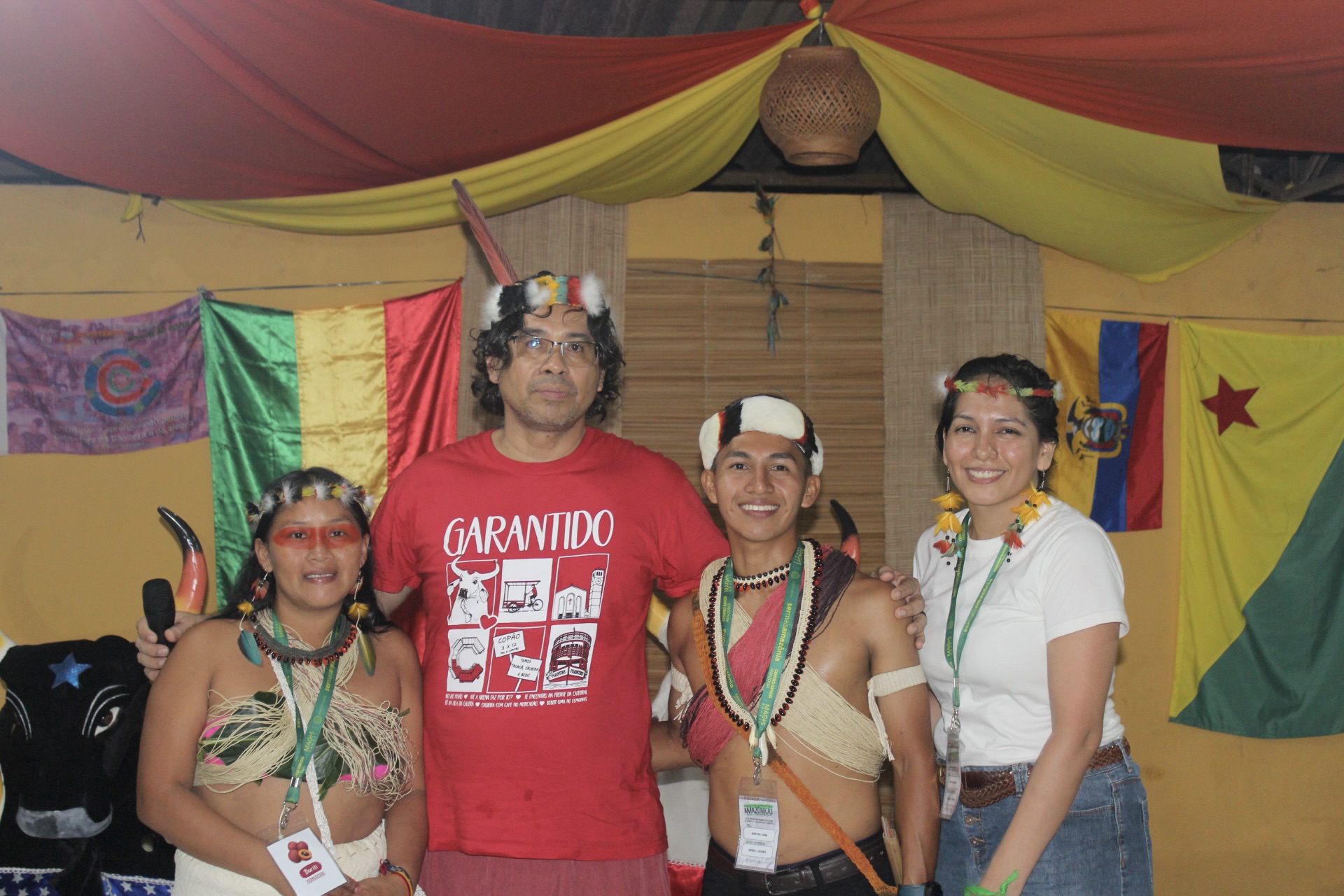
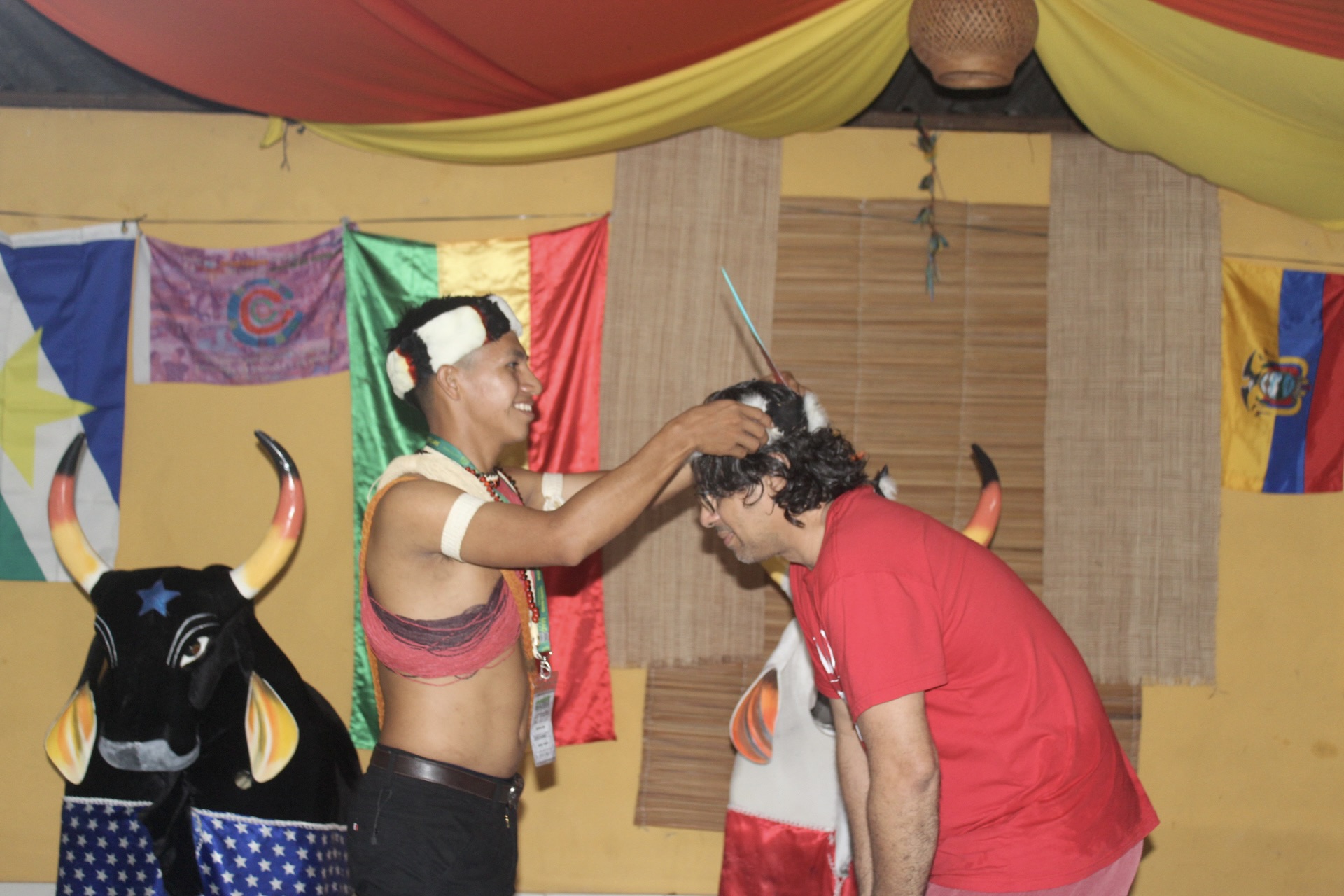
Under the theme “Connecting: Building Bridges”, the Amazonian Youth Forum was held in Manaus, Brazil—a space for gathering, listening, and collective action that brought together young people from different Amazonian territories from September 25 to 27.
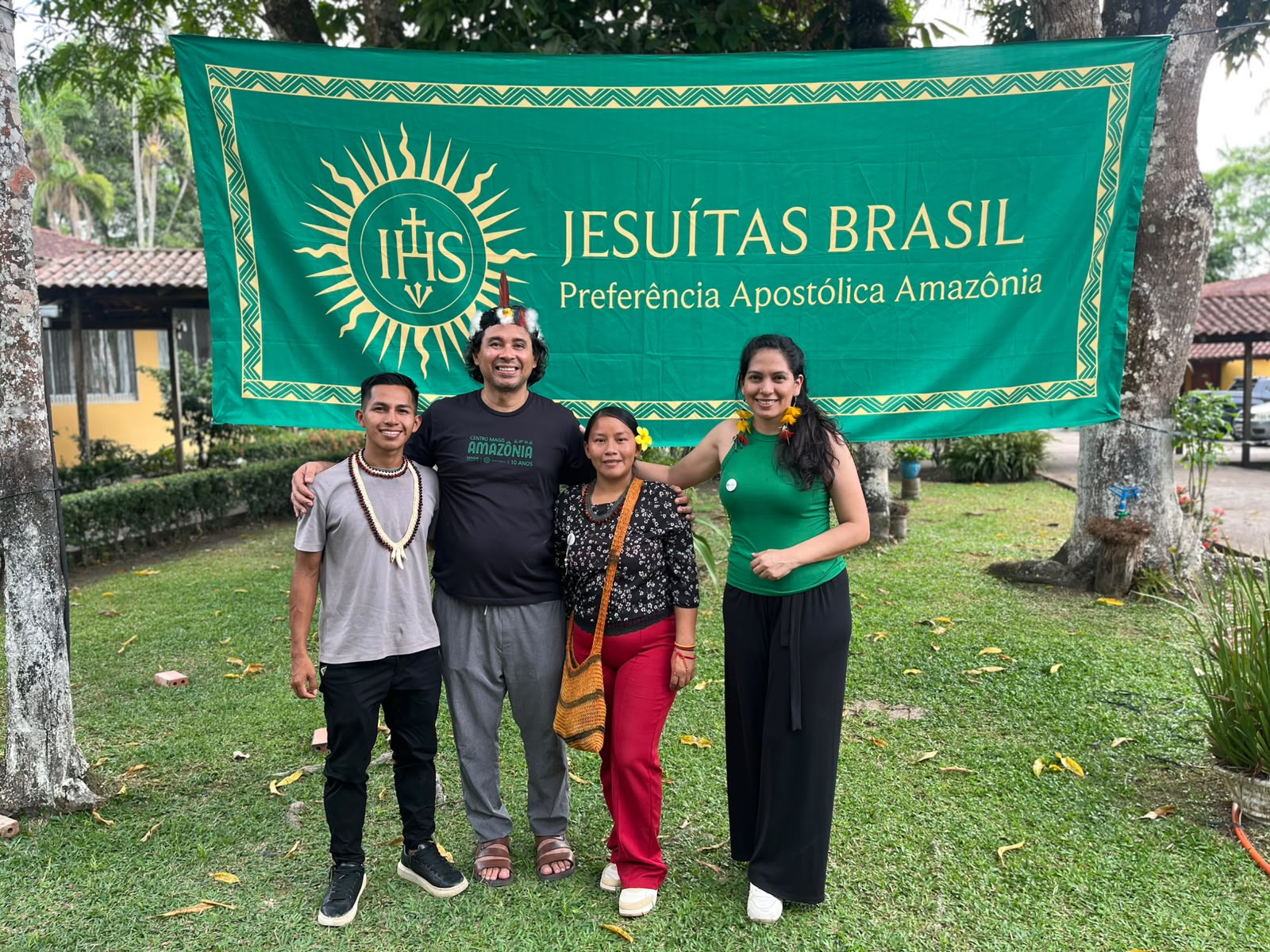
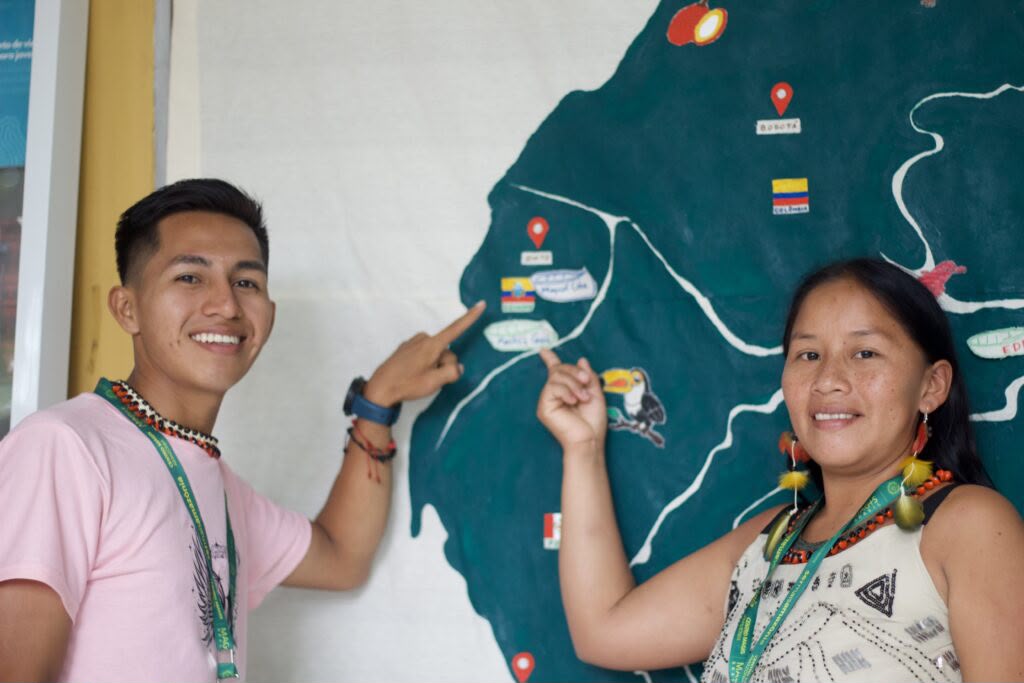
Representing the Ecclesial Conference of the Amazon (CEAMA), through the Amazonian Network for Intercultural Bilingual Education (REIBA), Maycol Coba and Maritza Caigua—members of the Waorani people of Ecuador—participated. Also accompanying the process was Ana Gabriela Jiménez, REIBA’s coordinator of Intercultural Bilingual Education (EIB) and Communications.
The meeting, organized by MAGIS Amazônia, proposed a path of listening and dialogue in which Amazonian youth were recognized as protagonists of their own processes and as key actors in building new forms of participation and coordination in the region.
Listening to the Voices of Amazonian Youth
The first day began with an opening ceremony centered on the diversity of the Amazon and care for our Common Home. The elements of earth, water, fire, and air were present during this moment, symbolizing life, the territories, and the relationship of Amazonian peoples with creation.
Afterward, participants shared reflections expressing the hopes, struggles, and challenges facing their communities. This exercise helped participants recognize that, although the realities of the territories are diverse, there are common concerns and dreams shared by the younger generations of the Amazon.
The program included moments of prayer, group work, plenary sessions, opportunities for fellowship, cultural exchange, and a gallery of proposals. The methodology sought to encourage active participation by the youth and create conditions for their experiences and perspectives to be heard.
From Reality to Proposals
During the working groups, the young people deepened the dialogue based on five guiding questions:
- What is our reality? – Identifying the main challenges, obstacles, and issues facing the territories.
- Why do we believe we are living this reality? – Recognizing its possible causes.
- What can we do to try to change this reality? – Identifying hopes and possibilities for transformation.
- How and with whom can we work to change it? – Recognizing individuals, organizations, communities, and institutions with whom we can coordinate efforts.
- What are our lines of action? – Translating these reflections into concrete proposals for the path forward for Amazonian youth.
This process allowed us to move from identifying problems to a collective search for alternatives, reinforcing the perspective that young people are not merely recipients of pastoral, educational, or social initiatives, but active agents capable of proposing ideas, organizing themselves, and transforming their territories.
Maycol and Maritza: Education, Identity, and Participation
The participation of Maycol Coba and Maritza Caigua holds special significance within the work of REIBA and CEAMA. Both young people are part of the group of university students participating in the Spanish as a Second Language training module, promoted by REIBA.
Through this educational process, their participation in the Forum allowed them to connect their academic training with the concrete experiences of the Amazonian peoples, fostering a dialogue between education, cultural identity, youth, and territory.
Their presence as young Waorani from Ecuador also brought the voice and experiences of an Amazonian indigenous people to the gathering, contributing to the exchange among the different realities and cultures present in the region.
For REIBA, these spaces represent an opportunity to continue strengthening educational processes that recognize the knowledge, languages, cultures, and experiences of Amazonian peoples, especially those of the younger generations.
Building Bridges Between Territories and Generations
The Forum also highlighted the importance of strengthening networks among Amazonian youth. In a region where rivers connect communities and territories, the gathering proposed “building bridges” among young people, organizations, communities, and those who support their efforts.
The participation of representatives from different countries and territories allowed for the sharing of experiences and the recognition of common challenges related to education, cultural identity, youth participation, care for our Common Home, and the creation of opportunities for new generations.
Also present at the gathering were individuals involved in supporting young people, including Fr. Silas Silva, SJ, coordinator of the Manaus Apostolic Center of the Jesuits of Brazil and director of the Amazonas MAGIS Center; Dom Frei Samuel Ferreira de Lima, OFM, auxiliary bishop of the Archdiocese of Manaus and a key figure in youth ministry; Fr. Rogério Mosimann, SJ, delegate of the Amazon Apostolic Preference of the Jesuits of Brazil; and Fr. Edson Tomé, SJ, secretary for Youth and Vocations of the Jesuits of Brazil.
The meeting continued the process of listening that began with the Amazon Youth Pre-Forum, deepening the dialogue in person among the different youth experiences in the region.
Youth Who Participate and Propose
For CEAMA and REIBA, the participation of Maycol Coba, Maritza Caigua, and Ana Gabriela Jiménez in this forum reaffirms the importance of supporting processes where Amazonian youth can make their voices heard, strengthen their capacities, share their knowledge, and actively participate in building the future of their peoples and territories.
The experience in Manaus presents the challenge of continuing to strengthen spaces for encounter and collaboration among young people from the various countries of the Pan-Amazon region, recognizing cultural diversity as a source of richness and education as a tool for creating new opportunities.
From the Amazon, young people continue to build bridges: between peoples, cultures, territories, generations, and hopes. CEAMA, through REIBA, continues to support these efforts, convinced that listening to and empowering the younger generations also means investing in an Amazon with greater participation, identity, justice, and hope.