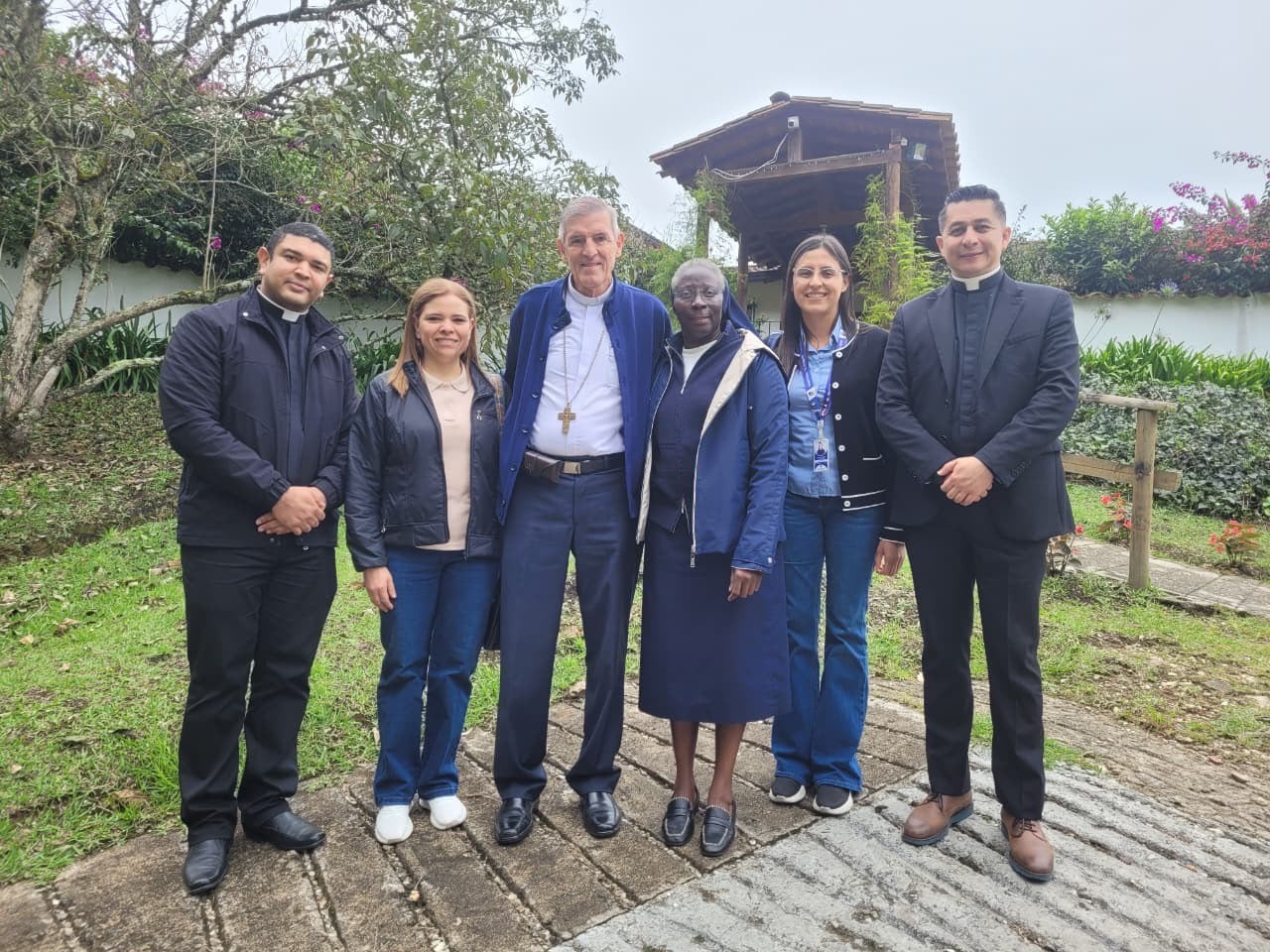
Sister Inês Paulo Albino traveled through Colombia from October 14 to 21, participated in the National Missionary Congress marking the 100th anniversary of DOMUND, and gained firsthand insight into the life, faith, and challenges of the communities in the Apostolic Vicariate of Leticia.
The Church’s mission is strengthened when it listens to the people, accompanies communities, and recognizes children and adolescents as key players in evangelization. This perspective shaped the visit to Colombia by Sr. Inês Paulo Albino, A.S.C., Secretary General of the Pontifical Society for Missionary Childhood and Adolescence (POIAM), who, from October 14 to 21, 2026, traveled through Bogotá, the Diocese of Sonsón-Rionegro, and the Apostolic Vicariate of Leticia.
Her visit was marked by two significant events: her participation in the Diocesan Missionary Congress of Sonsón-Rionegro, held in conjunction with the 100th anniversary of World Mission Sunday (DOMUND), and her meeting with Amazonian communities, where faith, cultural diversity, and social and environmental challenges are part of the Church’s daily life.
The visit helped strengthen the bonds of communion between the Church in Colombia and the Pontifical Mission Societies, as well as renew the commitment to a mission built on closeness, listening, and engagement with the realities of each region.
Sonsón-Rionegro: 100 Years of DOMUND and a Church Committed to Mission
One of the highlights of the visit took place in the Diocese of Sonsón-Rionegro, where Sister Inês participated in the opening of the Missionary Congress, held October 16–18, as part of the commemoration of DOMUND’s 100th anniversary.
The gathering became a space for celebration, formation, and missionary outreach, bringing together communities and pastoral workers around the commitment to proclaim the Gospel and strengthen the Church’s missionary awareness.
On Saturday, October 17, the General Secretary of POIAM spent time with more than 200 children and adolescents from various dioceses in Antioquia, who participated accompanied by their advisors and family members. The gathering was marked by joy, prayer, and reflection on the call to follow Jesus and actively participate in the Church’s mission.
Sister Inês’s presence helped bring the participants closer to the universal dimension of Missionary Childhood and Adolescence, reminding them that mission does not depend on age, but on the willingness to share the faith, pray for those most in need, and live in solidarity with other peoples and communities.
In this context, the commemoration of the 100th anniversary of DOMUND offers an opportunity to renew the entire Church’s commitment to evangelization and missionary cooperation. It also invites us to recognize the capacity of children and adolescents to contribute, from their own reality, to a Church that walks united and is open to encountering the world.
The Amazon: Listening to the Peoples and Recognizing the Challenges of the Mission
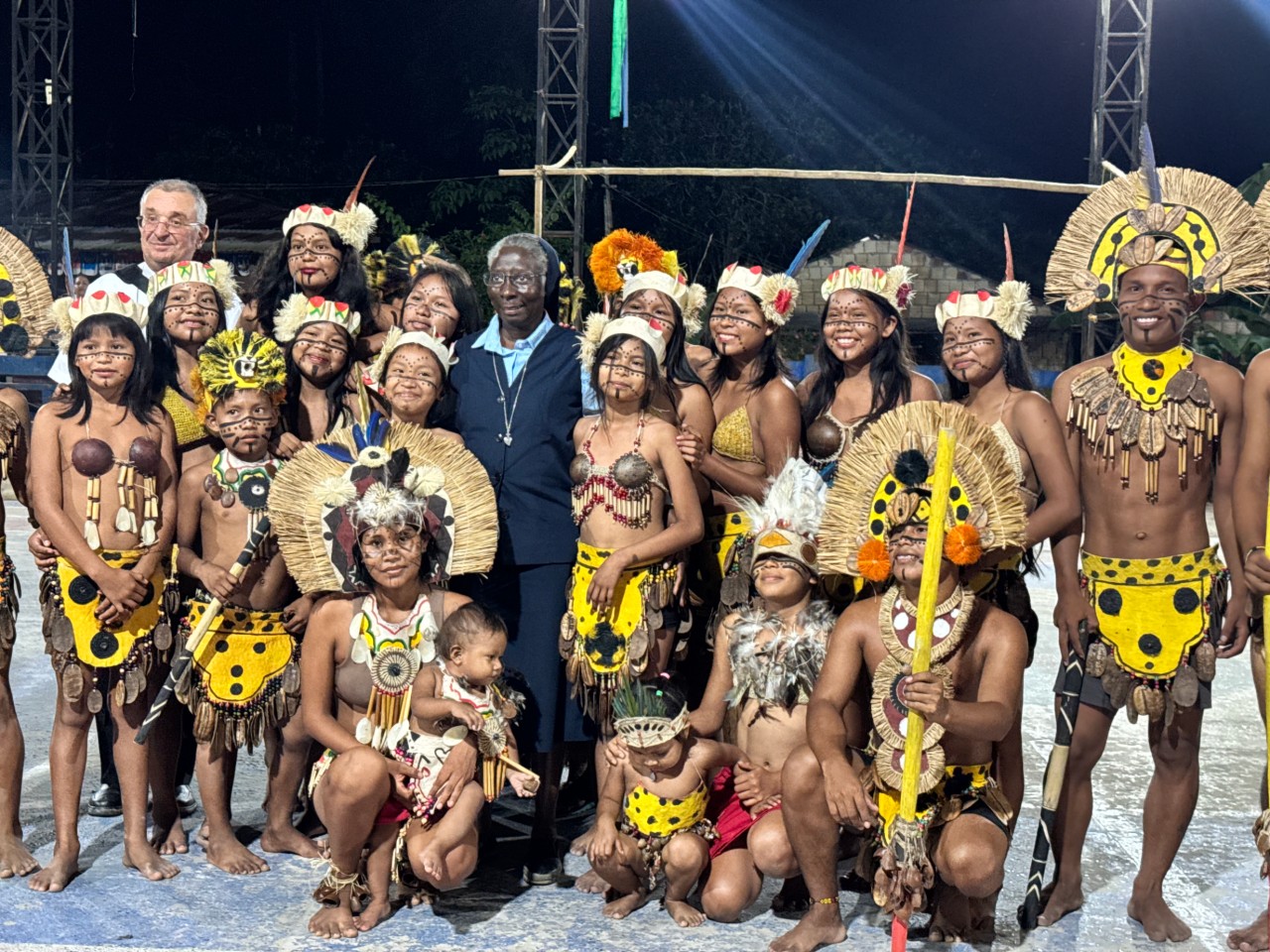
On October 19, Sister Inês Paulo Albino arrived at the Apostolic Vicariate of Leticia, where she was welcomed by the bishop, priests, men and women religious, laypeople, and—in a special way—by children and adolescents associated with POIAM.
During her stay in the region, she visited various communities, including some indigenous communities settled along the banks of the Amazon River. These encounters allowed her to gain insight into the realities of the inhabitants’ lives, learn about their expressions of faith, and recognize the natural, cultural, and spiritual richness that characterizes this region.
The visit was also an opportunity to listen to the sufferings, needs, and challenges faced by Amazonian communities. In a region marked by a great diversity of peoples and cultures, the Church’s presence demands a constant attitude of listening, respect, and accompaniment, recognizing the dignity of every person and the value of the peoples’ traditional knowledge and spiritualities.
From this perspective, the experience in Leticia highlighted the importance of a mission that is not limited to proclaiming the Gospel, but rather is present in the daily lives of communities, shares in their hopes, and accompanies their struggles for a life of dignity.
The encounter with Amazonian children and adolescents also made it clear that the universal mission is expressed in different ways depending on the region. Through prayer, solidarity, and the witness of their faith, even the youngest among them contribute to strengthening the bonds between local Churches and to building an ecclesial community that learns from diversity.
A Mission Built on Listening and Communion
The visit of the POIAM Secretary General to Colombia reaffirms the importance of strengthening formation and missionary outreach based on local realities. Both in Sonsón-Rionegro and in Leticia, encounters with children, adolescents, and communities highlighted that the mission is nourished by participation, fraternity, and shared commitment.
For the Church in the Amazon, this experience invites us to continue promoting pastoral action that recognizes peoples as protagonists of their own journey and that especially accompanies the younger generations in discovering their missionary vocation.
In territories where cultures, languages, and diverse ways of living the faith converge, the mission is called to foster intercultural dialogue, strengthen communion, and contribute to the defense of life in all its dimensions.
The experience of Sister Inês Paulo Albino reminds us that children and adolescents are not merely the recipients of evangelization, but also active participants in the mission, capable of sharing hope and building fraternity within their communities.
At the conclusion of her visit, the Pontifical Mission Societies of Colombia expressed their gratitude for her closeness and support. From the Amazon, this encounter extends an invitation to continue walking together, listening to the peoples, and strengthening a Church that proclaims the Gospel from the diversity of its territories.
A mission that is born of encounter, grows in communion, and is strengthened when it recognizes the little ones and the Amazonian peoples as protagonists of the life and mission of the Church.