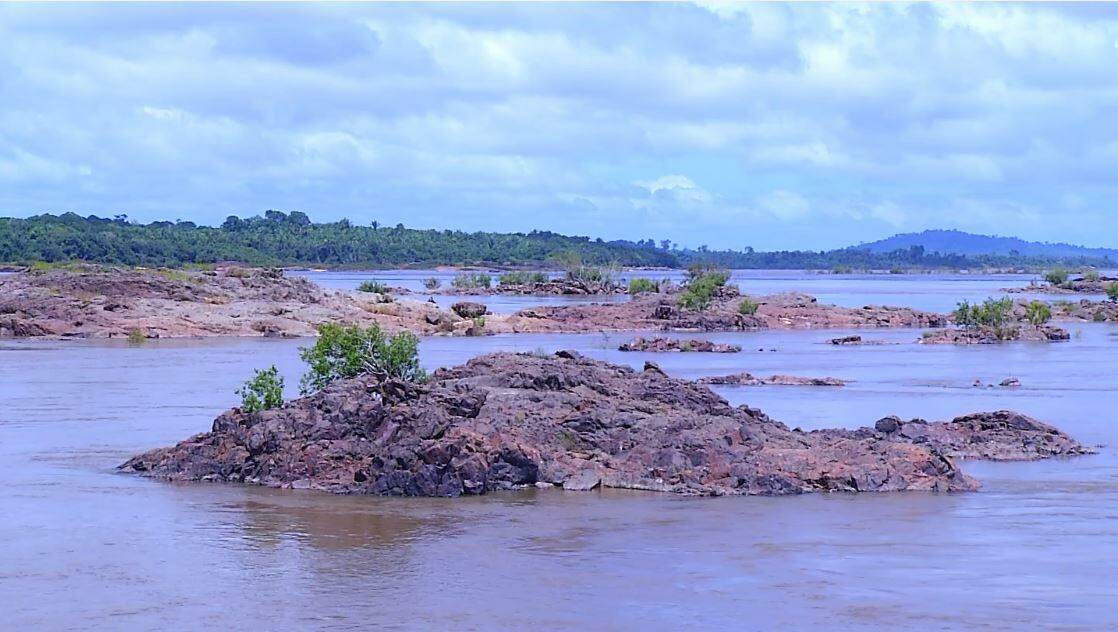
In the heart of the Amazon, where the Xingu River traces its most majestic curve, the “Great Turn” is in agony. What was once the cradle of life for indigenous peoples, river dwellers and fishermen, today resembles a hydric desert punctuated by exposed rocky outcrops. Six months after COP30 in Belém, the spotlights have dimmed, but the “planned ecocide” continues to bleed the riverbed, revealing the abyss between the discourses of preservation and the reality of those living on the margins of the Amazon’s greatest open wound.
Speaking about the Xingu is, for Bishop João Muniz Alves of the Diocese of Xingu, a “singular joy” that is now tinged with mourning. He describes the river as a spectacle of emerald waters that serves as a cradle and natural highway for peoples, and not merely as a tributary, but as a living organism. However, ten years after Belo Monte, this highway is blocked. “This river serves as a cradle for so many fish species and as the natural highway for several peoples. With its emerald-colored water, it is a spectacle of beauty,” affirms the bishop.
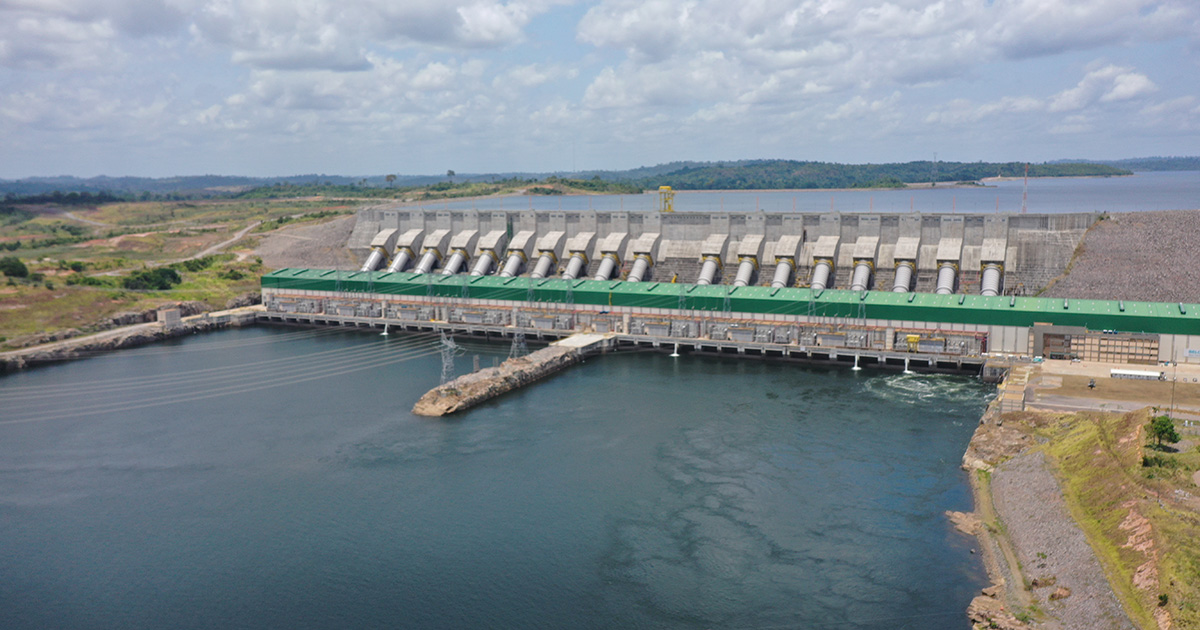
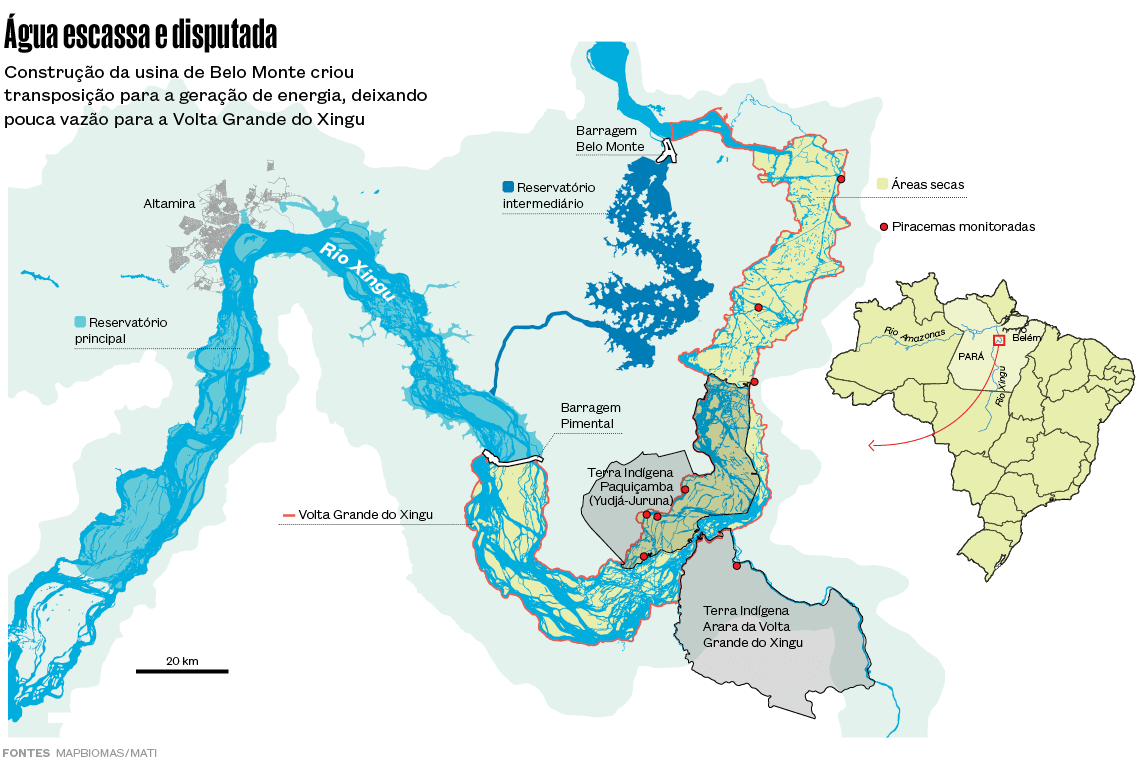
Ten years after the installation of the Belo Monte hydroelectric dam, the diversion of 80% of its waters to the turbines has transformed abundance into scarcity. Bishop João recalls the unfulfilled promise. “Belo Monte promised that the Great Turn would not be affected, but we know that it was. Currently, the region is drying up. That beautiful place, that cradle, has now become a place that has everything except the life that was tradition in that region.”
The urgency of this scenario is confirmed by the Independent Territorial Monitoring of the Great Turn of the Xingu (MTI-VGX), the alliance between scientists and communities that documents a biological nightmare: fish with bone deformities and entire breeding seasons extinct. For Bishop João, the diagnosis is clear and painful. “The postcard for the State of Pará is dying from lack of a life-protection policy. This is what we call ecocide,” denounces the bishop.
But the impact extends beyond biology; it strikes at the soul and freedom of communities. José Cleanton Ribeiro, of the Collegiate Coordination of the Missionary Indigenist Council (CIMI) of Regional North 2, warns that the socio-environmental and cultural damages have not ceased—they have become a form of control. “The autonomy of the peoples has been drastically affected. Communities live in profound dependence on subsidiaries of Norte Energia, which implement merely assistentialist actions,” reveals Cleanton.
For peoples such as the Arara (Arara of the Great Turn), the Juruna (Paquiçamba) and the Xikrin (Trincheira Bacajá), the drying of the river is the death of their very identity. “They identify themselves as children of the water. The River is their mother. With the drought, they lose this mystical relationship,” notes the CIMI coordinator. The Bacajá River, a vital tributary, today agonizes with less than 10% of its original flow, making transit and fishing—the basis of survival for these peoples—impossible.
This “culture of death” is felt in the skin by the artisanal fisherman, whose identity is tied to the rhythm of floods and ebbs. Sueli Martins Miranda, coordinator of the Pastoral Council of Fishermen (CPP) Regional North 2, defines the current scenario as a brutal aggression. “When the river becomes a rocky outcrop, it is not just the water that changes direction; life changes too. All that remains for the fisherman is uncertainty, the silence of moored canoes, empty nets and the struggle to continue existing,” she pours out.
For Sueli, what happens in the Great Turn and in the Lourenção Rocky Outcrop is direct violence against the survival of communities. “Keeping one’s head held high in the face of scarcity is to recognize traditional dignity and wisdom. The CPP works so that hope ceases to be discourse and transforms into a path of survival, strengthening the emotional and spiritual health of people in the face of losses,” explains the coordinator.
If Belo Monte left a trail of inefficiency and tutored dependence, the threat of the Canadian mining company Belo Sun emerges as an even more complex challenge. Cleanton denounces that the mining company has repeated Norte Energia’s strategy—the capture and co-optation of indigenous leaders to force community support for the gold extraction project. “This is our great challenge: to act in raising awareness and providing information about the real impacts of this enterprise, supporting the indigenous movement that is already articulating in defense of the region,” he affirms.
This problem takes on even more dramatic contours with the imminence of the mining company. The gold extraction project foresees the use of cyanide just 1.5 km from the Xingu, representing a reiteration of the greed that ignores the bishops’ warning in the “Letter from the Amazon” delivered at COP30: ‘Stop Investing in Death.’ Bishop João reinforces the bishops’ prophecy by calling for an end to “sacrifice zones.” For the Church, the technocratic greed that diverted the river to generate energy now seeks to co-opt voices to poison it with cyanide, denying future generations the right to the sacred territory.
In this scenario of a “culture of death,” the role of the Diocese of Xingu is what keeps the flame of resistance alight. José Cleanton is emphatic in recognizing that the Diocese’s support is what enables the continuation of CIMI’s work in Altamira. “Were it not for the support the Diocese gives us, from actions against Belo Monte until today, perhaps the team would no longer exist in the region. The Diocese has been this strong support, demanding compliance with conditions and accompanying the communities,” he acknowledges.
The environmental crisis has already transformed into a humanitarian emergency. Through CIMI and CPP, the Church accompanies families that today suffer the unthinkable in a region surrounded by rivers. “We call for action from authorities, especially for those people who live there and are in need. Now there is no drinking water, no food, because they drew their sustenance from the river,” laments Bishop João.
Evangelization on the Xingu, therefore, becomes “flesh” in the struggle for territory. It is an act of resistance against what the bishop classifies as a “culture of death sown in the region.” According to him, the mission of the Church is clear: “we pray and are with the people. We want to do our part through denunciations and means that help us create policies in favor of life—the life of rivers, of people and of our region.”
If the Xingu dies, the Church’s prophecy will become a sentence of guilt for humanity. As warned by CIMI and the Diocese, there is still time for ecological conversion, before gold, concrete and dependence permanently silence the cry of the Mother-River.
By Vívian Marler / Communication Advisor CNBB Regional North 2