The Ecclesial Conference of the Amazon (CEAMA) actively participated in the Second Conference on Integral Ecology, held at the Engativá University Center (UNIMINUTO) under the slogan “Caring for our Common Home: collective actions for a sustainable future”.
The event brought together academics, social leaders, church representatives, and environmental advocates in a space for inter-institutional dialogue aimed at strengthening concrete commitments in the face of the growing climate and socio-environmental crisis affecting humanity and particularly the Amazon.
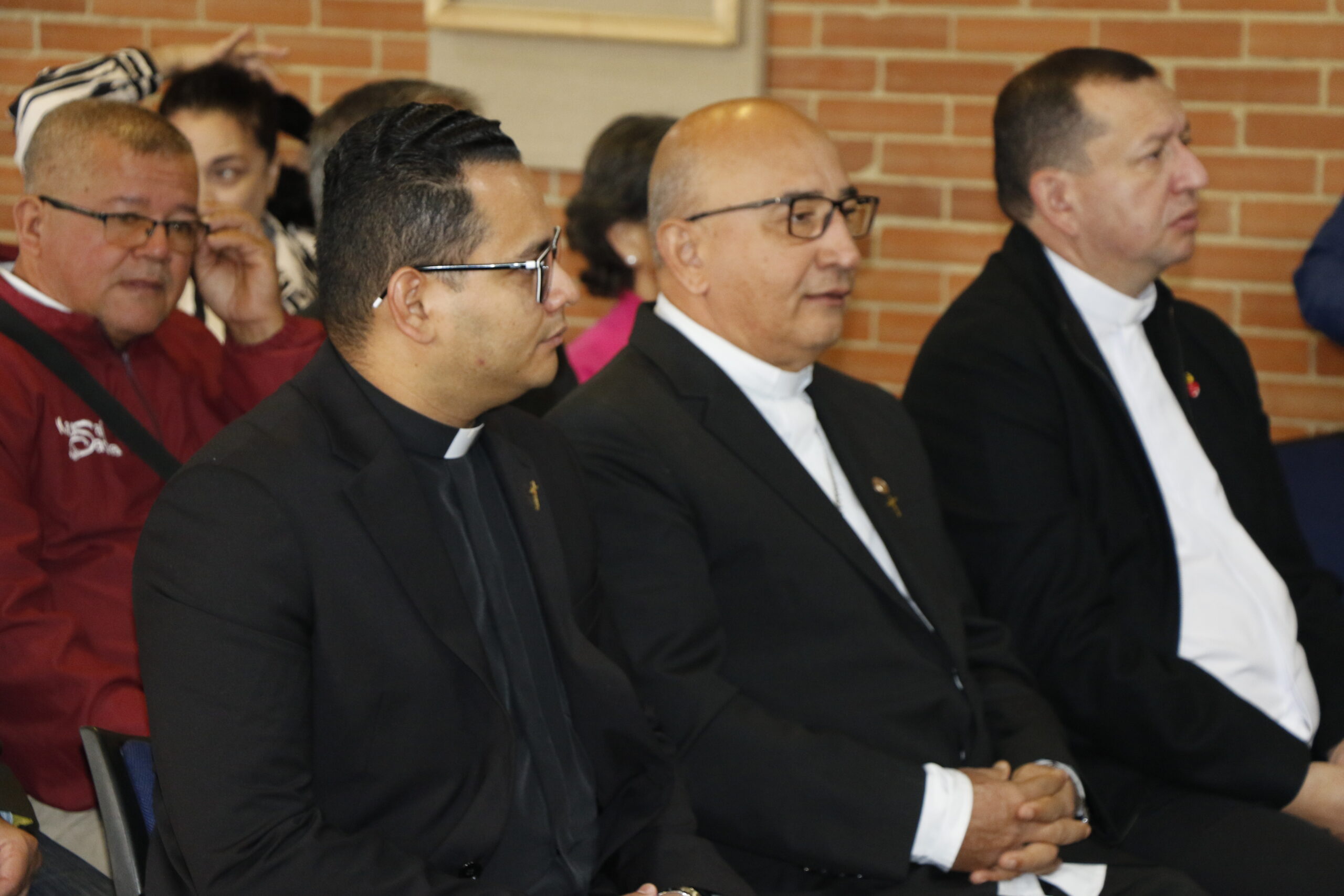
CEAMA was invited to share its reflections and experience in the discussion “A Synodal Path to Avoid the Point of No Return in the Amazon,” a space for discernment that allowed for a deeper exploration of the challenges and hopes emerging from the Amazon region, within the framework of the synodal process that guides the Church’s pastoral action in the region.
A View from the Global South: Climate Justice as Integral Conversion
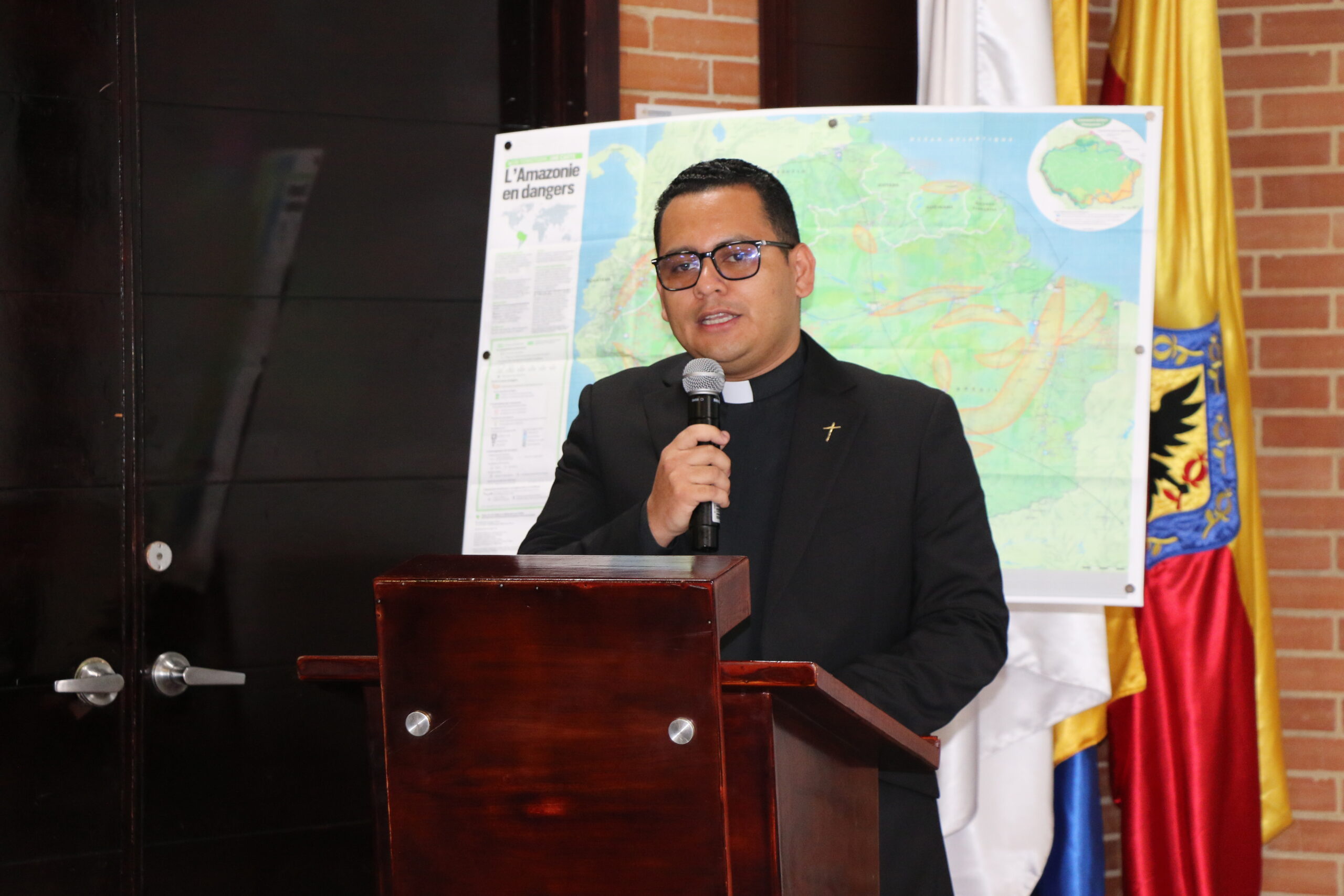
Father Francisco Hernández, representative of the Latin American and Caribbean Episcopal Council (CELAM), opened the day with the keynote address entitled “A call for climate justice and the Common Home: ecological conversion, transformation, and resistance to false solutions.”
In his speech, he emphasized that the climate crisis cannot be reduced to a technical or environmental problem, but is a matter of justice, human dignity, and faith.
Father Hernández also presented the Message from the Catholic Episcopal Conferences and Councils of Africa, Latin America and the Caribbean, and Asia on the occasion of COP30, underscoring the prophetic voice of the Churches of the Global South calling for integral ecological conversion and fair and sustainable development models.
The voice of CEAMA: caring for the Amazon is caring for all of humanity
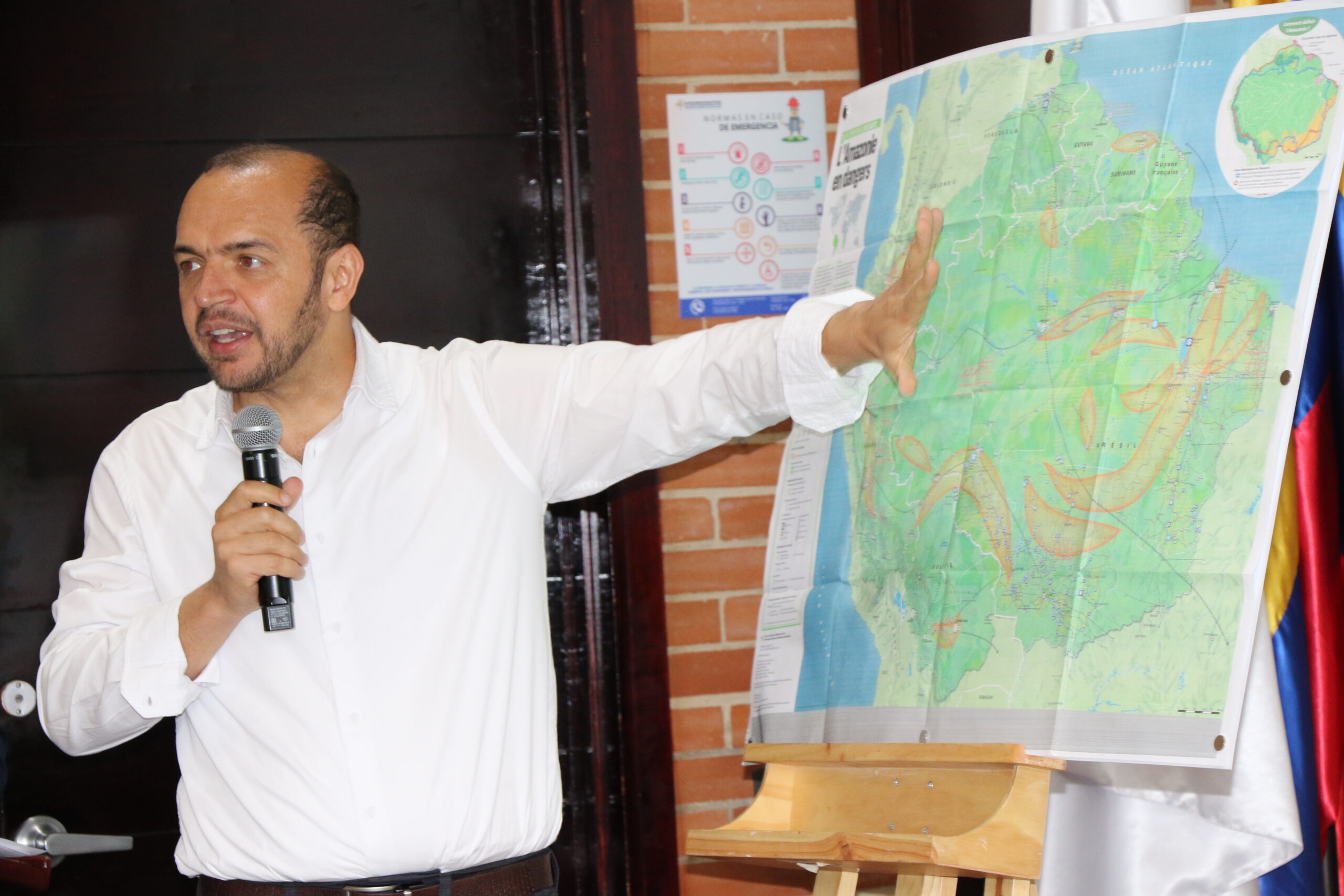
Representing CEAMA, Executive Secretary Marcelo Antonio Lemos participated as a speaker in the discussion and shared a profound reflection on the spiritual, ethical, and civilizational significance of defending the Amazon:
“Caring for the Amazon is caring for all of humanity. The Amazon is not a distant problem: it is our common home, a vital biome for the planet, and a spiritual space of life.
If the river dies, the people die; if the fabric of life is broken, our common future is broken,” said Lemos.
During his speech, he explained that CEAMA is in a process of discernment and listening that will culminate in the 2026 General Assembly, where the Synodal Apostolic Horizons will be defined.
These horizons seek to orient the pastoral and missionary commitment of the Church in the Amazon toward an integral ecology, an intercultural pastoral ministry, and a living synodality, capable of articulating the voice of indigenous peoples, religious life, the laity, ecclesial communities, and pastoral agents in the territory.
It also reaffirmed the joint commitment of CEAMA and the integral ecology networks to consolidate an organizational and pastoral unity that guarantees coherence and sustainability in accompanying the Amazonian peoples and ecosystems.
“Defending the Amazon is not just about protecting an ecosystem: it is about safeguarding the memory, culture, and spirituality of the peoples who inhabit it. It is a global call for justice, planetary communion, and incarnate hope,” concluded Lemos.
Mauricio López: toward an apocalyptic hope that reveals the new
The Vice President of CEAMA and founder of the Amazonian University Program (PUAM), Mauricio López, offered an inspiring presentation that connected faith, education, and ecclesial mission with the structural challenges of the planet.
He recalled that humanity is facing a critical point, but that through hope and conversion it is possible to reimagine the future:
“We need to recover the apocalyptic vision, not as destruction, but as a revelation of the new. Apocalyptic hope reveals, opens up possibilities, and invites us to act from the conviction that another world is possible, even in the midst of the cracks in the system.”
López shared the progress of the Amazon University Program (PUAM), an initiative coordinated between CEAMA, CELAM, REPAM, and various universities in the region, aimed at training Amazonian leaders in dialogue with communities and with the ancestral wisdom of the peoples.
He emphasized that PUAM promotes an outgoing, intercultural, and territorial education that seeks to inhabit the frontiers, tensions, and wounds of the system, weaving learning experiences from listening and collaboration.
“Ecological conversion is not achieved from the centers of power, but from the margins, from the communities that resist and create paths of hope,” he said.
Mauricio López also emphasized that the path of the Church in the Amazon is not hierarchical, but synodal and communal, where the people of God—bishops, religious, laity, and indigenous peoples—walk together toward the same horizon of faith and justice.
He recalled that the Amazonian peoples are not passive guardians, but active subjects of their history, whose worldview offers indispensable keys to the regeneration of the planet.
Weaving alliances for our Common Home
The presence of CEAMA at this Second Conference on Integral Ecology reaffirms its commitment to integral ecology as a path of evangelization and transformation.
Its participation alongside UNIMINUTO, CELAM, PUAM, REPAM, and other academic and ecclesial institutions strengthens a network of collaboration that promotes educational, social, and pastoral processes with an Amazonian and synodal focus, at the service of peoples and the planet.
These spaces are a living expression of Pope Francis’ dream in Querida Amazonía: a Church with an Amazonian face, which promotes a spirituality of care, transformative education, and a determined commitment to climate justice and a dignified life for all.