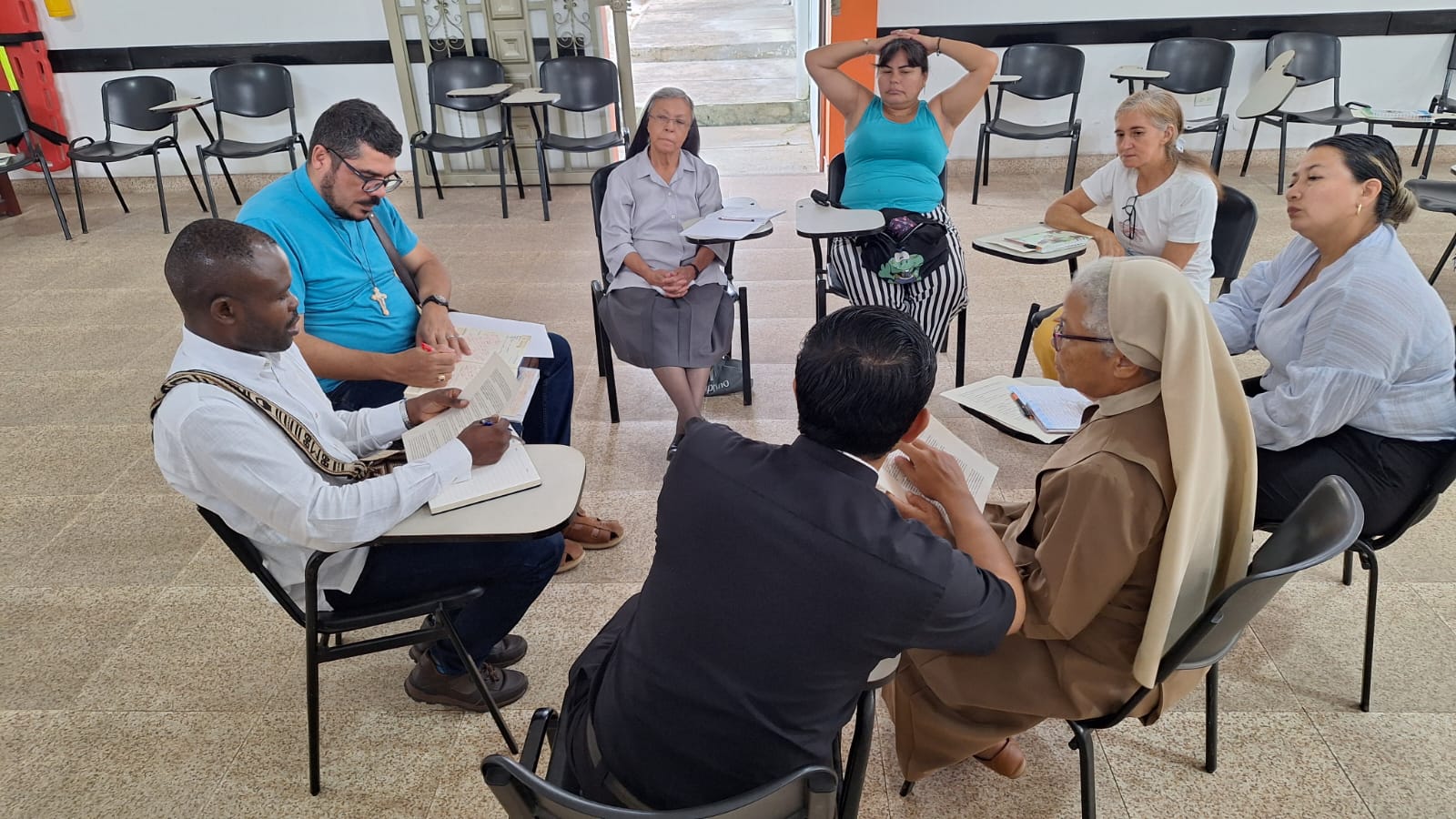
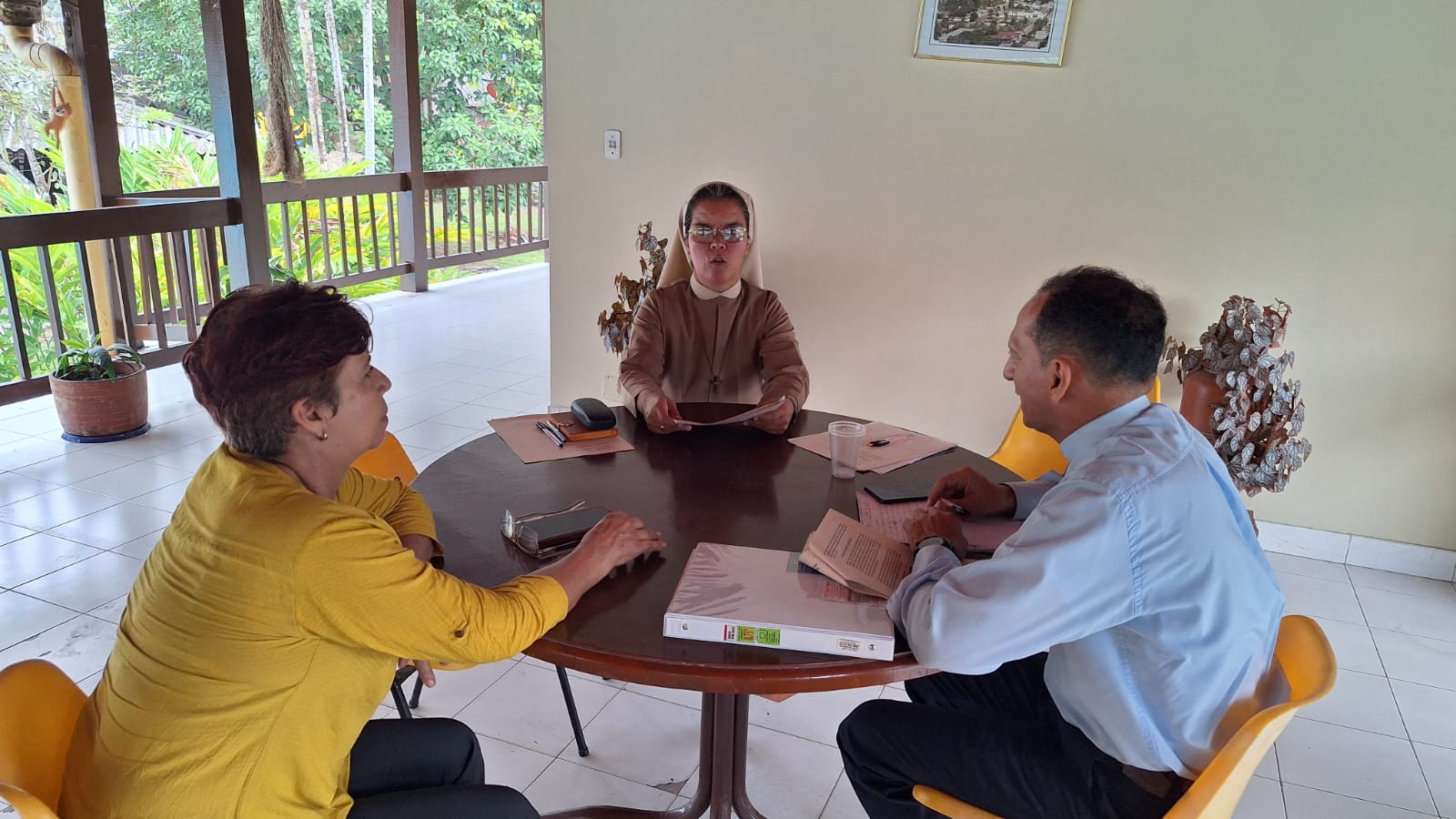
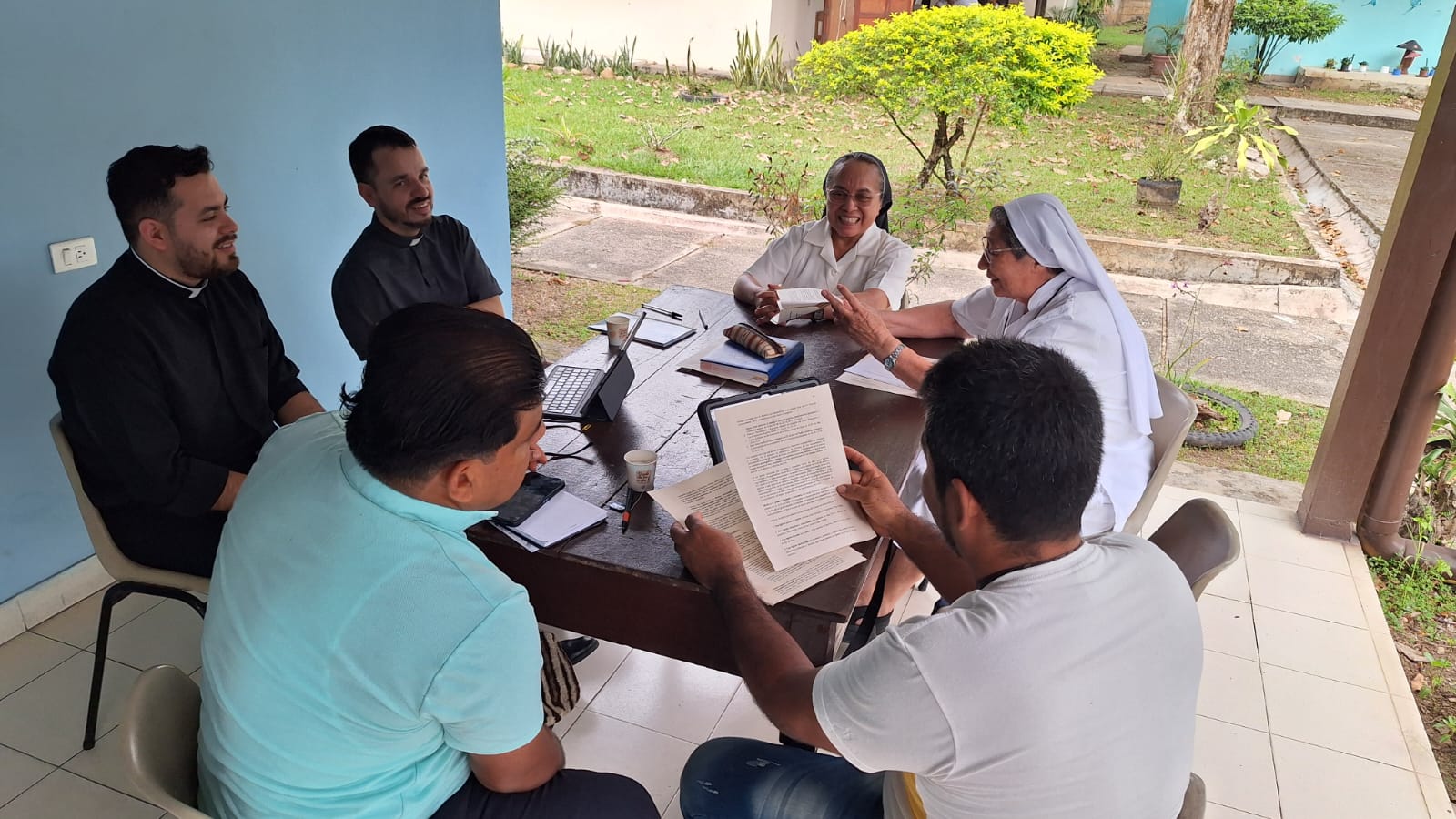
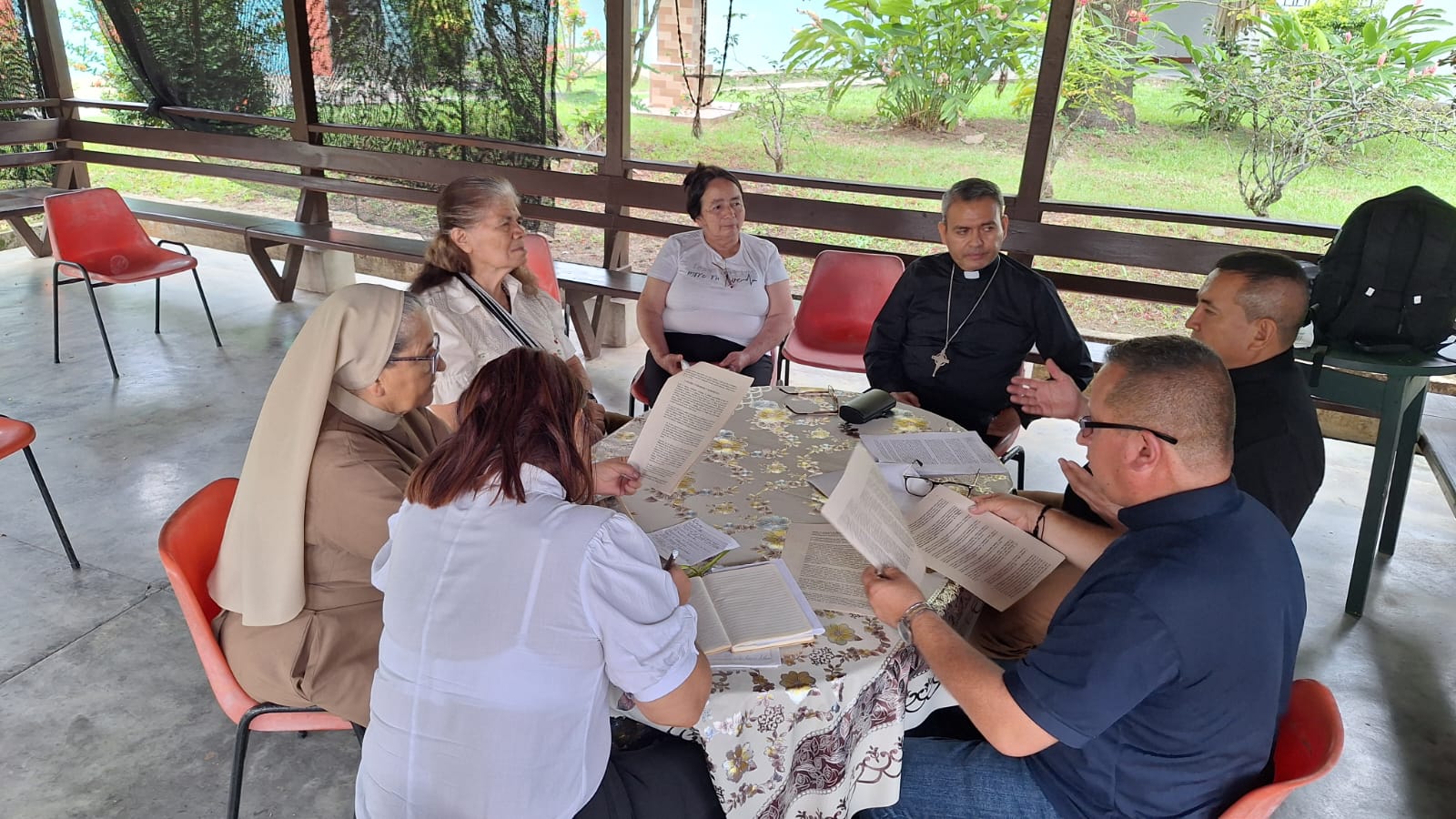
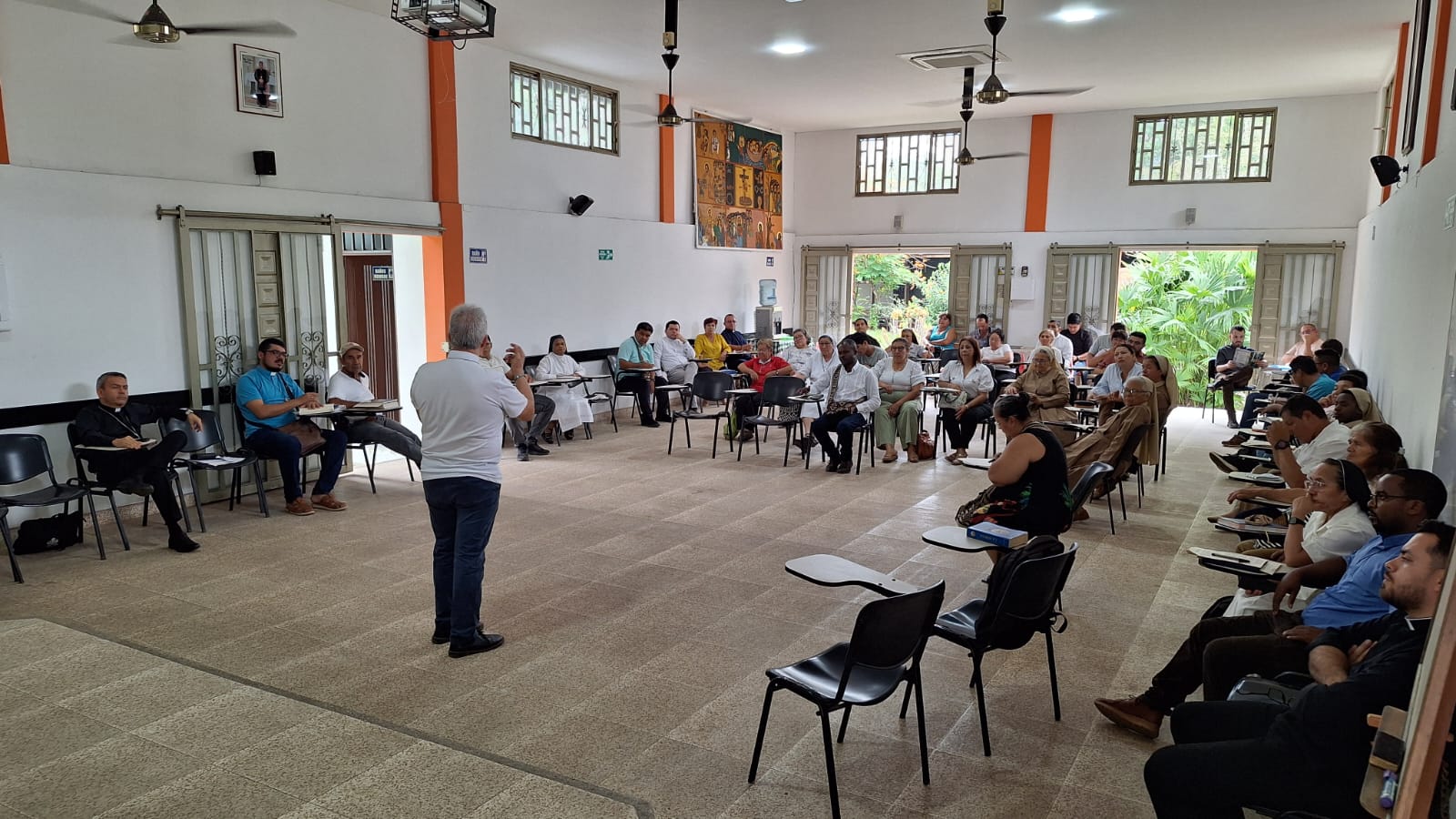
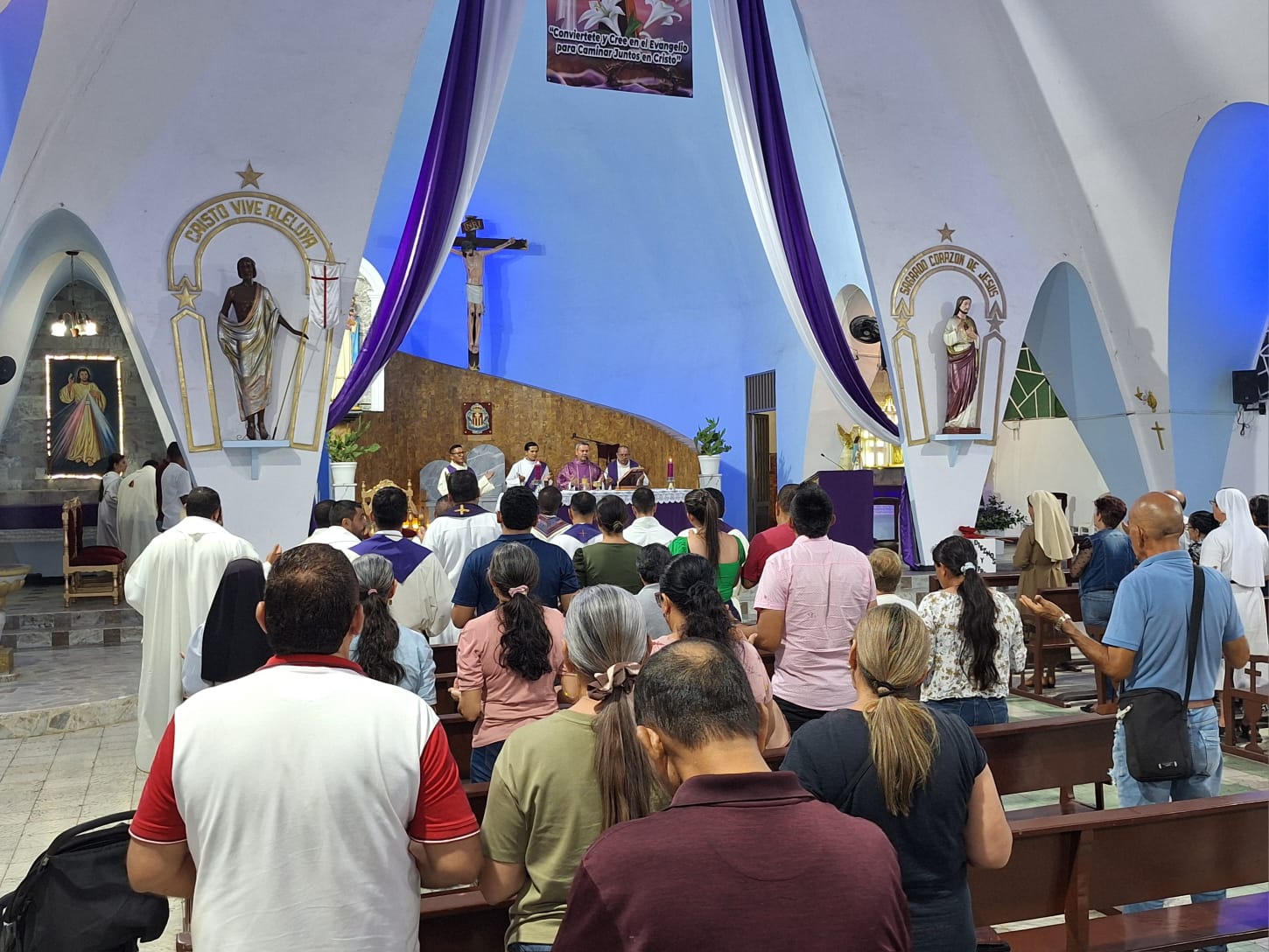
The pilgrim Church in the Colombian Amazon continues to strengthen its pastoral and missionary journey. From March 3 to 5, the Diocese of San Vicente del Caguán, in the department of Caquetá, held its Diocesan Assembly, a space for encounter, reflection, and discernment that brought together the bishop, priests, consecrated life, and laity from the 16 parishes in the territory.
Convened by the diocesan bishop, William Prieto Daza, the main objective of the assembly was to advance the development of the Diocesan Pastoral Plan in a synodal key, promoting communion, participation, and mission in a Church marked by cultural diversity and the challenges specific to the Amazon.
The meeting took place in an atmosphere of fraternity and dialogue, allowing participants to share pastoral experiences, listen to the realities of the communities, and reflect together on the paths that the Church is called to follow in this territory.
Listening to reality in order to walk together
Since his arrival in the diocese about a year and a half ago, Bishop William Prieto has placed a strong emphasis on listening to the people of God. As he explained, one of the first steps of his ministry has been to get to know the reality of this particular Church up close, especially after a period of more than three years of vacancy in the episcopal see.
The bishop highlighted the availability and commitment of priests, religious, and laity who animate pastoral life in a jurisdiction characterized by scattered communities and difficulties of access. Many of these communities are located along the Caguán River and in rural areas of the municipalities of San Vicente del Caguán, Cartagena del Chairá, and part of Puerto Rico and La Macarena (Meta).
Beyond the presentations and reflections, Bishop Prieto emphasized that one of the most important fruits of the Assembly has been the encounter between those who serve in different parts of the territory. Being able to see each other, share experiences, and strengthen fraternal bonds has been, he said, a sign of hope for the pastoral life of the diocese.
Evangelizing in a synodal key
The process currently underway in the diocese seeks to consolidate a Pastoral Plan to guide the evangelizing mission in the coming years. To this end, meetings were held last year in the different vicariates in order to gather input and develop a first draft of the plan.
Father Ricardo Tobar, a diocesan priest with thirty years of ministry, explained that the Assembly has been an important step in this process. The goal is to deepen the reflections made in the vicariates and move toward a pastoral plan that responds to the realities of the territory and strengthens the life of the communities.
Inspired by the Gospel and the action of the Holy Spirit, the pastoral process seeks to promote a Church that goes forth, proclaims the Good News, and accompanies people’s lives, following the example of Jesus who “went throughout all the cities and villages, teaching, proclaiming the Kingdom, and healing every disease and infirmity” (Mt 9:35).
The voice of the communities
Among the participants in the Assembly were numerous lay people who serve in their communities as catechists, faith animators, and pastoral agents. Their participation has been fundamental in enriching discernment and strengthening the sense of co-responsibility in the mission of the Church.
Nora Moreno, catechist and animator of the Balsillas community, belonging to the parish of Our Lady of Lourdes, shared her joy at participating in this process. For her, one of the most valuable aspects has been the group work and the possibility for everyone to express their opinions.
The exchange of experiences and joint reflection, she points out, make it possible to build a Church that walks together and strengthens the commitment of those who animate the life of communities, especially in territories where pastoral presence faces numerous challenges.
A Church that looks to the future
Among the commitments that emerged from the Assembly is the reactivation and reorganization of spaces for participation in parishes, such as parish pastoral councils and financial councils. These bodies are considered fundamental for strengthening synodality and promoting greater co-responsibility in the life of the Church.
Bishop William Prieto pointed out that the main fruit of this meeting is to continue strengthening the bonds of fraternity and to move forward together in the construction of the Diocesan Pastoral Plan. The shared desire of the participants is to consolidate living communities, with committed laity and a strong missionary awareness.
A Church with a missionary history in the Amazon
The Diocese of San Vicente del Caguán has a deep missionary tradition. It was established as an Apostolic Vicariate on December 9, 1985, by St. John Paul II, when it separated from the Apostolic Vicariate of Florence, with the aim of strengthening the evangelizing presence of the Church in this Amazonian region.
Its first pastors, Bishop Luis Augusto Castro Quiroga and later Bishop Francisco Javier Múnera Correa, promoted pastoral and missionary development in the territory.
In 2019, Pope Francis elevated the Vicariate to a Diocese, integrating it into the ecclesiastical province of Florence. Currently, under the pastoral guidance of Bishop William Prieto Daza, the diocese is organized into four vicariates that group together 16 parishes, from which the evangelizing mission in this region of the Colombian Amazon is encouraged.
With this Diocesan Assembly, the Church in San Vicente del Caguán reaffirms its commitment to walk in a synodal manner, strengthening communion, participation, and mission in service to the peoples of the Amazon.