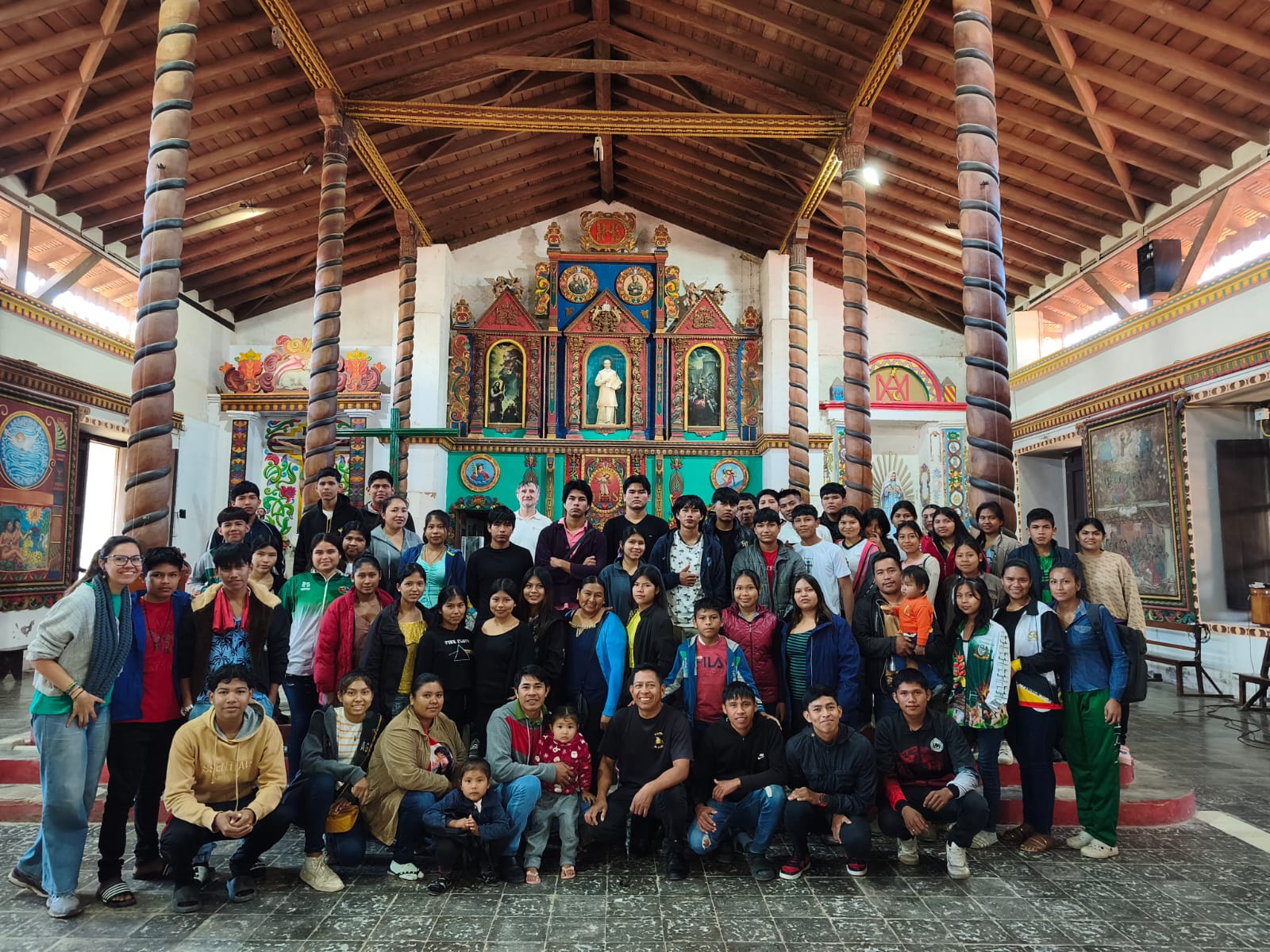
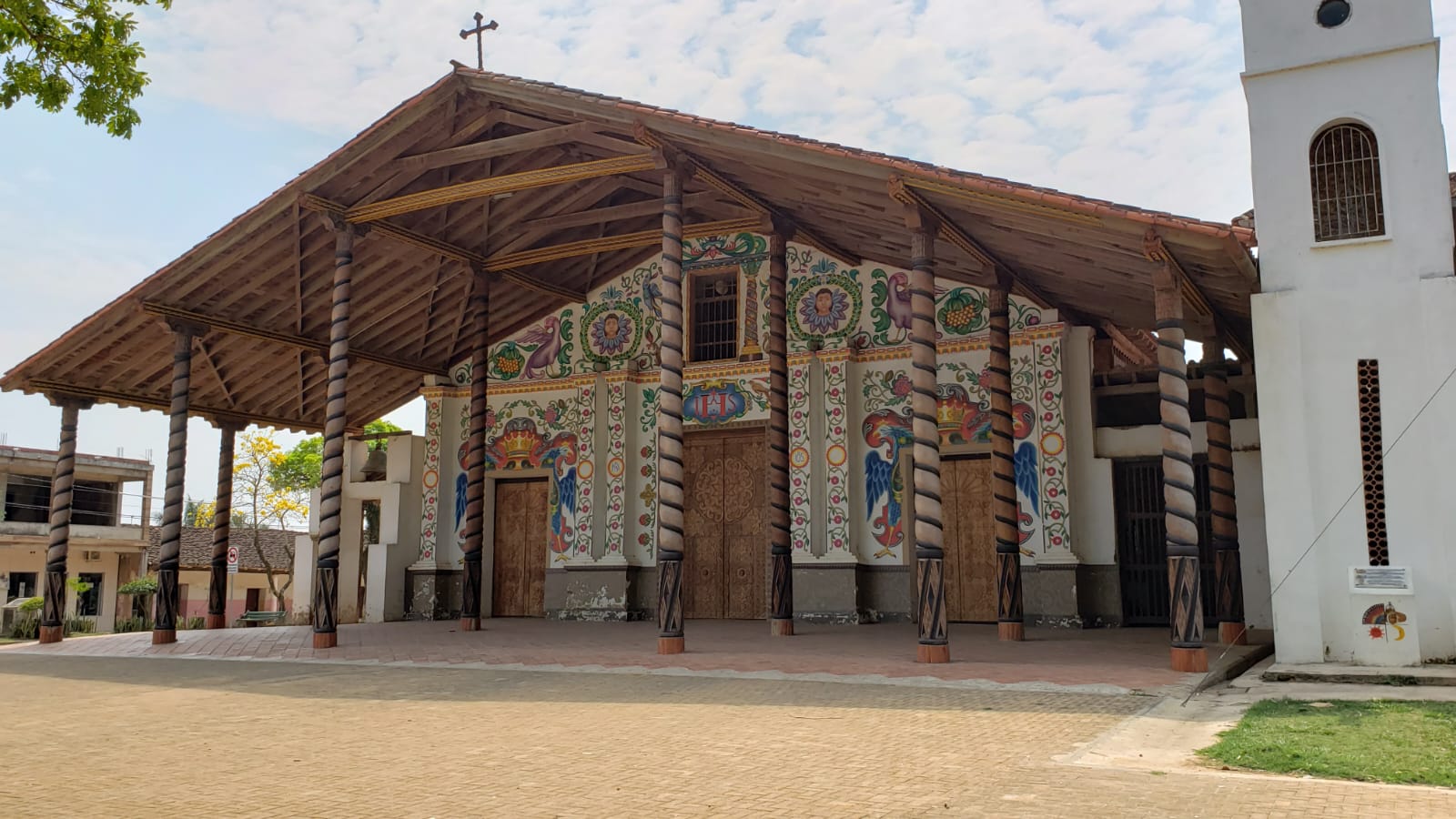
The experience in San Ignacio de Mojos, in the Bolivian Amazon, reflects a history of encounter between indigenous peoples and the Society of Jesus, marked by spirituality, the preservation of culture, and a commitment to caring for our Common Home.
Source: Jesuits Bolivia.
In the heart of the Bolivian Amazon, San Ignacio de Mojos preserves a history of encounter between indigenous peoples and the Society of Jesus—a relationship that, over the centuries, has been marked by friendship, respect, and service. This experience bears witness to how pastoral accompaniment, intercultural dialogue, and an appreciation for the peoples’ roots help keep the identity of Amazonian communities alive.
“Mojos is not just any story; Mojos is the story of a friendship,” says Father Fabio Garbari, SJ, the current pastor of San Ignacio de Mojos, referring to the shared history between the indigenous population and the Jesuit missionaries.
The mission has its roots in the arrival of the Jesuits Antonio de Orellana and Juan de Espejo 337 years ago. Since then, the history of Mojos has gone through various stages, including the expulsion of the Society of Jesus in 1767—an event that profoundly transformed the life of the missions and the indigenous communities.
The return of the Jesuits ushered in a new era of accompaniment, aimed at strengthening ties with the peoples, recognizing their knowledge, and walking alongside them in the defense of their identity, their territory, and their aspirations.
For Father Bernardo Mercado, SJ, provincial of the Society of Jesus in Bolivia, friendship is the foundation of this historic relationship. It is an encounter between different cultures that share a commitment to accompanying the lives of communities and strengthening their experience of faith.
A Church That Accompanies the Life and Culture of the Indigenous Peoples
The Church’s presence in San Ignacio de Mojos goes beyond the celebration of the sacraments. The parish has become a space for gathering, formation, and accompaniment for the indigenous communities, promoting the transmission of the faith in dialogue with local cultures and traditions.
María Eugenia Carrizo, a lay missionary who has been living in Mojos for 14 years, describes the parish as a platform for supporting the identity and culture of these peoples.
Currently, the pastoral work supports some 60 indigenous communities belonging to five indigenous peoples: the Mojeño Ignaciano, Mojeño Trinitario, Movima, Yuracaré, and Tsimane. Among its main initiatives is the training of youth and adult leaders in communities within the Multi-Ethnic Indigenous Territory (TIM), the Mojeño Ignaciano Indigenous Territory (TIMI), and urban areas.
One of the most significant challenges is strengthening the bonds between generations.
While elders keep cultural and spiritual memory alive, many young people are exposed to new cultural and technological influences that can distance them from their traditions. Added to this are migration patterns and the search for opportunities outside their territories.
In light of this reality, the parish promotes educational programs that allow children, adolescents, and young adults to deepen their spirituality, learn about their history, and value their cultural identity.
The Indigenous Council: Guardian of Mojos’ Heritage
The preservation of the culture and spirituality of these peoples finds one of its main pillars in the Great Indigenous Council of San Ignacio de Mojos, an ancestral institution that continues to pass down its knowledge, celebrations, music, and traditional dances.
Its work is particularly evident in the organization of the Ichapequene Piesta, Mojos’s main festival, as well as in the religious celebrations that blend Catholic spirituality with the cultural expressions of the indigenous peoples.
Chief Hilario Jiménez highlights the importance of ongoing dialogue between the Council and the parish—a relationship strengthened through interaction and collaboration in various community activities.
This experience demonstrates how indigenous communities play a leading role in preserving their spiritual and cultural heritage, passing down from generation to generation the knowledge and values that sustain their identity.
The San Ignacio de Mojos Museum and the Mission Archive, spaces dedicated to preserving the region’s historical memory, contribute to this effort. The museum houses thousands of musical scores linked to the missionary musical tradition, while the School of Music helps keep this artistic heritage alive.
Music, dances, and traditional celebrations are expressions of a living culture, in which the memory of ancestors continues to engage with new generations.
The Amazon: A Horizon of Hope and Commitment
The experience of San Ignacio de Mojos also prompts reflection on the current challenges facing the Amazon. Defending the territory, protecting water resources, conserving forests, and passing down ancestral knowledge are fundamental to ensuring the continuity of these peoples’ way of life.
Víctor Noza, a young Indigenous man from the Multi-Ethnic Indigenous Territory, highlights the importance of defending the territory and protecting the environment, acknowledging the parish’s support in these efforts.
For his part, Father Bernardo Mercado, SJ, invites us to view the Amazon through the concrete experience of its inhabitants. Indigenous peoples, he notes, offer a perspective that places harmony with creation and collective well-being at the center of life.
This vision aligns with the Church’s call to promote an integral ecology that recognizes the profound connection between human dignity, the protection of territories, cultural diversity, and the care of our Common Home.
More than a statement of principles, this commitment requires concrete actions and a presence close to the communities, respecting their organizational processes and standing in solidarity with their struggles and hopes.
Walking Together to Build the Future
The history of San Ignacio de Mojos reminds us that the evangelizing mission finds its deepest meaning in encounter, listening, and service. The Jesuits’ experience alongside indigenous peoples invites us to build relationships based on mutual respect, the recognition of cultures, and the defense of life.
In an Amazon region facing multiple environmental, social, and cultural threats, strengthening these bonds is essential to supporting communities in protecting their territories and building a dignified future for new generations.
As Father Bernardo Mercado, SJ, puts it, friendship is strengthened by walking together, with a genuine commitment to the land, the customs, and the dreams of the peoples.
San Ignacio de Mojos is, thus, a testament to a Church that seeks to keep alive the dialogue between faith and cultures, recognizing indigenous peoples as protagonists of their own history and guardians of life in the Amazon.