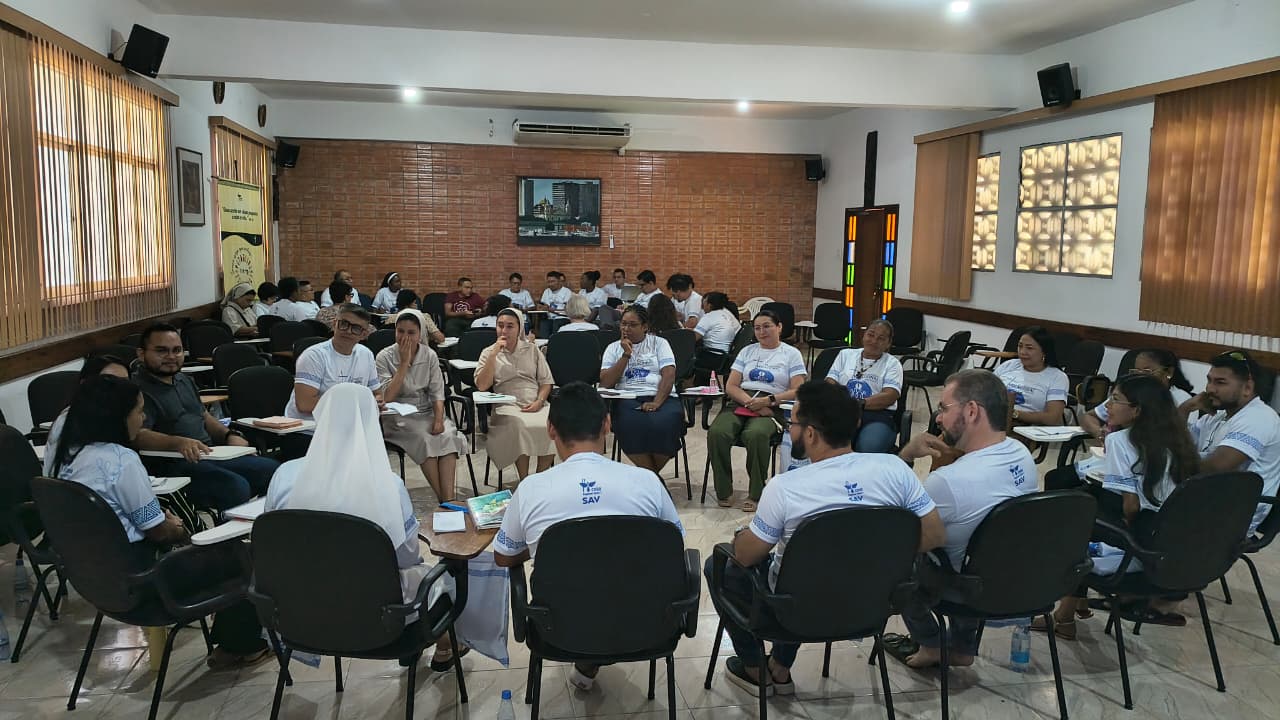
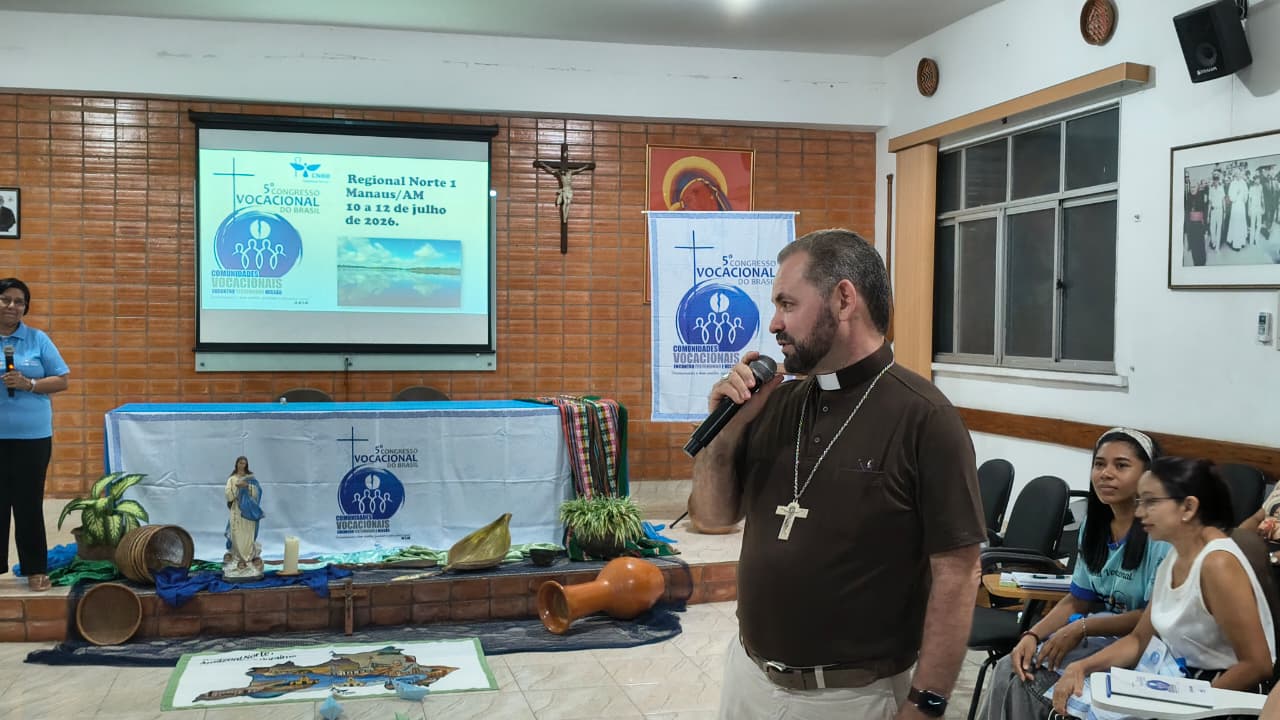
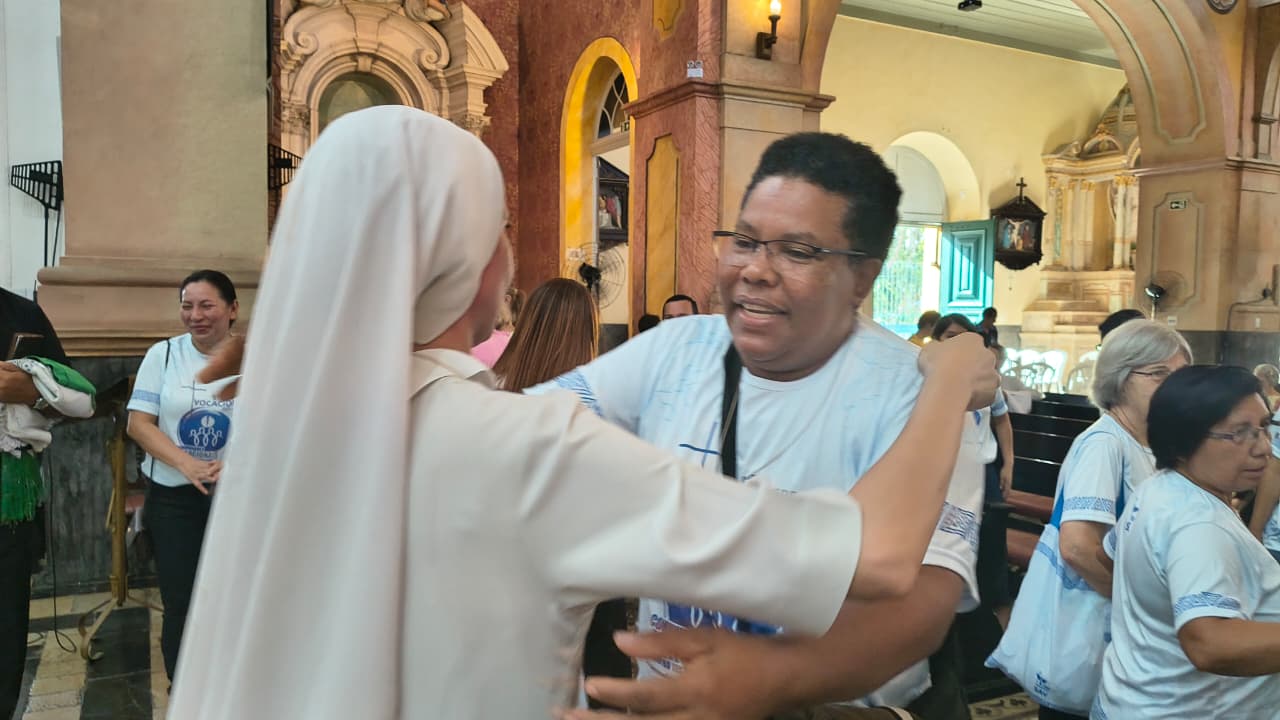
With an eye toward the 5th National Vocational Congress of Brazil, to be held September 4–6, 2026, in Aparecida (São Paulo), the Northern Region 1 of the National Conference of Bishops of Brazil (CNBB) held the Pre-Congress on Vocations, a space for formation, discernment, and reflection on the future of vocational ministry in the Amazon.
For three days, pastoral workers, men and women religious, priests, and bishops gathered at the Maromba Center in Manaus to delve deeper into the base document for the National Congress, whose theme will be “Vocational Communities: Encounter, Witness, and Mission”, inspired by the motto: “They devoted themselves to the apostles’ teaching and to fellowship, to the breaking of bread and to prayer” (cf. Acts 2).
The gathering allowed the local Churches to share their experiences, challenges, and contributions regarding the building of an authentic vocational culture within the diverse pastoral contexts of the Amazon, reaffirming the commitment of a Church that welcomes, listens to, and accompanies all people in their concrete realities.
Vocations Are Born Amid the Realities of the Amazon
One of the central themes of the Pre-Congress was reflection on the complex social situations faced by many Amazonian communities. The presence of illegal mining, the abandonment of communities, human trafficking, drug trafficking, new family structures, and multiple forms of violence represent challenges that directly challenge the Church’s evangelizing mission.
In this context, Sister Florizete Maria Moreira of the Franciscan Sisters of St. Felix of Cantalice (CSSF), who carries out her mission in the Prelature of Tefé, emphasized that the Vocational Animation Service must approach these realities with an attitude of welcome and mercy.
She emphasized that vocational ministry cannot be limited to conveying information but must begin with encountering people as they are, acknowledging their stories, wounds, and hopes. As she explained, proclaiming God’s love requires a Church capable of welcoming young people and families in the diversity of their situations, accompanying them on their journey of faith.
A Church Centered on Jesus and Close to the Peripheries
The reflections also highlighted that consecrated life finds its strength precisely in those areas where human realities are most challenging.
From this perspective, the Christian vocation involves remaining centered on the person of Jesus Christ in order to respond with hope to contexts marked by exclusion, poverty, and vulnerability. The participants agreed that proclaiming the Gospel requires an open attitude, capable of overcoming rigid frameworks and recognizing God’s action in diverse human experiences.
Vocational Ministry as a Prophetic Response
During the meeting, Bishop Zenildo Lima, auxiliary bishop of Manaus, invited participants to understand vocational ministry as a prophetic response to the great challenges facing the Amazonian peoples.
The bishop noted that a vocation cannot be understood solely as a personal response to God’s call, but also as a willingness to serve where life is most threatened. He recalled that the tradition of the Latin American Church has understood vocation from a perspective of deep sensitivity to the realities of injustice and exclusion, uniting the following of Christ with a commitment to human dignity.
He also proposed looking to the figure of Mary as a vocational model for the Amazon: a young woman who, from the simplicity of Nazareth, knew how to read the signs of her time and proclaim the hope of a Kingdom that lifts up the humble and transforms history.
Building Vocational Communities
The study of the base document allowed for a deeper exploration of four fundamental dimensions: the experience of encounter, witness, mission, and the identity of ecclesial communities as authentic vocational communities.
Through group work, the participants developed proposals that will be submitted to the preparatory process for the Fifth Vocational Congress of Brazil, contributing to the development of pastoral materials for the entire country.
The gathering reaffirmed that vocational promotion must involve all vocations present in the Church: ordained ministry, consecrated life, marriage, the laity, and the many forms of ecclesial service.
A Source of Hope for the Entire Amazonian Church
At the conclusion of the Pre-Congress, Bishop José Albuquerque of the Diocese of Parintins and national leader for vocational ministry highlighted the value of the synodal journey undertaken by Amazonian communities and encouraged them to continue strengthening a culture of vocations that reaches children, adolescents, young people, and adults.
The bishop recalled that the entire Church is called to promote the active role of the laity and families in evangelization, reaffirming that all the baptized share in the same missionary vocation.