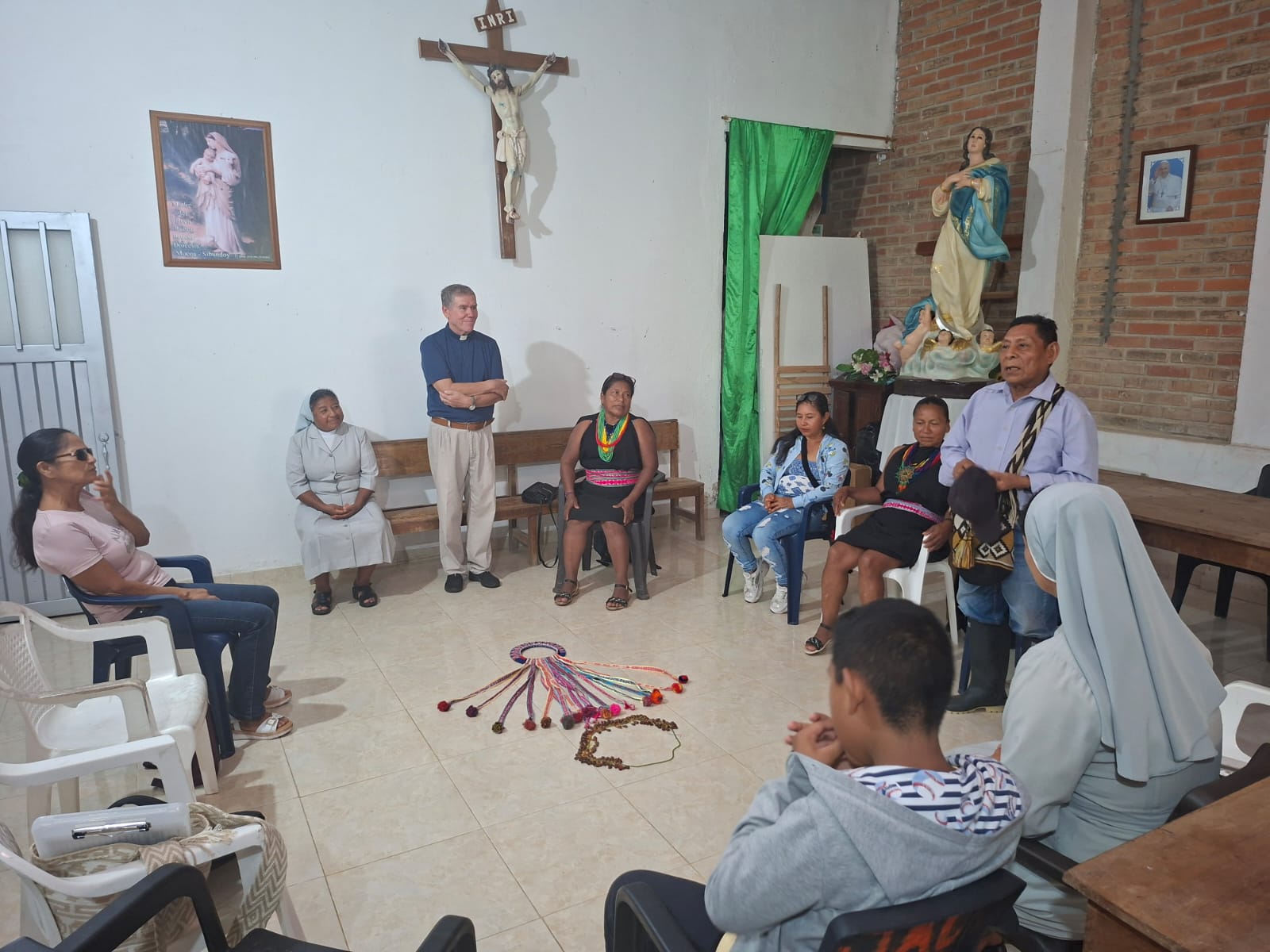
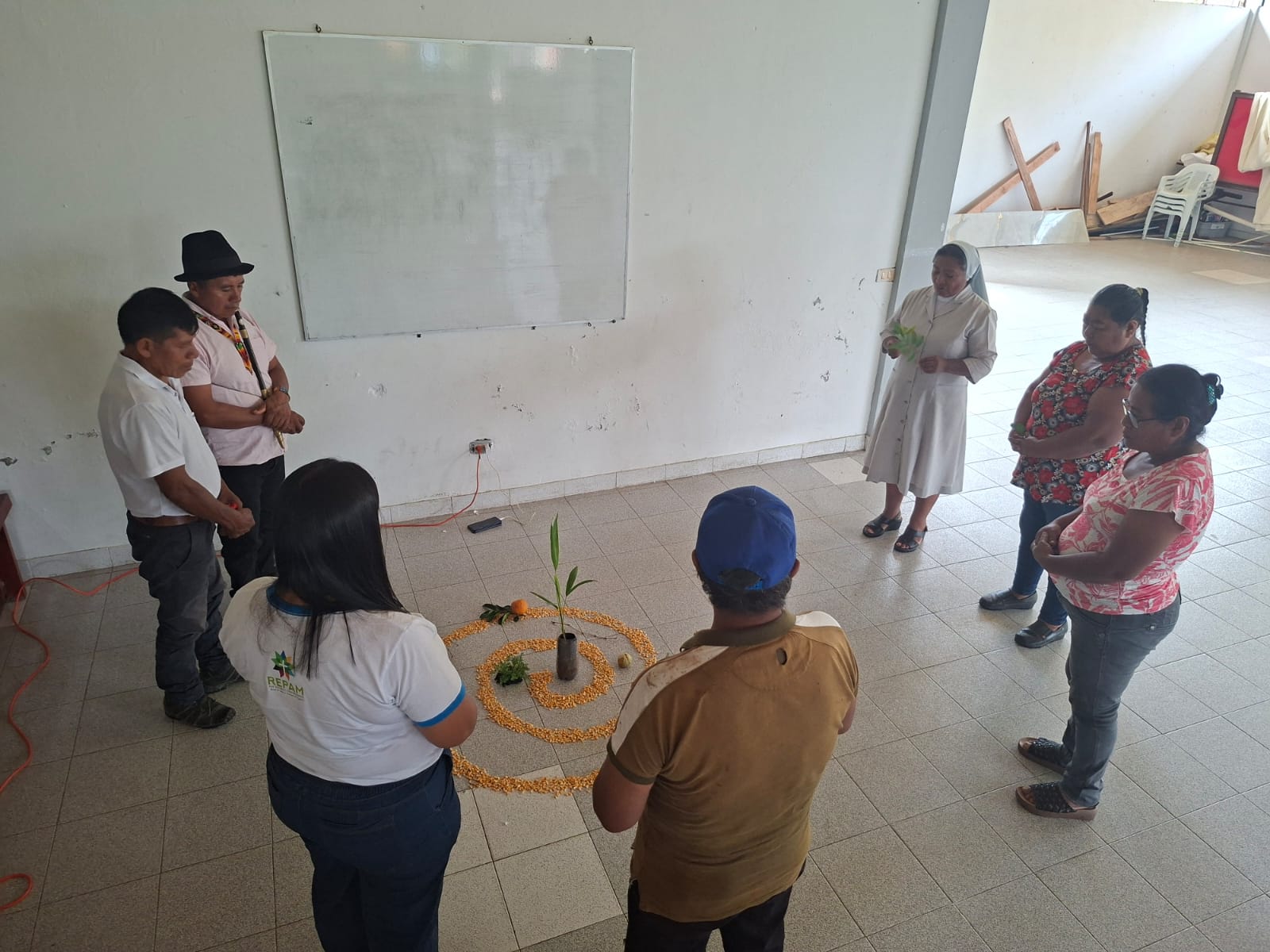
In a joint effort to strengthen the Church’s journey alongside indigenous peoples, the Social Ministry and Indigenous Ministry of the Diocese of Mocoa-Sibundoy, in collaboration with the Pan-Amazonian Ecclesial Network (REPAM), organized a series of community gatherings in various Amazonian territories, fostering spaces for listening, dialogue, spirituality, and collective building.
The sessions took place in Sibundoy, Mocoa, La Hormiga, and Miraflor (Cauca), bringing together indigenous communities and leaders who shared their experiences, challenges, and hopes regarding the lives of Amazonian peoples and their relationship with the Church.
These spaces are part of the process of strengthening the diocesan Indigenous Ministry and seek to consolidate a more accessible, intercultural, and committed ecclesial presence to the realities of Indigenous peoples, in harmony with the synodal journey promoted by the Church in the Amazon.
Listening to Walk Together
Through participatory and community-based methodologies, the meetings allowed for a deeper exploration of topics related to Indigenous spirituality, cultural identity, the defense of territories, and the transmission of ancestral knowledge.
One of the most significant aspects was the recognition of the fundamental role of Indigenous women as guardians of life, collective memory, and the wisdom of the peoples. The participants shared reflections on their leadership in community processes and their contribution to the preservation of culture and ancestral spirituality.
Likewise, the communities discussed the importance of revitalizing mother tongues and strengthening traditional practices that continue to be pillars of community life, such as the chacra, the tulpa, weaving, and other cultural expressions that transmit identity and a sense of belonging across generations.
Challenges to Life and Territory
During the meetings, concerns also arose regarding the various threats faced by indigenous communities in their territories.
Among these, the impacts of aerial spraying, pressures on Amazonian ecosystems, the progressive loss of cultural practices, gender-based violence, and difficulties in strengthening indigenous models of education and community healing were highlighted.
The communities agreed on the need to continue promoting processes of reconciliation, territorial defense, and care for Mother Earth, understanding that the protection of Indigenous peoples is closely linked to the protection of the Amazon and the entire Common Home.
In this context, the participants reaffirmed the importance of building a spirituality that engages deeply with indigenous worldviews and recognizes the richness of their knowledge, symbols, and ways of relating to creation.
Toward the Diocesan Meeting on Indigenous Pastoral Care
These meetings constitute a preparatory stage for the Diocesan Meeting on Indigenous Pastoral Care to be held in July, which will bring together community representatives to further strengthen this pastoral process.
Using a methodology inspired by synodality—based on listening, communal discernment, and the active participation of the peoples—the aim is to consolidate lines of action that address the needs and challenges present in the territory.
The process also incorporates lessons and tools from the School of Human Rights promoted by REPAM, an initiative that has contributed to strengthening community capacities for the defense of rights, the care of the territory, and the promotion of an integral ecology.
A Church that walks with the peoples
This experience reaffirms the commitment of the Diocese of Mocoa-Sibundoy and REPAM to a Church that listens to, accompanies, and learns from indigenous peoples, recognizing their leading role in building alternatives for life, justice, and hope for the Amazon.
In line with the calls of the Synod for the Amazon and the apostolic exhortation *Querida Amazonía*, this shared journey continues to build bridges between faith, culture, and the defense of life, strengthening an ecclesial presence committed to reconciliation, the dignity of peoples, and the care of our Common Home.
From the Amazonian territories, a synodal, intercultural, and prophetic Church continues to take root, recognizing in indigenous peoples a source of wisdom for the present and future of the Amazon.