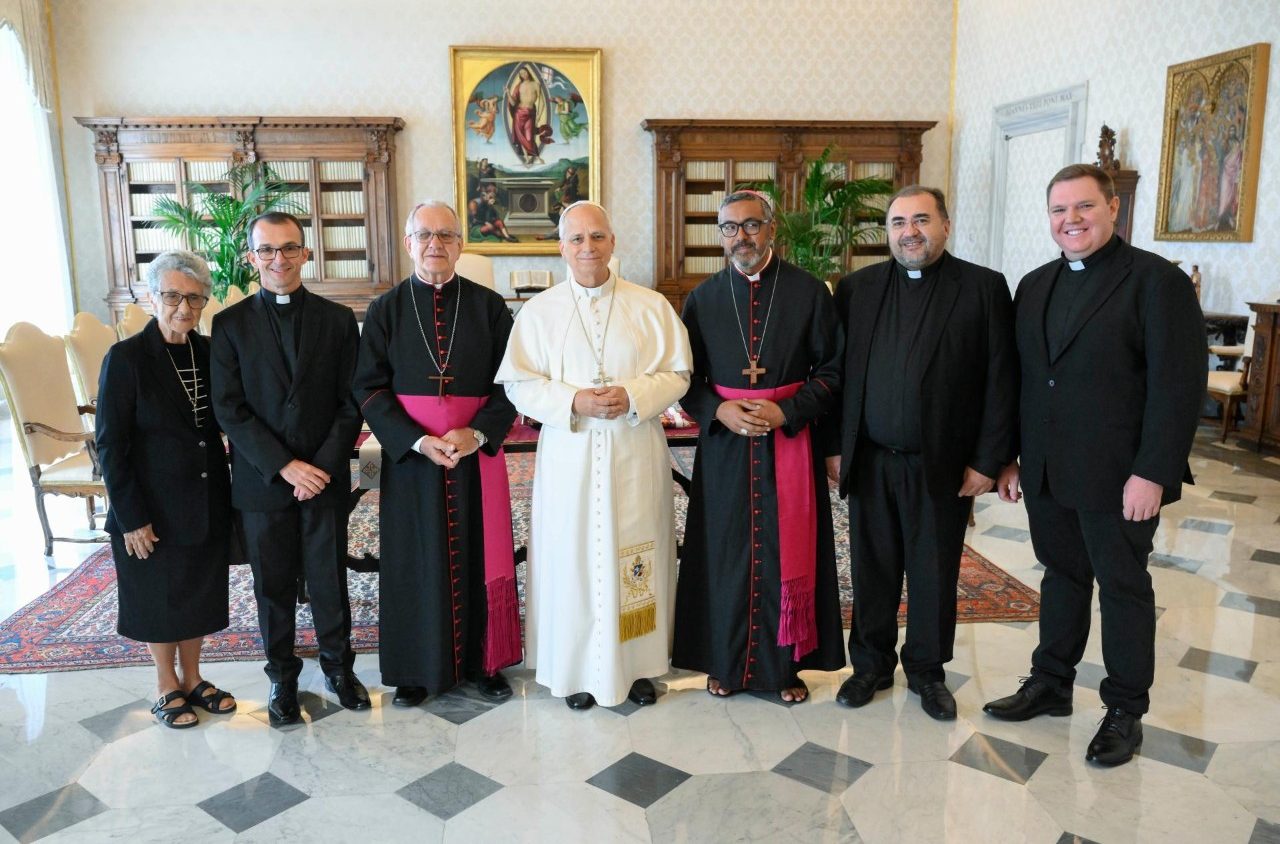
The reality of the Amazon reached the heart of the universal Church during the audience that Pope Leo XIV granted to a delegation from the Diocese of São Gabriel da Cachoeira, led by its bishop, Monsignor Raimundo Vanthuy Neto.
The meeting, marked by simplicity, warmth, and dialogue in Portuguese, provided an opportunity to present to the Holy Father the pastoral, cultural, social, and environmental realities of a diocese located in the heart of the Negro River basin, where the Church accompanies hundreds of indigenous communities spread across a vast territory.
Joining Monsignor Vanthuy were Bishop Emeritus Monsignor Edson Taschetto Damian, Sister Letícia, Daughter of Mary Help of Christians, and priests from the Brazilian Pius College in Rome.
A Church That Travels Along the Rivers
The Diocese of São Gabriel da Cachoeira covers approximately 294,000 square kilometers, an area larger than the state of São Paulo and close to the land area of Italy.
Within this vast territory lie around 400 communities, distributed mainly along the Negro River basin. 24 indigenous peoples live there and 18 languages are spoken, in a context where approximately 94% of the population is indigenous.
This diversity is one of the diocese’s greatest assets, but it also poses major challenges for pastoral ministry.
Geography shapes much of the communities’ lives. The river serves as a path, a means of communication, and a meeting place. Pastoral travel depends largely on boats and canoes, and missionaries must undertake long journeys to reach communities located in remote areas and overcome the difficulties posed by the rivers and their rapids.
In this context, the mission requires patience, adaptability, and a deep willingness to walk in step with the peoples and territories of the Amazon.
The Leading Role of Indigenous Catechists
One of the central themes discussed during the meeting was the role of indigenous catechists in the life of the communities.
In many places, they play a fundamental role in transmitting the faith, providing community support, and offering pastoral formation. To strengthen this ministry, the diocese organizes formation programs that can last several days and bring together people from different regions.
This reality reflects a Church in which indigenous peoples themselves assume responsibilities and actively participate in building their Christian communities.
Formation, therefore, is not understood solely as the transmission of content, but as a process of strengthening local leadership and supporting those who sustain community life amid vast geographical distances and economic hardships.
An Amazon Protected by Its Peoples
The defense of our Common Home also featured prominently in the conversation.
The diocesan representatives noted that the Rio Negro region is among the best-preserved areas of the Amazon, with a relatively low proportion of deforested areas. This reality is closely linked to the historical presence of indigenous peoples and to their knowledge and ways of relating to nature.
The experience of these peoples confirms that the protection of the Amazon is deeply connected to the protection of their territories, cultures, and ways of life.
This perspective finds a strong echo in the journey of the Amazonian Church and in the magisterium emerging from the Synod for the Amazon, especially in the apostolic exhortation Querida Amazonia, which invites us to recognize the seeds of the Word present in the cultures and traditions of these peoples.
The meeting also provided an opportunity to highlight the communal forms of organization, ancestral knowledge, and intercultural relationships that are part of the daily life of the peoples of the Rio Negro.
Symbols of the Amazon Presented to the Pope
Amazonian identity was also represented through the symbols presented to the Holy Father.
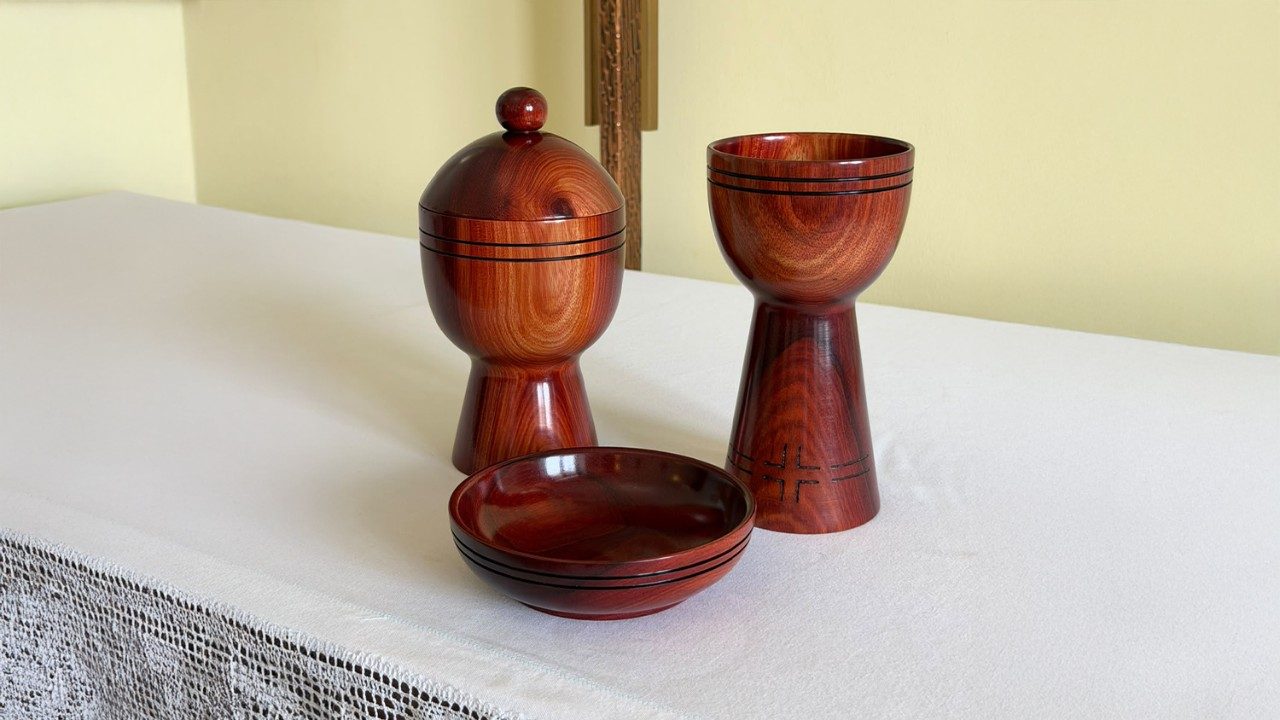
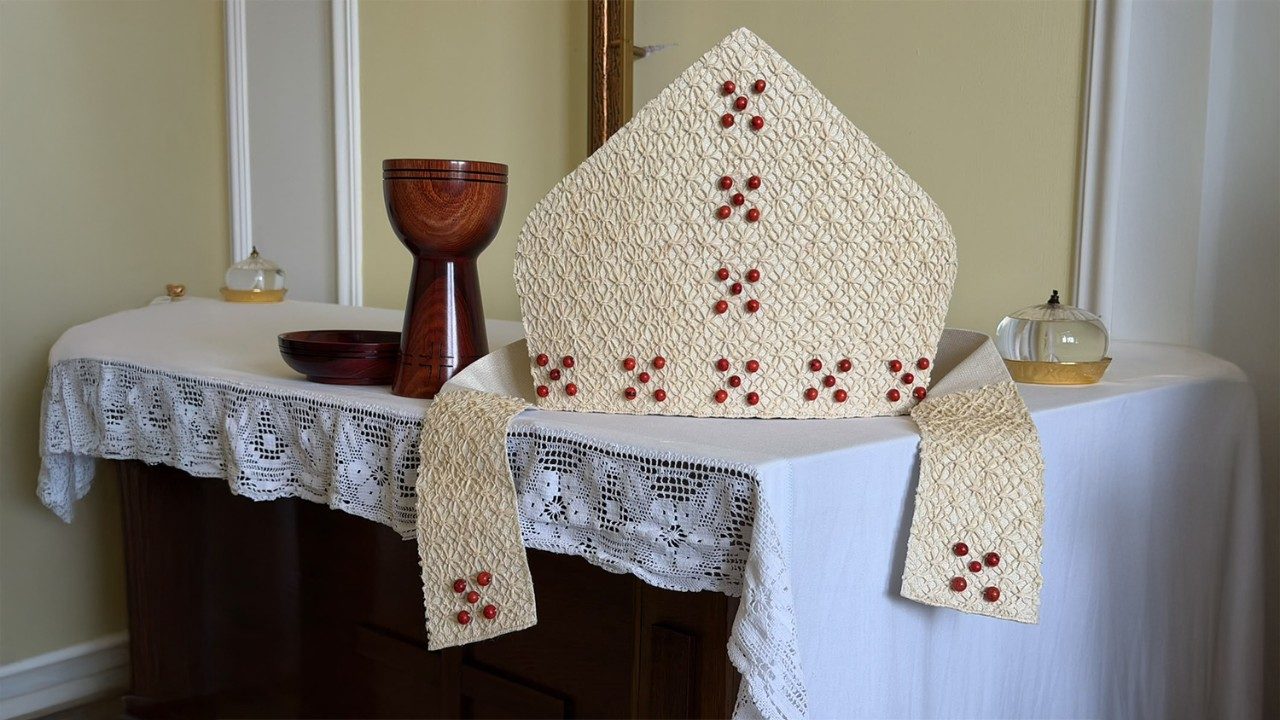
The delegation presented the Pope with a mitre made from tucum palm and decorated with açaí seeds, as well as liturgical items and handicrafts from communities in the region.
These objects represented much more than a mere ceremonial gesture. They were a way of bringing the faces, cultures, materials, and knowledge of the Amazonian peoples to Rome.
The meeting was marked by the Pontiff’s warmth; he conversed with the delegation members in Portuguese and showed interest in the photographs and the experiences they shared about local life.
Women Supporting the Mission
The presence and leadership of women were also evident in the dialogue.
Sister Letícia, a Daughter of Mary Help of Christians, recalled the history of the missionary presence along the Rio Negro and highlighted the role that women have come to play in educational, pastoral, and community processes.
Today, Indigenous women hold positions as teachers and principals of educational institutions, actively participate in catechesis, and support various community initiatives.
This transformation is a significant sign in a region where, historically, women have faced cultural structures that limited their participation.
The growth of higher education among Indigenous peoples is also opening new paths. Today, there are Indigenous people with university degrees, master’s degrees, and doctorates, strengthening their ability to contribute—drawing on their own knowledge and perspectives—to education, research, and the life of their communities.
Reflections on a Missionary History
During the conversation, participants also reflected on the presence of the Salesian missionaries on the Rio Negro, which began in the early 20th century, as well as on the arrival of the Salesian sisters.
The region’s missionary history has been marked by both positive and negative aspects. Alongside experiences of accompaniment, education, and advocacy for Indigenous peoples, the impacts that certain practices of the former boarding schools had on Indigenous languages and cultures are also acknowledged.
This historical reflection is part of the ongoing process of the Amazonian Church, which is called to reexamine its presence from an intercultural perspective, acknowledging the mistakes of the past and strengthening an evangelization that values the cultures and autonomy of the peoples.
In this context, during the interview following the meeting, the figure of Sister Cleusa Rody Coelho was also recalled—a religious sister dedicated to the defense and support of the peoples of the Amazon, whose witness continues to be remembered for her missionary dedication.
A Church Reaching Out to the Peripheries
At the conclusion of the audience, Bishop Raimundo Vanthuy Neto highlighted the simplicity and warmth with which the meeting unfolded. The bishop asked the Pope for a special blessing for the Church of the Rio Negro, the missionaries, and the communities, and also expressed the need to continue finding ways to ensure the sustainability of the diocesan mission.
The audience thus becomes a sign of communion between the universal Church and one of the most challenging geographical peripheries on the planet.
For the Ecclesial Conference of the Amazon (CEAMA), this meeting reaffirms the importance of a Church that listens to the Amazonian peoples, recognizes their leading role, values their cultures, and accompanies their efforts to defend life and their territory.
From the riverside communities to the heart of the Vatican, the Church of the Rio Negro reminds us that the Amazon is not merely a territory in need of protection: it is also a living, diverse, and deeply communal Church that has much to contribute to the universal Church.
The meeting with the Pope once again brings to the forefront a fundamental conviction: walking with the Amazonian peoples means listening to their voices, learning from their wisdom, and building together a Church with an Amazonian face, committed to human dignity and the care of our Common Home.