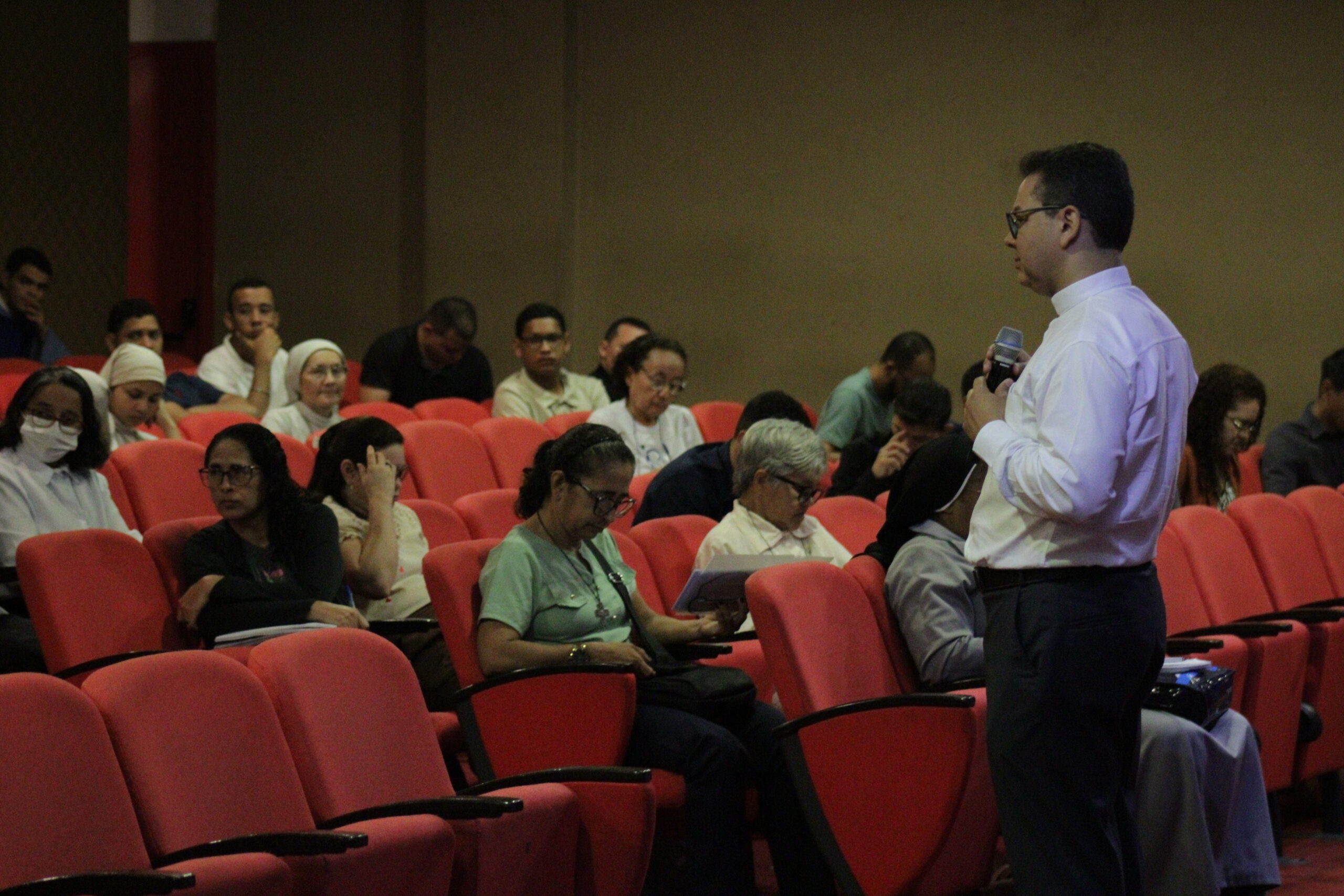
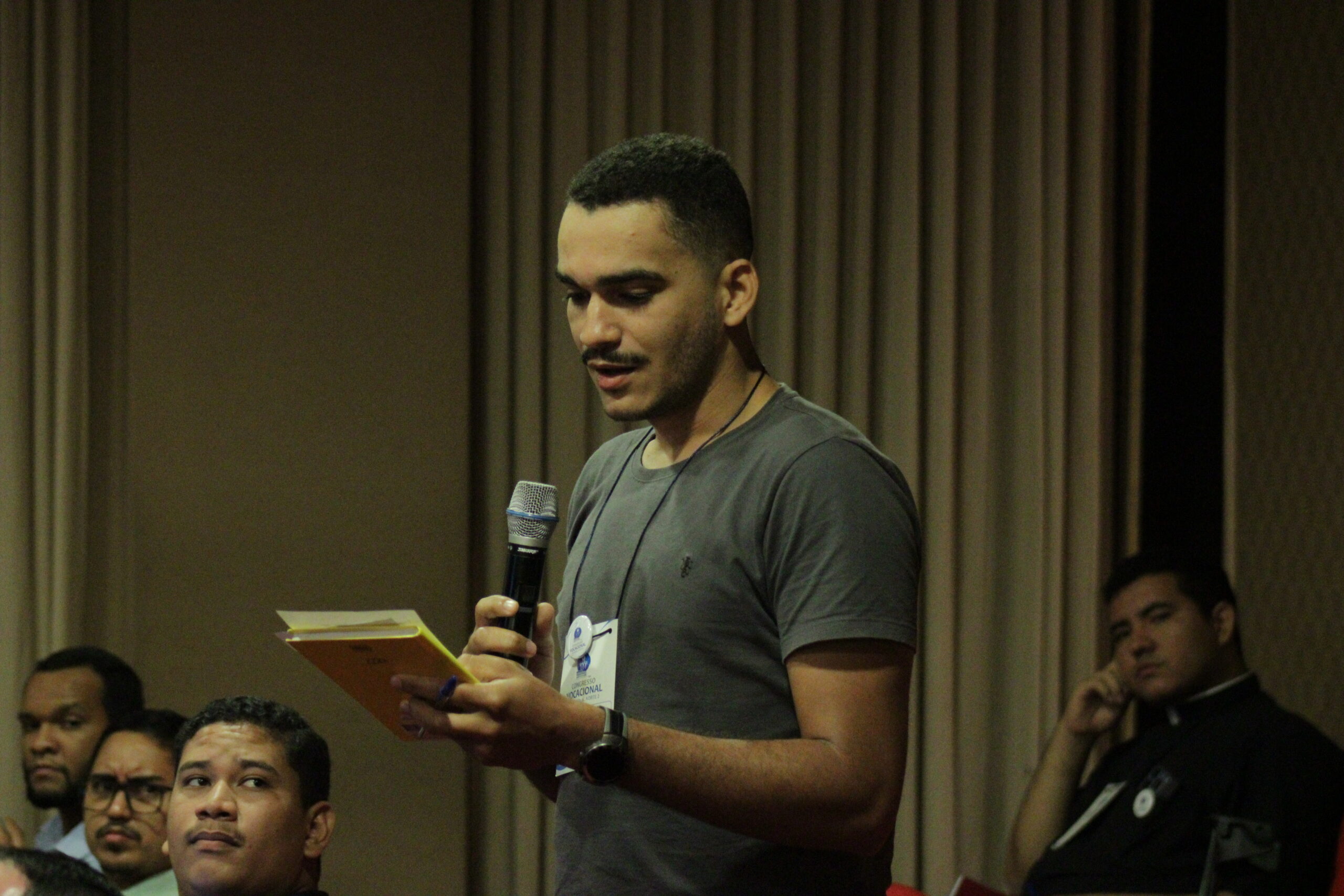
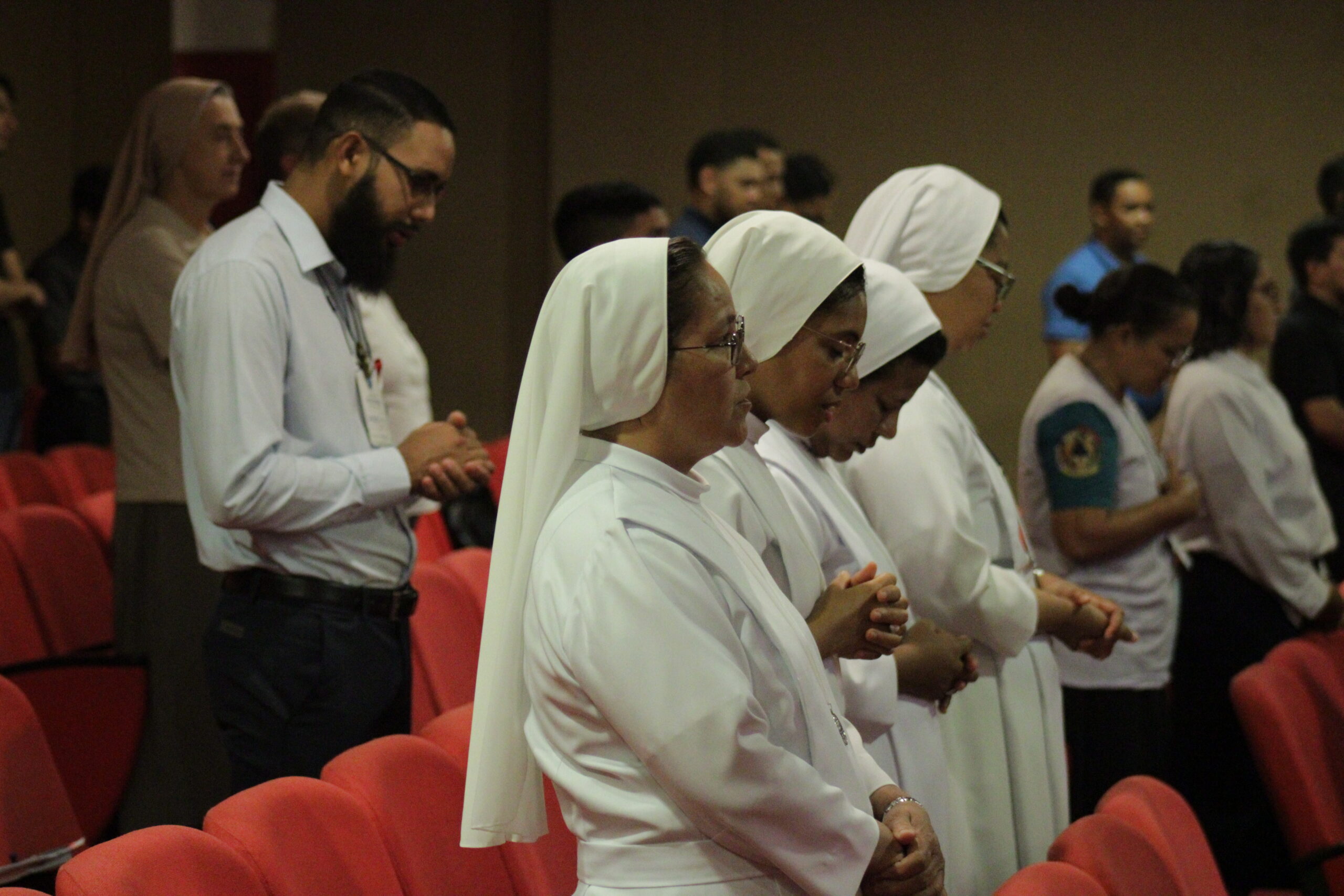
Over three days, from June 5 to 7, the Cultural Center of the Catholic University of Belém (PA) hosted representatives of vocational promotion in the Amazon for the CNBB ‘Regional North 2 Vocational Congress.’ Bringing together representatives from the dioceses and prelatures of Pará and Amapá, the event marked a decisive stage in preparation for the ‘5th Vocational Congress of Brazil,’ which will take place in September at the National Sanctuary of Aparecida (SP).
Under the theme “Vocational Communities: encounter, witness, and mission,” and inspired by the biblical motto “Every day they continued to meet together… they broke bread in their homes” (Acts 2:46), the congress sought to strengthen the culture of the call in every corner of the Amazon region.
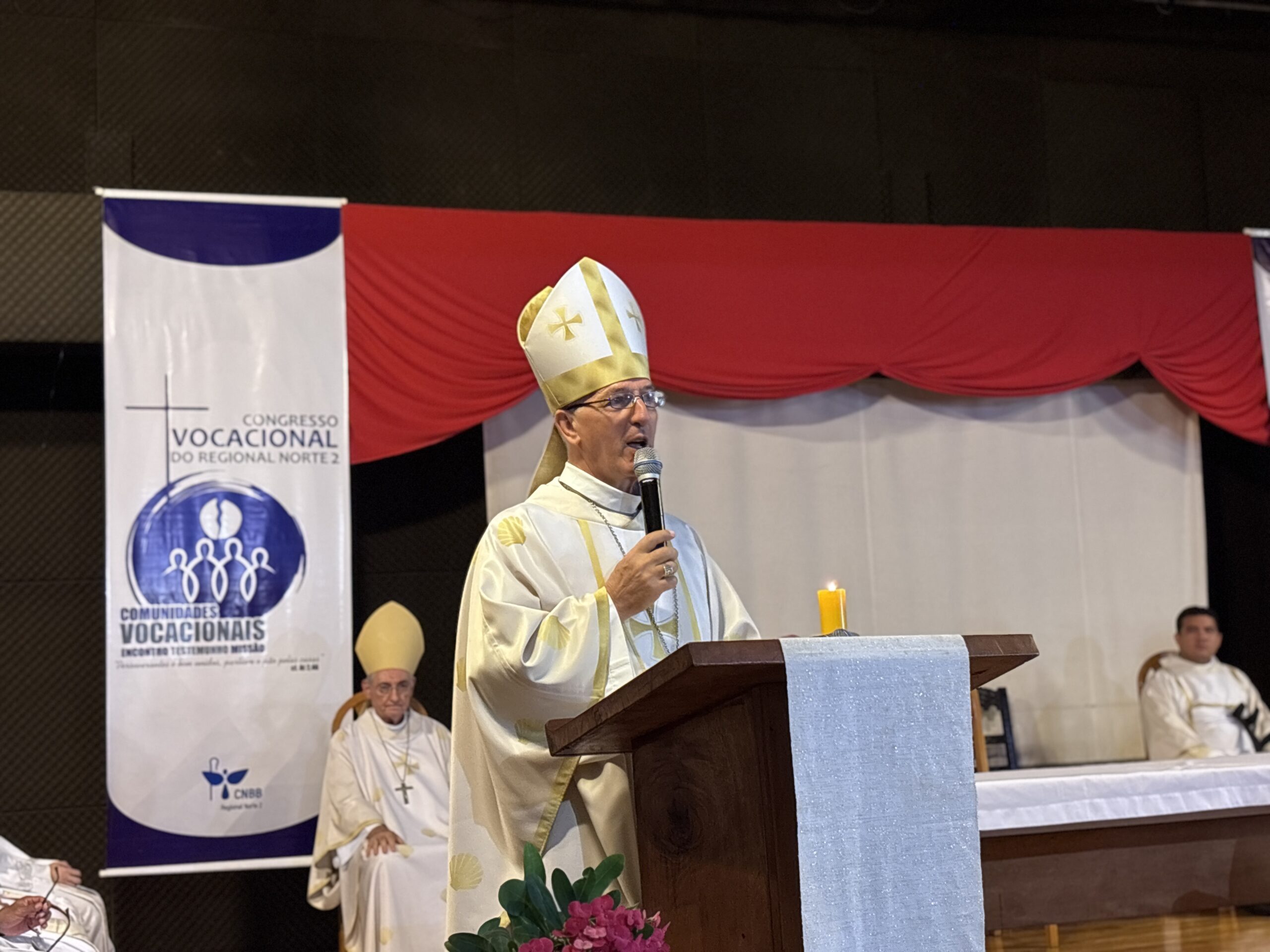
The journey opened in a spirit of synodality with the Holy Mass presided over by Bishop José Maria Chaves dos Reis, Bishop of Abaetetuba and the liaison for the Vocational Animation Service (SAV) in Regional North 2. The opening night was an invitation to fellowship and hospitality among the congress participants.
On the second day, Archbishop Irineu Roman, Archbishop of Santarém and President of Regional North 2, highlighted the urgency of vocations with an “Amazonian face” in his homily. “We need priests and religious who have a great love for the people, commitment, and a spirit of sacrifice, especially among the poorest. Mary and St. Paul are our models of service and proclamation,” stated the Archbishop, reinforcing that the meeting aims to enhance the mission within local dioceses.
Father Marcelo Ribeiro, a member of the writing team for the National Congress’s Base Text, led deep reflections on the crisis of mediation today. For him, the great challenge is to combat the privatization of faith. “Faith has never been an isolated act; it is an act of the Church. We receive faith from the community and, within it, we immerse ourselves in humanitarian affection,” he noted.
Analyzing the life of the first Christian communities, Father Marcelo emphasized that the mission is sustained by perseverance in daily life, exemplified by the priests and leaders who cross rivers in their boats to keep the faith alive in the interior. Regarding the relationship between the Initiation into Christian Life (IVC) and the Vocational Itinerary, the advisor was emphatic: “There is no mature faith that does not become a vocation. Discernment is the action of the Holy Spirit; it is the Church’s role to be a companion, offering a listening ear and respect for each person’s time of maturation.”
For Father Erenilson, Rector of the Saint John Paul II Seminary in the Diocese of Marabá, mission is not just a pastoral activity, but the very essence that gives meaning to the priestly call. In his testimony, the rector shared the vital experience of the “Seminaristic Missions,” held during vacation periods, when the seminary chooses a parish for deep immersion. “We send our seminarians to the communities, especially those where the practice of faith is more fragile. It is an encounter of mutual enrichment: the people feel that the Church came to them, that they are important, and the seminarian has real contact with the people whom he will one day serve as a priest,” highlighted Father Erenilson. For him, this “Church that goes forth” is the most fertile soil for raising new vocations, as it allows the young person in discernment to give themselves entirely to the service of God.
Addressing the diversity of gifts in the Church, Father Erenilson offered a timely warning about ecclesial unity. Citing the conciliar document Ad Gentes, he reminded that the nature of the Church is, by definition, missionary. Therefore, charisms must serve to build up the Body of Christ and never to isolate groups or create distances within the same community. “Mission is what attracts vocations because it carries the ‘Kerygma,’ the primary announcement of the encounter with Christ. We are instruments of this encounter that answers fundamental questions: Who is Jesus? What does He want from us? What is the meaning of our life?” the rector pointed out. He reinforced that this work is intrinsically linked to the Initiation into Christian Life (IVC), which must be the guiding thread of a joint pastoral effort. “We cannot accept isolation. We are a single community with the same goal: to bring the Good News and promote the encounter that transforms lives,” said the priest.
Bishop José Ionilton de Oliveira, Bishop of the Prelature of Marajó, was incisive in recalling that although the Church is rich in a plurality of charisms, ministries, and gifts, everything must converge toward a single mission: proclaiming the Kingdom of God. For the Marajó bishop, the call is a divine gift that requires attentive listening and a generous response, which must be accompanied and matured in clear stages. “Every vocation is for the Church and for a faith community. There is no individualistic or personalistic vocation; it is essentially destined for a mission,” noted Bishop Ionilton. He reinforced the importance of the commitment to forming missionary disciples who understand their role in the mystical body of Christ.
Projecting the final steps of the meeting, the Bishop highlighted the importance of Regional North 2’s contribution to the national scene: “We are gathering the richness of our working groups’ reflections to offer a powerful synthesis to the National Congress in Aparecida. It is our Amazonian ‘ground’ defining criteria and sharing light so that vocational promotion throughout Brazil gains this community and missionary vigor.”
The ‘Regional North 2 Vocational Congress’ was not just another regional event; it was a true “mosaic of experiences” where the diversity of the Church in the Amazon found voice and purpose. During the days of reflection in Ananindeua (PA), the testimonies of participants revealed a pulsing Church, aware of its challenges and passionate about God’s call.
Sister Alecsandra Pina de Oliveira, National Advisor for the Youth Sector of the CRB and one of the main guides of this journey, led the Regional to a reflection that touched the heart of the mission. With the authority of someone who walks alongside youth, she invited the Church to use “new lenses.” “Today’s youth challenge us to humanize our processes. They ask us for authenticity and no longer accept ready-made answers to questions that have changed radically,” highlighted Sister Alecsandra. While working on the dimensions of testimony and mission, she provoked a deep review of the vocational animator’s role. “We need to be inspired by Jesus to understand how to collaborate today, not from abstract ideals, but from the ground of life in Regional North 2. Our mission is to echo these challenges in the Amazonian land, building a joint path where real testimony overcomes discourse.”
On the ground of the communities, shared experiences brought the practical dimension of faith. Elizângela Maria Pantoja, a catechist from the Diocese of Cametá, spoke movingly about the Initiation into Christian Life (IVC) as a Christ-centered foundation. “Baptism is not a rite of passage; it is our awakening to holiness. By assuming that we are ‘new Christs,’ we begin to exercise the office of prophet, priest, and king in the heart of the community,” she stated.
This co-responsibility was echoed by Father Ezekel da Cruz, from the Diocese of Macapá, who argued that vocational culture should be the soul of all pastoral work. “All ministries and movements are co-responsible. It is not just the task of the parish priest. We need to create spaces where children and youth learn to listen to God, valuing every vocation, from marriage to the priesthood.” In harmony, Father Diego Meneses, from the Diocese of Abaetetuba, reinforced that to awaken new calls, it is necessary to first invest in the qualified training of those who animate: “we need animators inspired by the commitment of the early community.”
Consecrated life brought precious contributions regarding patience in discernment. Brother Agostinho, from the Sementes do Verbo Community, presented the ‘Sabbatical Year School’ as an oasis of healing. “It is a time of discipleship without haste. Our goal is to form for the Church, allowing the young person to experience the plurality of faith before taking a definitive step,” he explained.
Meanwhile, Sister Edna da Silva, from the Congregation of Franciscan Sisters of Maristella, touched on the importance of caring for the history of those who arrive. “One cannot kill the history of a vocational candidate; it needs to be refined with charity and asceticism. The animator needs to ‘captivate and cultivate,’ offering a joyful testimony that prevents disillusionment along the way.”
With a practical and vibrant view on strategies for approaching youth, Sister Dalvana Johansson, of the Congregation of the Sisters Servants of Our Lady of the Annunciation, who works directly in formation, said that the effectiveness of the vocational message today lies in a fundamental binomial: a strong physical presence and mastery of digital tools. “Our strategy is to be present, making our charism known in the daily life of the parishes and in pastoral movements, as we do at the Sanctuary of Graces. Often, the first contact comes from the recommendation of priests and seminarian friends; we go to these young women, present who we are and what we do, allowing them to be enchanted by our mission through our life witness,” explained Sister Dalvana.
Recognizing that the universe of youth is intrinsically connected, the Sister highlighted that the digital world has ceased to be an accessory to become an essential tool for evangelization. According to her, social media is often the only way to shorten the geographical distances so common in the Amazonian reality. “Today, I see digital communication as something indispensable. It is through WhatsApp and online meetings that I can maintain close contact with young people who are in distant locations. This agility allows us to communicate the vocational message quickly and have an almost immediate response from those who feel the call. The digital space gives us the possibility of constant proximity, ensuring that the flame of enchantment for the congregation remains alive,” the formator concluded.
Coming from the Prelature of Itaituba, Father Carlos Eduardo de Lima Rodrigues gave one of the most forceful speeches of the Congress. He warned against “romanticized faith” that ignores the harsh reality of the Amazon. “Jesus called the apostles based on a living testimony, not on idealism. Today, we suffer from clericalism and the ideologization of faith, which take away our critical sense. Our mission is to be salt and light in the real world, with a preferential option for the poor and our feet firmly planted in the truth of the Gospel,” noted the Rector of the Saint Joseph Seminary of the Prelature of Itaituba.
The theological closing, led by Father Marcelo Ribeiro, unified all voices under the perspective of Integral Mission. He reminded that vocation covers the entire life cycle. “Our concern should be with the missionary disciple from the first ‘yes’ until the end of life, ensuring that they reach the end fulfilled and in peace.”
Father Marcelo highlighted the identity of the laity as missionaries par excellence and not mere volunteers, presenting the ‘National SAV Form’ as the map that will help each parish accompany these itineraries. Inspired by Acts 2:42-47, the participants committed to goals of integrating vocational culture into all stages of the IVC, transforming dialogue into concrete commitment.
Toward the National Sanctuary: The Face of the Amazon in Aparecida
The Regional North 2 Congress was a sending forth. The reflections gathered here will not be restricted to Pará and Amapá; they will be the voice of the Amazon in Aparecida in September 2026. The delegation, led by Bishop José Maria Chaves dos Reis, Bishop of Abaetetuba and liaison for vocations in Regional North 2, is already preparing with great expectations.
“It will be a time of exchange and strengthening of our mission,” stated Father Diego Meneses. For Maria Augusta de Oliveira Barbosa, from the Order of Virgins, the expectation is to renew the values of unity: “The Congress in Belém was unique for shedding light on the stable operative processes in our region, with its territorial extensions and care for native peoples. May we be able to replicate these values in Aparecida!”
With the same hope, Sister Luciane, from the Congregation of the Dorotheas, sees the Congress as a gift from God to understand her mission. Thus, with hearts burning and feet on the path, Regional North 2 moves toward the National Sanctuary, carrying in their luggage the certainty that the seed sown in the Amazon is a promise of an abundant harvest for the entire Church in Brazil.
by Vívian Marler / Communications Officer, CNBB Regional North 2