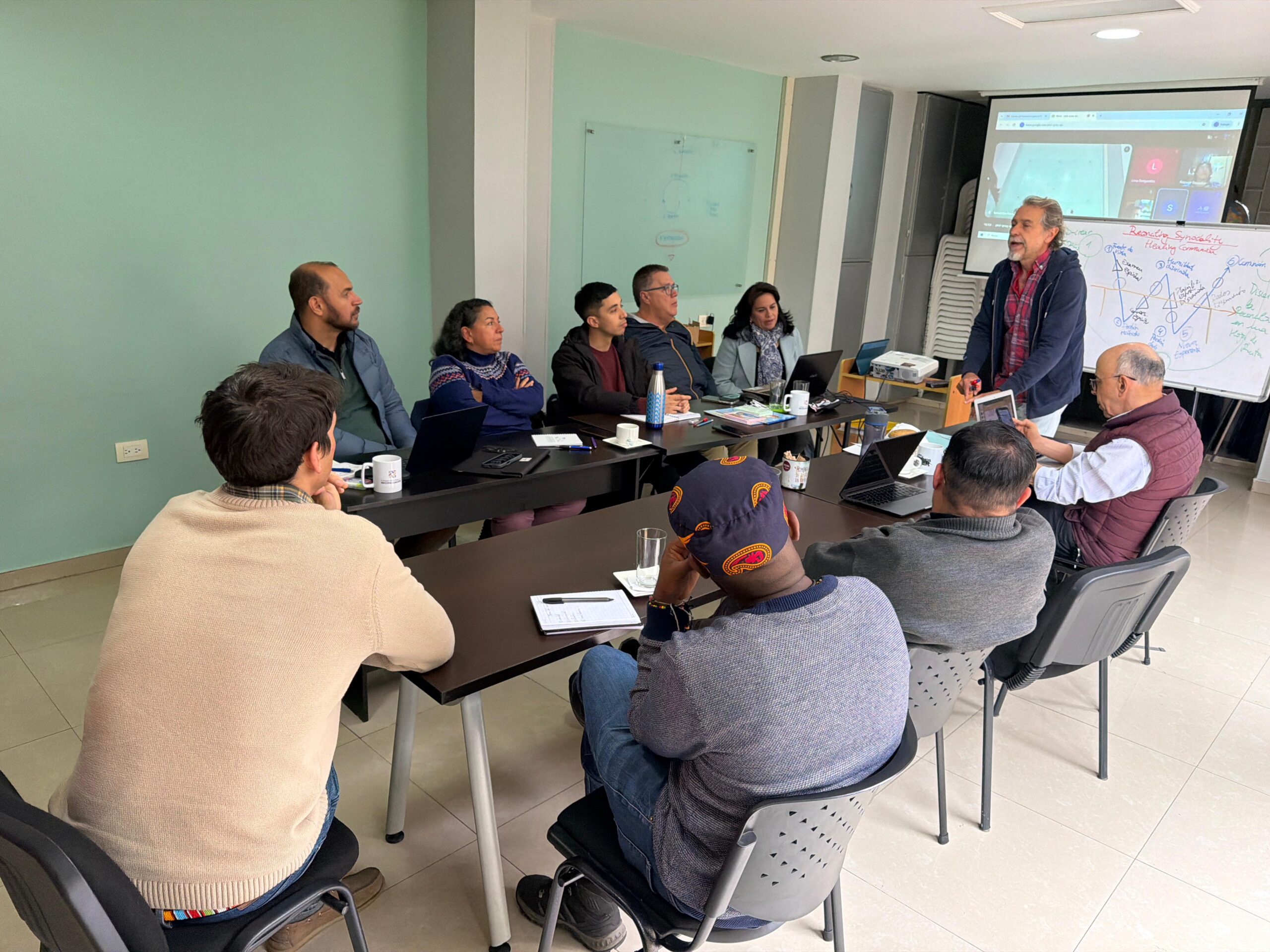
On Wednesday, May 20, the “Reconciliatory Synodality” meeting took place, organized by the Foundation for Reconciliation, in a space for reflection, discernment, and dialogue on the challenges of reconciliation in ecclesial and social life, as well as its deep connection to the synodal journey promoted by the universal Church.
Representatives from various ecclesial organizations participated in the event: the Archdiocese of Bogotá (Afro-Colombian Pastoral Care and Vicariate for Evangelization), the Foundation for Reconciliation, REPAM – Ecuador, the Amazonian Itinerant Network, the Latin American Confederation of Religious – CLAR, and the Ecclesial Conference of the Amazon – CEAMA.
One of the central themes of the meeting was the recognition that “conflicts must be placed on the table and not under the table,” understanding that reconciliation does not mean hiding tensions, but rather addressing them through discernment, listening, and communal conversion.
During the reflections, it was emphasized that“synodality is not possible without reconciliation”, drawing on the insights promoted by the pontificate of Pope Francis and continued by Pope Leo XIV. Reconciliation was presented as a necessary condition for healing ecclesial communion and strengthening participation and co-responsibility within the Church’s mission.
Father Elías López recalled that Pope Leo XIV has insisted on a “peace that is unarmed inwardly and disarming outwardly”, noting that peacebuilding begins within and in the capacity to heal internal divisions. In this sense, he affirmed that the Church is called to become a “field hospital” for the world’s wounds, especially in the face of growing polarization, social fractures, and violence.
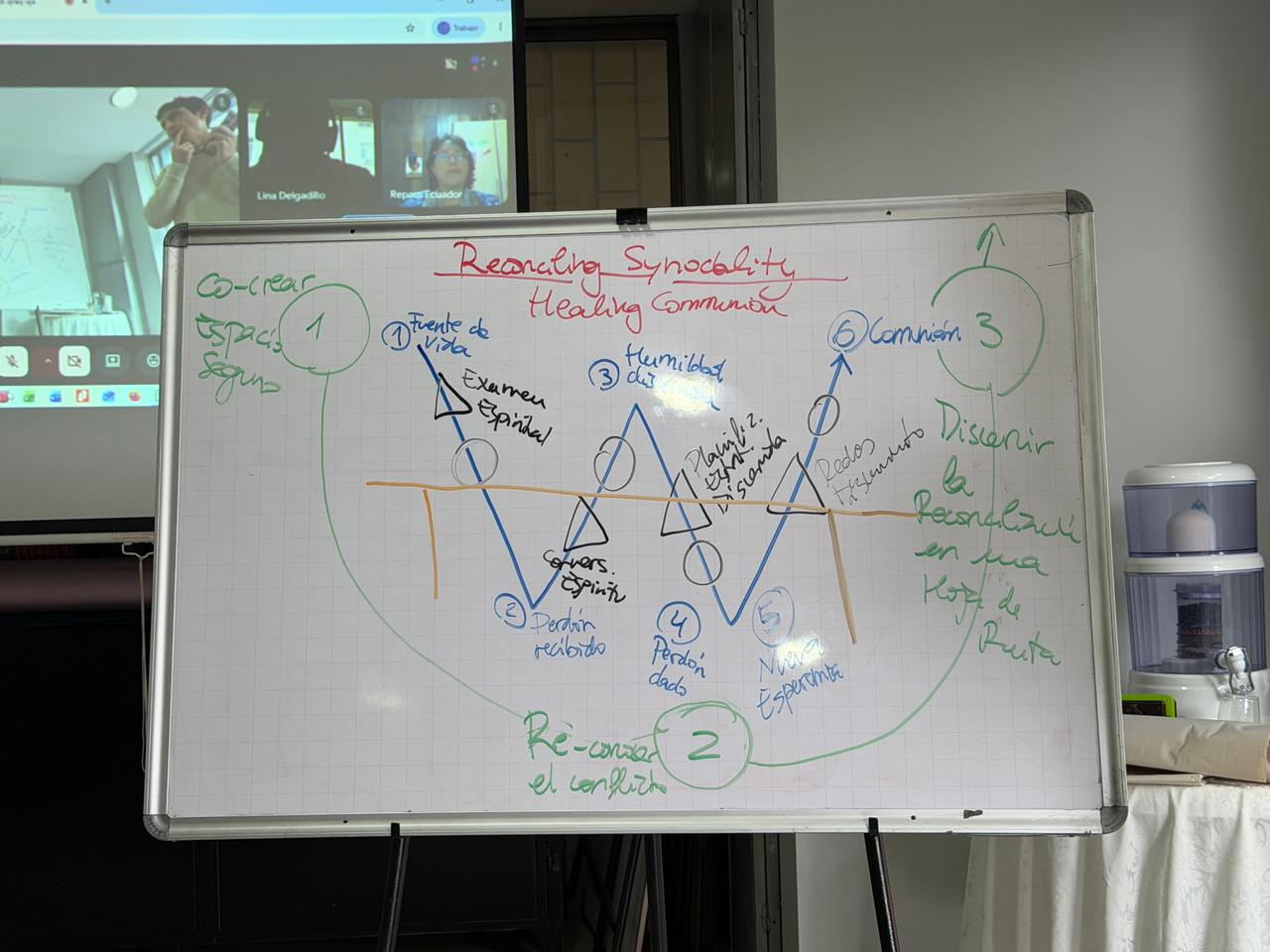
The proposal for “Reconciliatory Synodality” was presented as a spiritual journey of conversion, inspired by Ignatian spirituality and conflict transformation. Among the main elements shared were the so-called “six anchors of reconciliation”: source of life, discerned humility, forgiveness received, forgiveness given, new hope, and communion.
Likewise, the discussion delved into tools for discernment and community transformation such as the spiritual examination, conversation in the Spirit, discerned strategic planning, discernment networks, adaptive leadership, Theory U, restorative justice, and the theory of change.
Participants also highlighted the importance of listening through the body, creating safe spaces, acknowledging conflicts, and the need to build community roadmaps to heal relationships and strengthen communion.
The Ecclesial Conference of the Amazon values these types of processes that strengthen a Church capable of walking together amid diversity, addressing conflicts from the perspective of the Gospel, and promoting a culture of reconciliation, listening, and hope for the Amazonian peoples and for the entire Church.