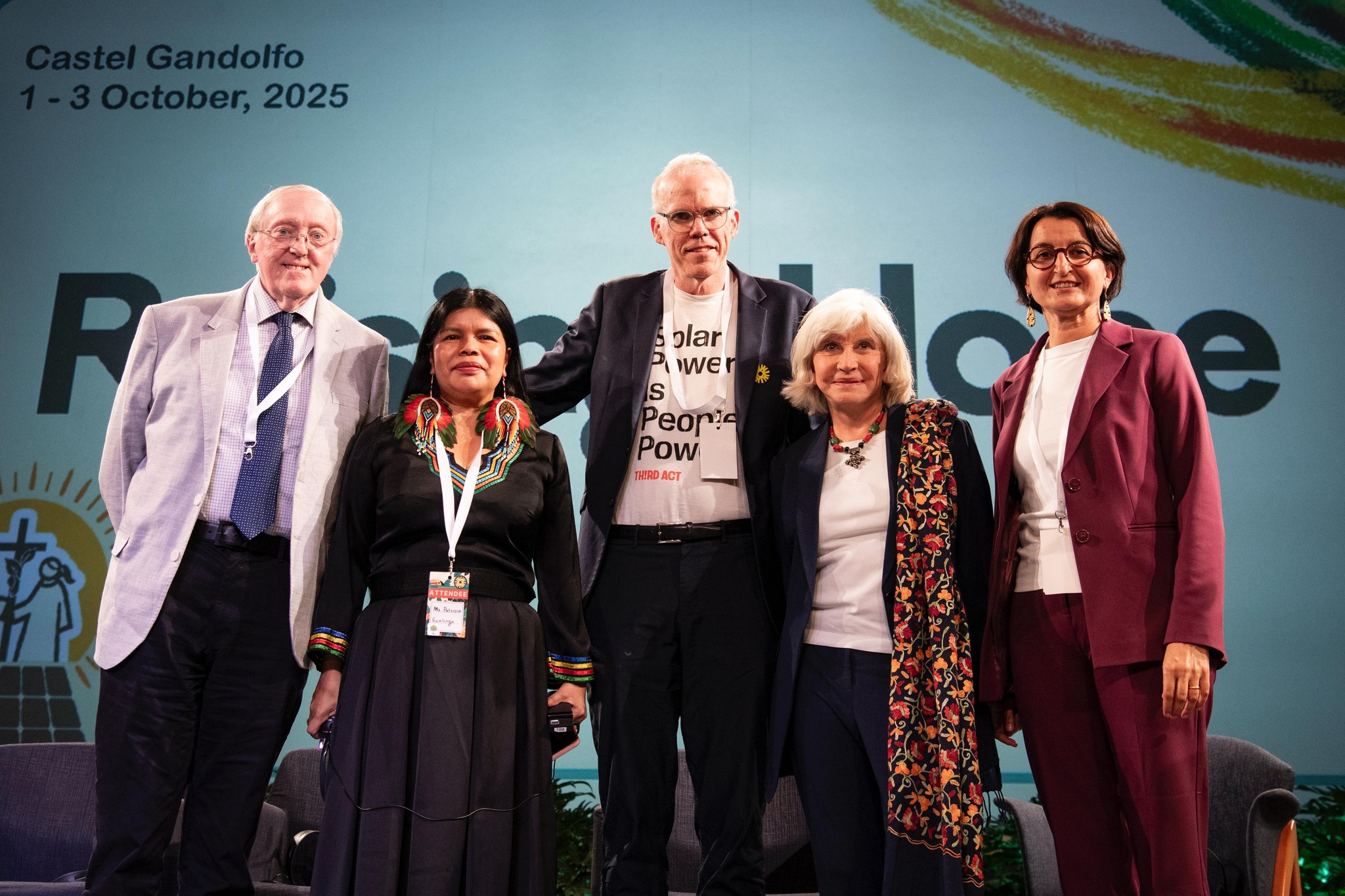
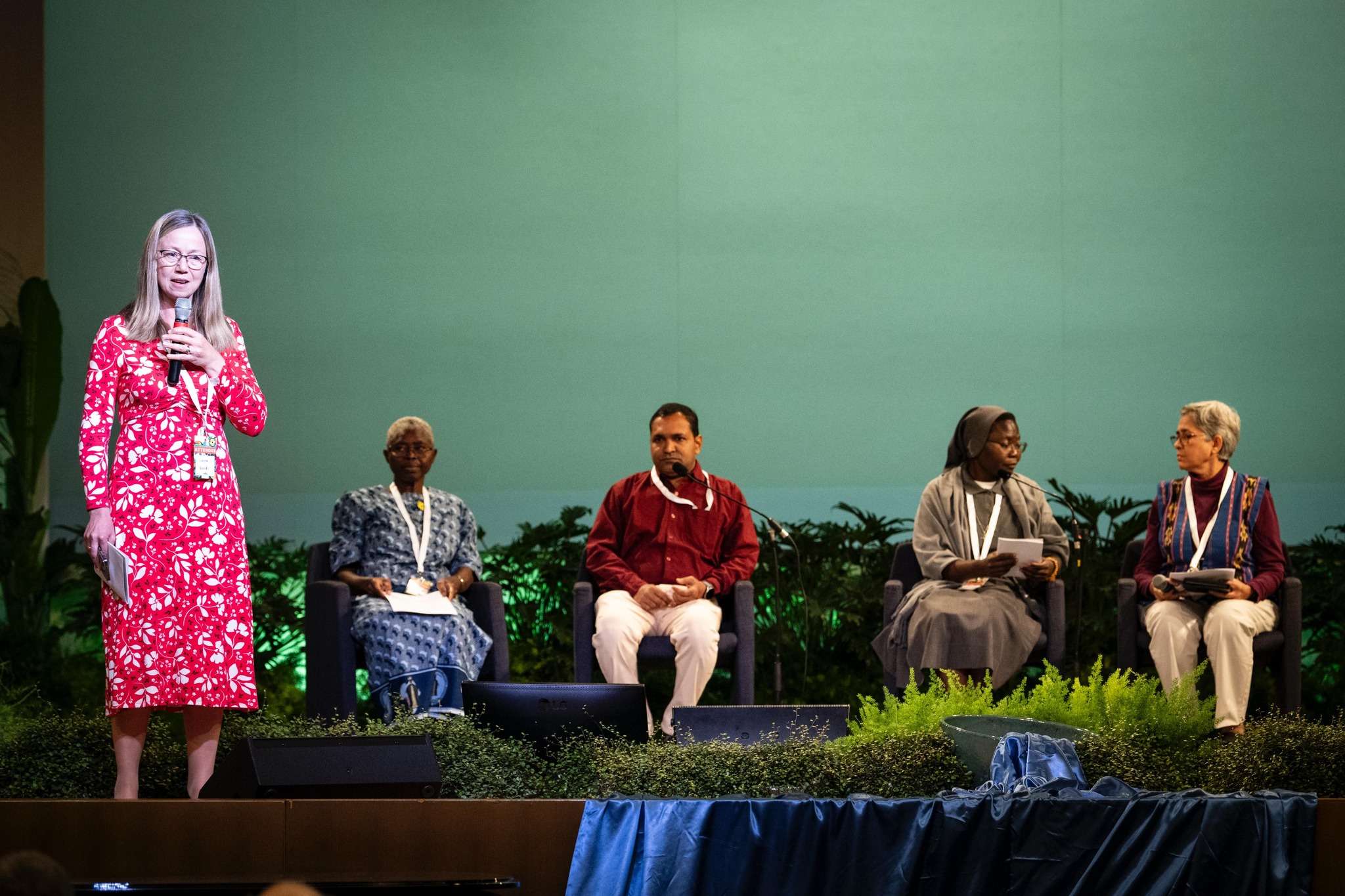
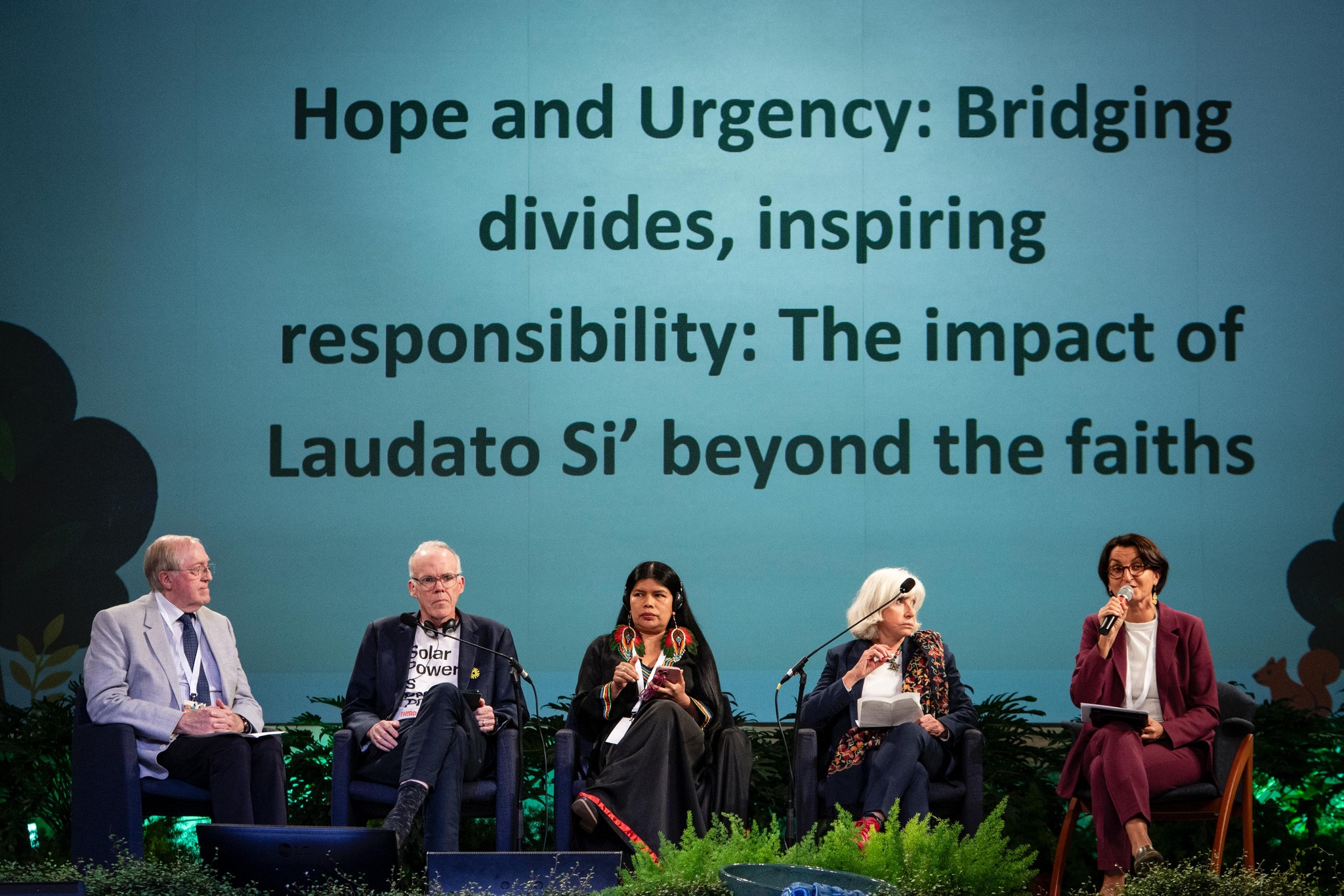
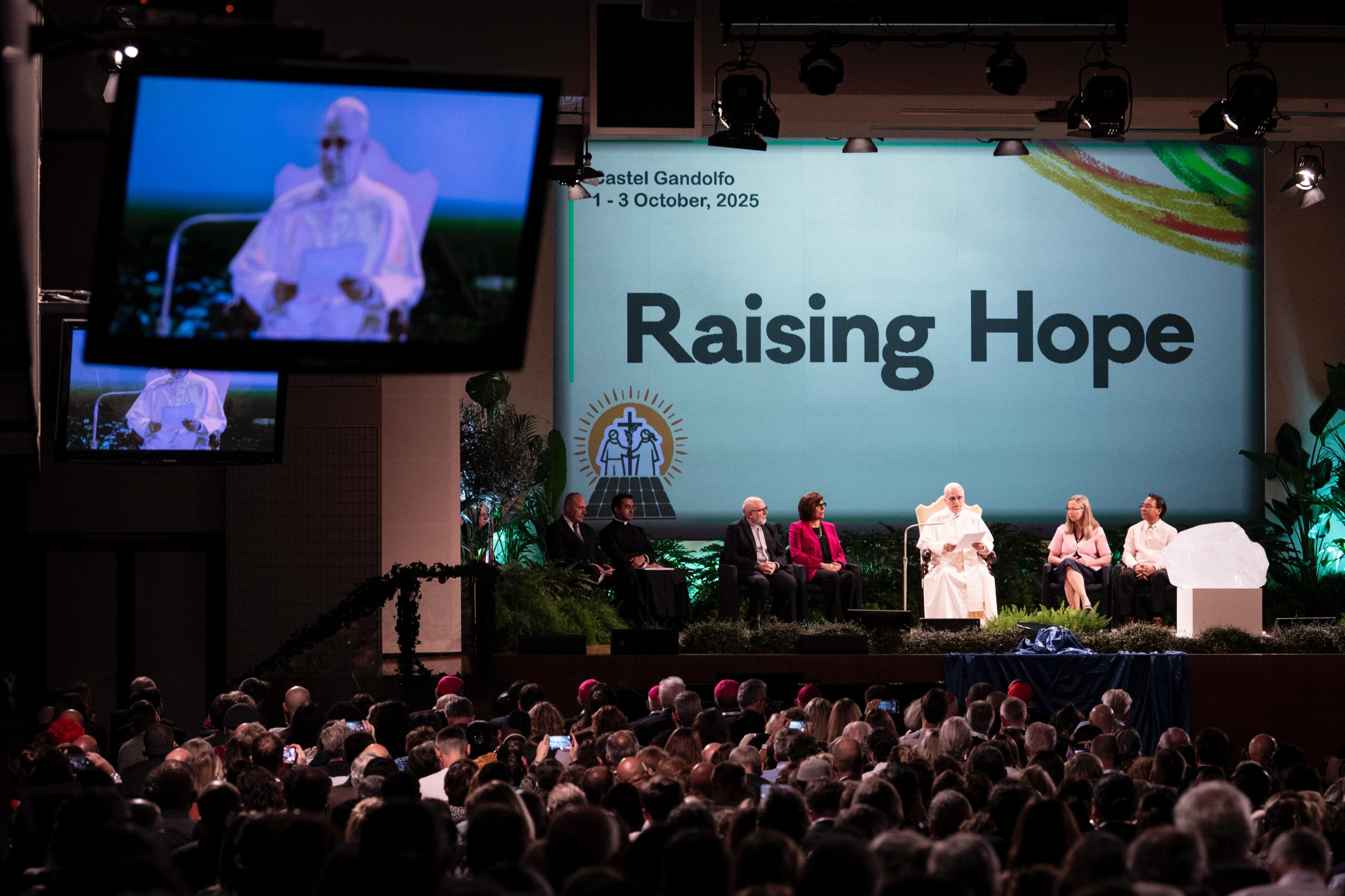
As part of the “Giving Hope” Conference, marking the tenth anniversary of Pope Francis’ encyclical Laudato Si’ and just days before the end of the Season of Creation (September 1–October 4), the vice president of the Ecclesial Conference of the Amazon (CEAMA), Patricia Gualinga, shared a profound message from her identity as a Kichwa woman of the Sarayaku people in the Ecuadorian Amazon.
Laudato Si’: a bridge to walk together
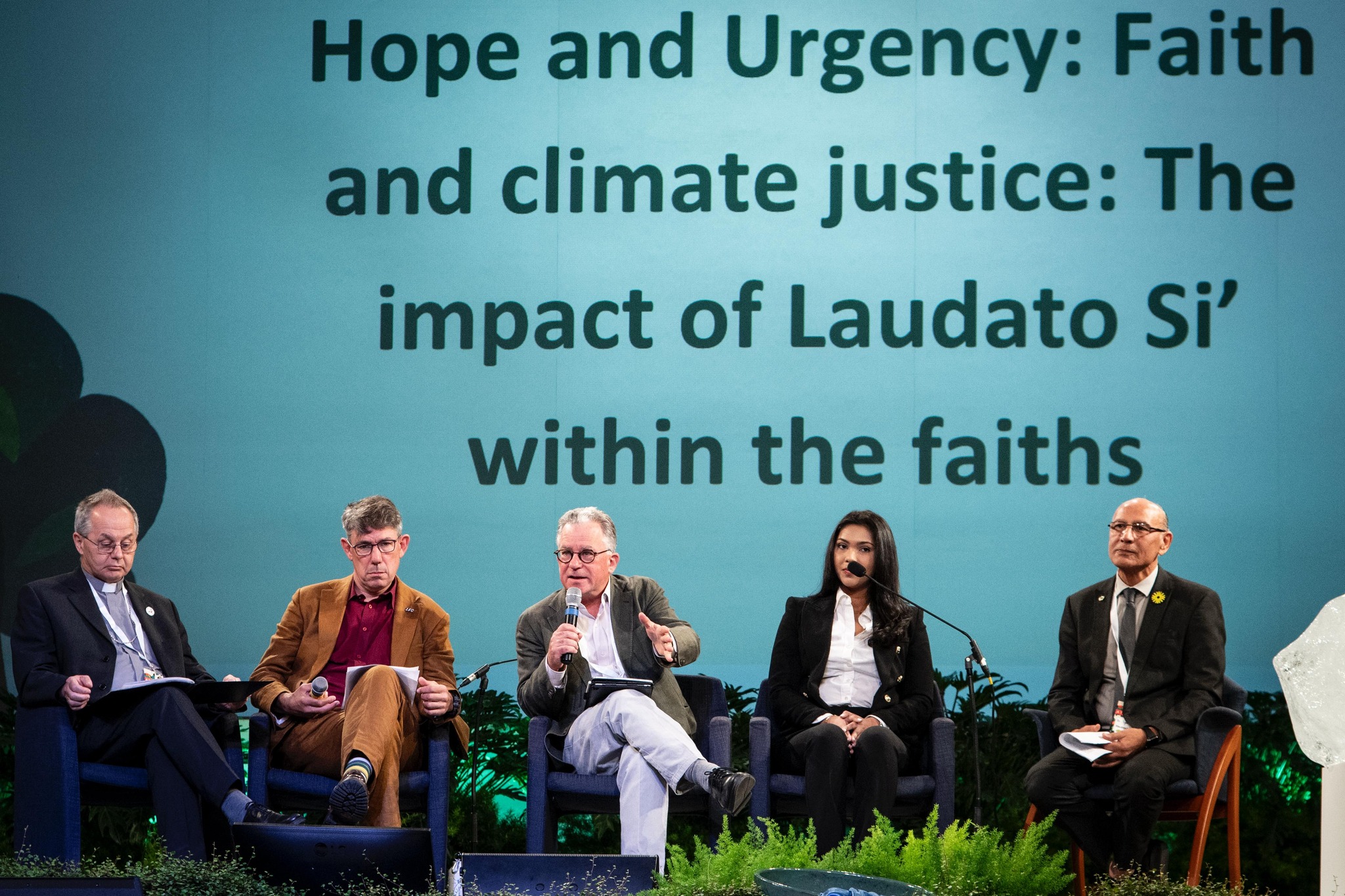
In her speech during the plenary session “Hope and Urgency. Overcoming Divisions, Inspiring Responsibility: The Impact of Laudato Si’ Beyond Confessions,“ Gualinga emphasized that the encyclical has marked a turning point by recognizing that the climate crisis is not only environmental and economic, but also a moral challenge.
”Laudato Si’ gathers and echoes our ancestral knowledge about nature. It creates a common language where science, spirituality, politics, and community worldviews can dialogue and enrich each other,” he said.
Testimony from Sarayaku: Spirituality and Resistance
Gualinga recounted how the Sarayaku people managed to stop oil activity in their territory through spirituality, community, and the law, setting a legal precedent in the Inter-American Court of Human Rights. He also highlighted the “Kawsak Sacha” – Living Forest proposal, which recognizes nature as a conscious living being and subject of rights.
“Every river, every tree, and every ecosystem has its own dignity. To cut those invisible threads is to destroy life itself,” he said, recalling that this vision is not idolatry, but a way of understanding life as a sacred web.
Facing extractive threats
With a prophetic voice, he denounced the expansion of the extractive frontier in the Amazon and the criminalization of indigenous leaders and social organizations:
“We cannot continue to be sacrificial territories. Governments prioritize the economy over life, persecuting those who defend our Common Home.”
Love as a transformative force
Gualinga emphasized that indigenous peoples have joined the Gospel not by imposition, but out of love and conviction:
“Where there is administration, there is risk of death; where there is love, there is a commitment to care and social justice.”
Global projection: the collective voice of the Amazon
Recently appointed as a member of the UN Permanent Forum on Indigenous Issues, she recalled that her voice is not individual, but collective, representing the Amazon:
“There will be no climate justice without justice for indigenous peoples.”
A decisive time for the Amazon and the Church
In her closing remarks, she called on the Church to be a sign of listening, communion, and unity:
“We are at a decisive moment. The peoples, rivers, and forests cannot wait any longer. If we believe in the Good News, we must proclaim it with an Amazonian face, in a spirit of love and hope.”
Patricia Gualinga’s speech resonated with the certainty that caring for our Common Home will only be possible through unity, listening, and a real commitment to the peoples who inhabit it.